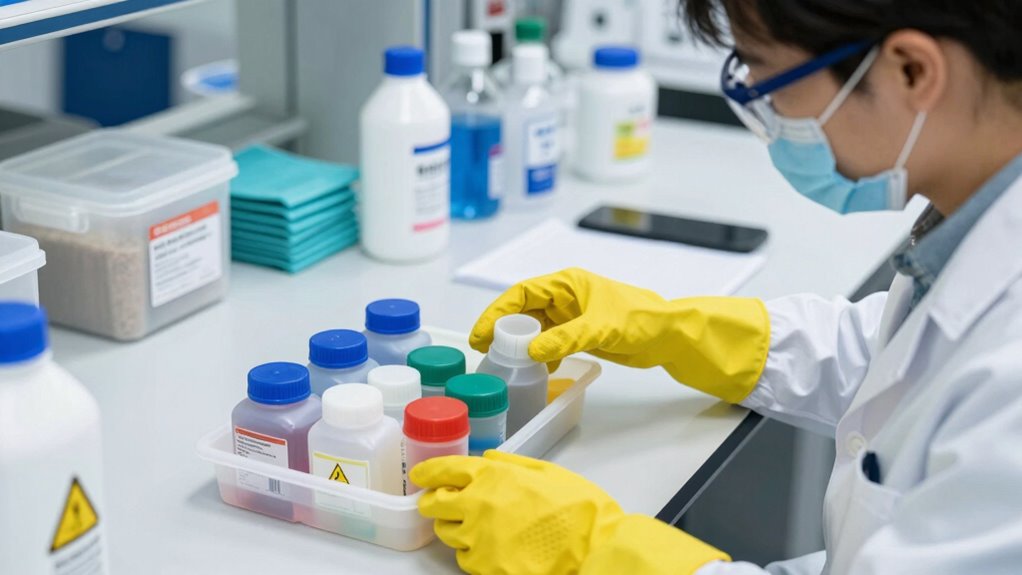

In small labs, you should always wear proper PPE—gloves, goggles, and lab coats—before responding to a chemical spill. Quickly assess the spill’s size and chemical type, then contain it with absorbent materials like spill pads or kitty litter, making sure to protect drains and vents. Follow your lab’s spill response plan and neutralize acids if trained. Staying prepared and informed helps prevent accidents from escalating. Keep learning to master effective spill management techniques.

Prime made for students and young adults
- Fast, free delivery for dorm and study essentials
- Prime Video and Amazon Music included
- Member-only deals
Key Takeaways
- Wear appropriate PPE and assess spill severity before taking action.
- Use absorbent materials to contain and isolate the spill promptly.
- Understand chemical properties to select suitable containment and neutralization methods.
- Follow established cleanup procedures and document the incident thoroughly.
- Regularly train staff and maintain accessible spill response materials for preparedness.

Have you ever wondered what to do when a chemical spill occurs? In a small lab, quick and effective action can prevent serious injuries and environmental damage. The first step is to guarantee your safety by wearing proper personal protective equipment (PPE). PPE is your frontline defense against chemical exposure and should include gloves, goggles, lab coats, and, when necessary, respirators. These items shield you from contact with hazardous substances and minimize the risk of inhalation or skin absorption. Always assess the spill’s size and chemical nature before proceeding; if it’s an uncontrollable or highly toxic spill, evacuate the area immediately and alert your emergency response team. Proper chemical spill response procedures are essential to minimize risks effectively. Once you’ve donned PPE and confirmed that the spill is manageable, your next priority is to contain it. Spill containment strategies are designed to limit the spread of hazardous chemicals and protect both personnel and the environment. Use absorbent materials such as spill pads, spill socks, or kitty litter specifically designed for chemical absorption. Place these materials around the perimeter of the spill to prevent it from spreading further, especially towards drains, vents, or other sensitive areas. If the spill involves liquids that can react with certain materials, ensure that your containment approach is compatible with the chemical’s properties. For example, some acids require neutralization before absorption, which should only be performed if you are trained and equipped to do so safely. Proper hazard communication is crucial in ensuring everyone understands the risks involved and how to respond appropriately. Additionally, understanding chemical properties can greatly improve your response effectiveness and safety. Proper training and preparedness are vital components of an effective spill response plan, especially in small labs where resources may be limited. Being familiar with natural and synthetic chemicals common in your laboratory can help you identify hazards more quickly during an incident. Once the spill is cleaned up, thoroughly decontaminate the affected area and equipment, and document the incident as required by safety regulations.
As an affiliate, we earn on qualifying purchases.
Frequently Asked Questions
How Often Should Spill Response Training Be Conducted?
You should conduct spill response training at least annually to guarantee everyone knows emergency procedures and can act quickly. Regular training reinforces spill containment techniques and keeps safety protocols fresh in your team’s minds. Frequent practice helps identify gaps in response plans, making spill containment more effective. Additionally, consider training whenever new staff join or when new chemicals are introduced, ensuring everyone stays prepared for any emergency.
What PPE Is Recommended for Different Chemical Spills?
For different chemical spills, you should wear appropriate personal protective gear like gloves, goggles, and lab coats to prevent exposure. When handling hazardous spills, use spill containment supplies such as absorbent pads or neutralizers to control and contain the spill effectively. Always assess the chemical’s hazard level first, then select the PPE accordingly, ensuring your safety and minimizing environmental impact during clean-up.
How Do I Dispose of Contaminated Cleanup Materials?
When disposing of contaminated cleanup materials, you’ll want to treat it like a delicate treasure. First, guarantee proper contamination containment by sealing the waste in approved, labeled containers. Next, follow waste segregation protocols to separate hazardous from non-hazardous waste. Always coordinate with your facility’s hazardous waste disposal program or local regulations. Never toss contaminated materials in regular trash, as this ensures safe, responsible disposal and protects everyone involved.
What Are the Legal Reporting Requirements for Spills?
You must report chemical spills to the appropriate regulatory agencies promptly to guarantee compliance with legal requirements. Failure to report can lead to liability issues and fines. Typically, you’ll need to notify local environmental agencies, OSHA, or other relevant authorities, especially if the spill exceeds certain thresholds. Document the incident thoroughly, including cleanup procedures and disposal methods, to demonstrate regulatory compliance and protect yourself from potential legal consequences.
How Can I Prevent Chemical Spills in the First Place?
To prevent chemical spills, you should follow proper storage protocols, guaranteeing chemicals are labeled, sealed, and stored securely in appropriate containers. Regularly inspect storage areas for leaks or damages. Conduct emergency drills with your team to reinforce spill prevention practices and response actions. Keep a spill response kit nearby, and train staff on its use. These steps help minimize risks and ensure quick, effective action if a spill occurs.
As an affiliate, we earn on qualifying purchases.
Conclusion
By mastering these chemical spill response basics, you’re like a steady lighthouse guiding your small lab safely through stormy waters. Remember, quick action and proper precautions can turn a potential disaster into a manageable situation. Stay calm, follow your spill response plan, and don’t hesitate to seek help if needed. With preparedness, you’ll navigate spills smoothly, ensuring safety for yourself and your coworkers—like a beacon shining bright amid chaos.
As an affiliate, we earn on qualifying purchases.
As an affiliate, we earn on qualifying purchases.
Fall Picks
fall essentials
As an affiliate, we earn on qualifying purchases.