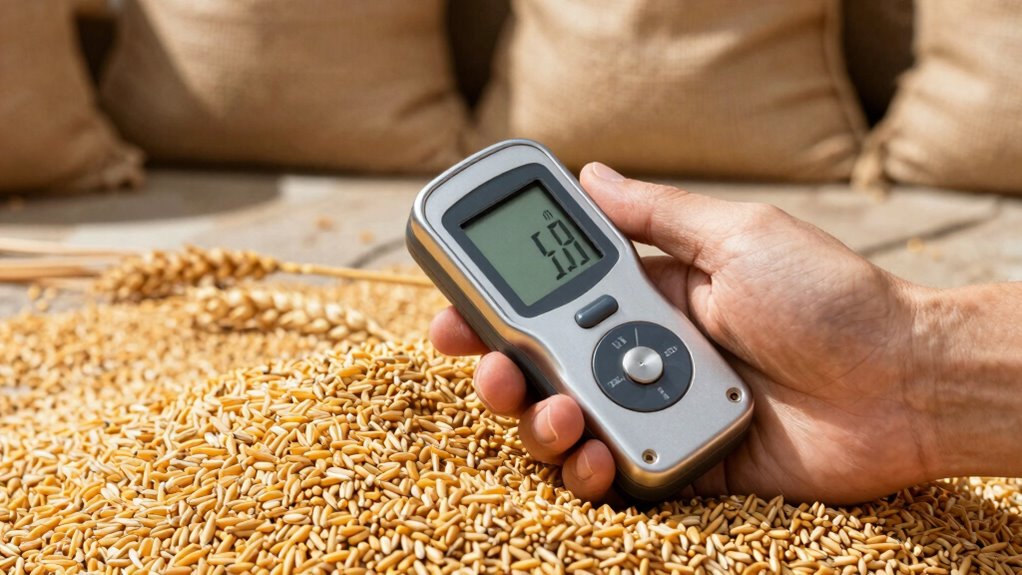

Grain moisture meters are essential during storage because they give you fast, accurate moisture levels, helping you maintain grain quality. By regularly checking moisture, you can spot problems like mold, insects, or fermentation early, allowing you to act promptly. Proper calibration ensures your measurements are reliable, guiding drying and ventilation efforts. External factors like humidity and temperature also affect moisture, so continuous monitoring helps you keep storage conditions ideal. Keep going to discover how to maximize their benefits.

Prime made for students and young adults
- Fast, free delivery for dorm and study essentials
- Prime Video and Amazon Music included
- Member-only deals
Key Takeaways
- They enable quick, accurate moisture measurements to prevent spoilage and maintain grain quality during storage.
- Proper calibration ensures reliable readings, guiding effective drying and storage decisions.
- Regular monitoring detects moisture changes influenced by environmental factors like humidity and temperature.
- Accurate moisture levels help avoid over-drying or mold growth, reducing storage losses.
- Consistent measurements support timely interventions, preserving grain integrity over long storage periods.
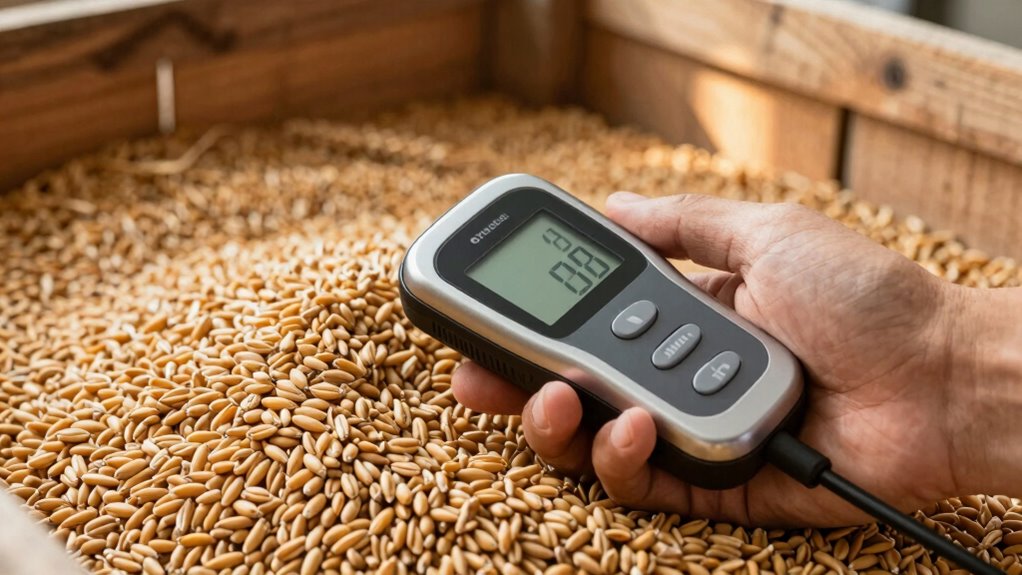
Monitoring grain moisture levels during storage is essential to preserve quality and prevent spoilage. When you keep an eye on moisture content, you can take timely action to avoid mold growth, insect infestations, and fermentation that compromise the grain’s integrity. Grain moisture meters are your primary tools for this task, providing quick and accurate readings that inform your storage decisions. To ensure these readings are reliable, it’s crucial to understand the importance of proper calibration techniques. Calibration helps your moisture meter deliver precise measurements, which are vital because even small errors can lead to significant storage issues. Regularly calibrating your device against known moisture standards or using calibration kits ensures that your readings reflect the true moisture content of your grain. This process can involve adjusting the meter’s settings or verifying its accuracy with reference samples, depending on the model you have.
By maintaining accurate calibration, you gain confidence that every measurement you take is trustworthy. This confidence allows you to make informed choices about when to dry your grain or adjust storage conditions. For example, if your moisture content exceeds recommended levels, you can promptly initiate drying procedures to prevent spoilage. Conversely, if the moisture is too low, you know that your grain is at risk of becoming overly dry, which can also affect quality. Consistently monitoring moisture content with a well-calibrated meter becomes a routine part of your storage management, helping you optimize conditions and minimize losses. Proper calibration also helps prevent measurement drift, ensuring your device remains accurate over time despite environmental changes.
Furthermore, understanding the interplay between moisture content and storage environment is key. External factors like ambient humidity and temperature influence grain moisture levels over time. Regular readings enable you to detect shifts early, giving you the chance to take corrective actions such as ventilating the storage area or adjusting aeration systems. The precision offered by properly calibrated moisture meters also helps you avoid unnecessary drying or overly frequent interventions, saving energy and reducing costs. Additionally, proper calibration ensures that your measurements stay accurate across different conditions, which is vital for long-term storage success. Recognizing the importance of environmental factors can further improve your storage strategies. Ultimately, using moisture content data wisely leads to better storage outcomes, preserving the grain’s quality and market value.
grain moisture meter for storage
As an affiliate, we earn on qualifying purchases.
As an affiliate, we earn on qualifying purchases.
Frequently Asked Questions
How Often Should I Check Grain Moisture Levels During Storage?
You should check grain moisture levels frequently during storage, ideally every few days, especially right after harvest. Proper harvest timing helps minimize initial moisture, but storage conditions can change quickly. Regular monitoring with a moisture meter ensures grains stay dry enough to prevent spoilage or mold growth. Adjust ventilation or aeration if needed, maintaining ideal conditions and safeguarding your harvest throughout storage.
Can Grain Moisture Meters Be Used for All Types of Grains?
Did you know that moisture variations can lead to a 30% loss in grain quality? Yes, grain moisture meters can be used for most grain types, but accuracy depends on the specific grain. Different grains have unique moisture absorption rates, so check your meter’s specifications. Using it across various grain types ensures you maintain ideal storage conditions and prevent spoilage, no matter what kind of grain you’re storing.
Are Digital Moisture Meters More Accurate Than Analog Ones?
Digital moisture meters are generally more accurate than analog ones, especially when you use proper calibration techniques. Their advanced sensors and consistent readings reduce human error. However, your user proficiency impacts accuracy too—if you’re unfamiliar with calibration procedures, even digital meters can give inaccurate results. To guarantee precision, regularly calibrate your device and familiarize yourself with its features, making digital meters a reliable choice for monitoring grain moisture.
How Does Ambient Temperature Affect Moisture Readings?
Ever wondered how ambient temperature impacts moisture readings? Temperature fluctuations can skew your grain moisture measurements, making calibration accuracy a challenge. When it’s hot or cold outside, your meter might give inconsistent results if not properly adjusted. To guarantee precise readings, consider calibrating your device regularly for current conditions. This way, you avoid storing grain with incorrect moisture levels, protecting your investment and maintaining ideal storage conditions.
What Are the Signs of Improper Grain Storage Related to Moisture?
If you notice musty odors, mold, or uneven grain textures, you’re likely dealing with improper moisture management. Moisture migration can cause uneven drying, leading to hotspots, while excess moisture fosters fungal growth, which damages grain quality and poses health risks. Regularly checking moisture levels with a grain moisture meter helps you identify these issues early, ensuring proper storage and preventing costly spoilage or contamination.
As an affiliate, we earn on qualifying purchases.
Conclusion
Just as a captain relies on his compass to navigate treacherous waters, you need a grain moisture meter to steer your storage safely. It’s your safeguard against spoilage, mold, and loss, guiding you to maintain ideal grain quality. Ignoring it is like sailing without a map—risky and uncertain. Embrace this tool, and like a wise mariner, you’ll ensure your harvest remains bountiful and protected against the storms of nature.
As an affiliate, we earn on qualifying purchases.
grain drying and storage monitor
As an affiliate, we earn on qualifying purchases.
As an affiliate, we earn on qualifying purchases.
Halloween Picks
halloween
As an affiliate, we earn on qualifying purchases.