
TL;DR
The James Webb Space Telescope has detected unexpected phenomena in the early universe, prompting a scientific debate. Researchers are analyzing data that may reshape cosmological models.
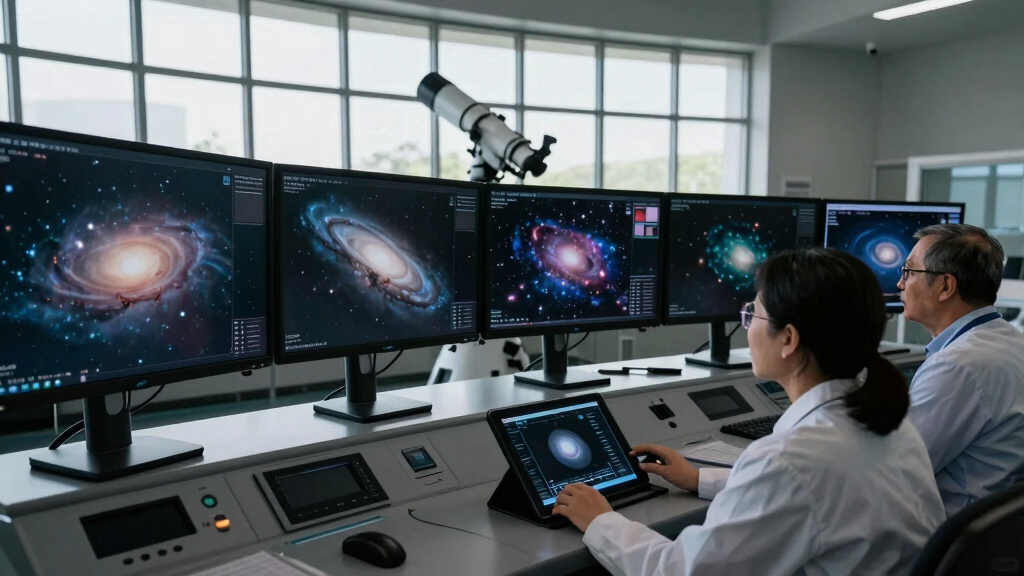
Astrophysicists are examining surprising data from the James Webb Space Telescope (Webb) that reveal anomalies in early-universe galaxies, challenging current cosmological models. This development matters because it could lead to a fundamental revision of our understanding of galaxy formation and the universe’s evolution.
Recent observations from Webb have identified galaxies at high redshift that appear more mature and massive than existing models predict for their age. These findings were announced by NASA and collaborating institutions, with data collected over the past few months.
Scientists note that some of these galaxies exhibit unexpected features, such as higher-than-anticipated star formation rates and unusual chemical compositions. Researchers emphasize that these observations are confirmed by multiple Webb instruments, including NIRCam and NIRSpec, and have undergone preliminary peer review.
While the data is verified, the interpretation remains uncertain. Some astrophysicists suggest the findings could indicate new physics or previously unknown processes in galaxy evolution, but these hypotheses are still under discussion.
Implications for Cosmology and Galaxy Formation
This unexpected data could significantly alter existing theories about how galaxies formed and evolved in the early universe. If confirmed, it may suggest that current models underestimate the speed of galaxy maturation or the influence of certain physical processes, prompting a reevaluation of cosmological theories.
The findings also have the potential to impact related fields, such as dark matter research and the understanding of cosmic inflation, making this a pivotal moment in astrophysics.

The Perfect Machine: Building the Palomar Telescope – A Poignant Chronicle of Big Science Born in Depression-Era America
As an affiliate, we earn on qualifying purchases.
As an affiliate, we earn on qualifying purchases.
Background on Webb’s Early Universe Observations
The James Webb Space Telescope, launched in December 2021, was designed to observe the universe’s earliest galaxies, aiming to shed light on cosmic dawn and reionization. Over the past year, Webb has provided unprecedented data, confirming the existence of ancient galaxies and offering insights into their properties.
Previous models, based on Hubble data and theoretical simulations, predicted that early galaxies would be smaller and less evolved. Webb’s initial findings largely aligned with expectations but left open questions about the pace and mechanisms of galaxy formation. The recent anomalies are the first indication that these models might be incomplete or require revision.
“If these findings hold up, we may need to rethink fundamental assumptions about how quickly galaxies can form and evolve after the Big Bang.”
— Professor Marcus Alvarez, cosmologist at University of Cambridge

HUGERSTAR Telescope for Adults High Powered, 90mm Aperture 800mm Refractor
- Superior Optics: 90mm aperture with multi-coated lenses
- High Magnification Range: 32X to 240X with eyepieces and Barlow lens
- Easy Object Location: 5×24 finder scope included
As an affiliate, we earn on qualifying purchases.
As an affiliate, we earn on qualifying purchases.
Unconfirmed Theories and Data Interpretation Challenges
While the observations are confirmed, their implications are still debated. Some scientists propose new physics, such as modifications to dark matter models, but these ideas are speculative and require further validation. It remains unclear whether the anomalies are due to observational errors, data processing, or genuinely new phenomena.
Researchers are also investigating whether these findings could be explained by unrecognized biases or limitations in current models of galaxy evolution.

Cosmic Shards: Stargazing Cards – Messier Catalog, 110 Astronomy Flashcards
- Portable Stargazing Tool: Compact and easy to carry
- Concise Cosmic Content: Provides essential, engaging information
- Immersive Front Design: Star maps, constellations, and telescope images
As an affiliate, we earn on qualifying purchases.
As an affiliate, we earn on qualifying purchases.
Upcoming Analyses and Webb’s Future Observations
Scientists plan to analyze additional Webb data, including deeper surveys of high-redshift galaxies, to verify the anomalies. Collaborations with other observatories, such as the Atacama Large Millimeter/submillimeter Array (ALMA), are underway to cross-validate findings.
Further peer-reviewed publications are expected in the coming months, and Webb’s scheduled mission extensions will enable ongoing observations that could clarify these early universe mysteries.

Telescope for Kids, 50mm 100x Beginner Telescope with Tripod
- Magnification Range: 20x to 100x zoom for detailed viewing
- Easy Setup: Quick assembly with tripod and accessories
- Includes Accessories: Two eyepieces, finder scope, Barlow lens
As an affiliate, we earn on qualifying purchases.
As an affiliate, we earn on qualifying purchases.
Key Questions
What specific anomalies has Webb detected?
Webb has observed galaxies at high redshift that appear more massive, mature, and star-forming than current models predict for their age. These include unusual chemical signatures and higher-than-expected star formation rates.
Could these findings be due to errors or data processing issues?
While the data has been verified through multiple instruments and preliminary peer review, scientists acknowledge that interpretation is still uncertain. Ongoing analysis aims to rule out observational errors.
Why do these findings matter for our understanding of the universe?
If confirmed, they could lead to a revision of the timeline and mechanisms of galaxy formation, impacting broader theories about cosmic evolution and fundamental physics.
When will more definitive answers be available?
Further data analysis and peer-reviewed publications are expected within the next few months. Additional observations from Webb’s extended mission are also planned to clarify these anomalies.
What are the next steps for scientists studying Webb’s data?
Researchers will conduct deeper surveys, cross-validate findings with other observatories, and develop new models to explain the anomalies. The goal is to determine whether these are signs of new physics or data artifacts.
Source: hn