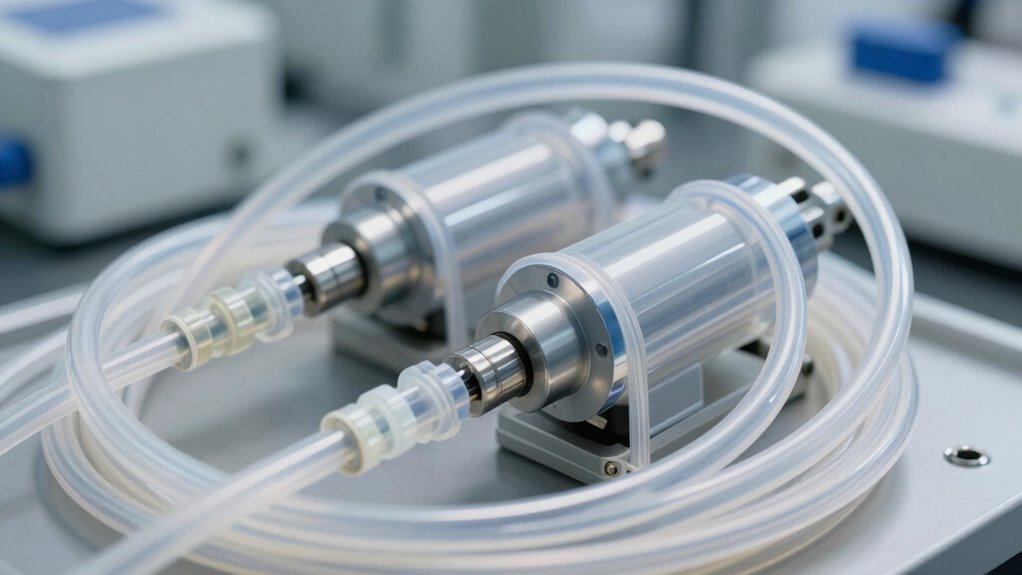

Peristaltic lab pumps are ideal for sampling and transferring fluids because they offer precise control and minimize contamination risks. You select the right tubing material and size to guarantee compatibility, durability, and consistent flow. Regular inspection and maintenance help prolong pump life and maintain accuracy. Proper setup and monitoring are essential for reliable operation over time. Keep exploring to discover techniques that maximize your pump’s performance and efficiency.
Key Takeaways
- Peristaltic lab pumps utilize flexible tubing to accurately transfer fluids without contamination.
- Proper tubing material and size ensure compatibility, durability, and consistent flow during sampling and transfer.
- Regular maintenance and inspection prevent wear, cracks, and blockages, ensuring reliable pump operation.
- Correct system setup, including priming and installation, optimizes performance and minimizes air bubbles.
- Monitoring and preventive maintenance extend tubing and pump lifespan, ensuring long-term accuracy and efficiency.
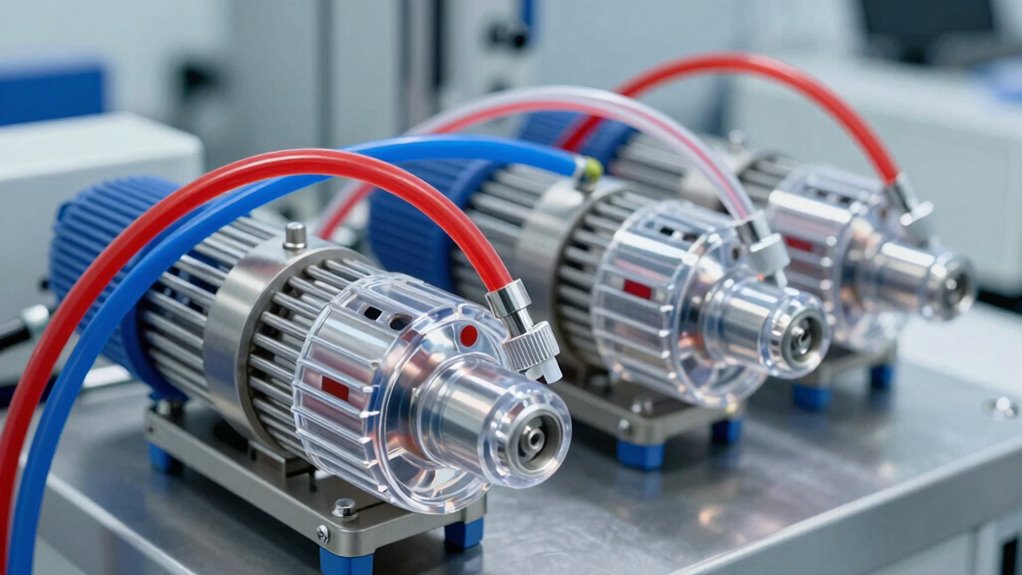
Another essential aspect of effective peristaltic pump operation is tubing selection. The tubing acts as the interface between your fluid and the pump mechanism, so choosing the right type influences accuracy, longevity, and contamination risk. Opt for tubing made from materials compatible with your fluids—whether it’s sterile, chemically resistant, or flexible. The tubing size also matters; selecting the correct inner diameter ensures you get the desired flow rate without overstressing the pump or causing leaks. When you’re setting up your system, consider the tubing’s flexibility and durability, especially if you’ll be cycling it repeatedly. Proper tubing selection not only improves performance but also reduces the frequency of replacements and maintenance, saving you time and costs in the long run. Additionally, selecting tubing with appropriate material properties can help prevent chemical degradation or contamination over time. In addition, aligning your tubing with the pump’s specifications is essential. Using incompatible or substandard tubing can lead to inconsistent flow, increased wear, or even pump failure. You should routinely inspect the tubing for signs of wear, cracks, or blockages, replacing it as needed to maintain peak operation. When you’re changing tubing, make sure to prime the system properly to prevent air bubbles, which can affect flow consistency. Proper tubing installation and regular maintenance are crucial for sustaining optimal performance. Keeping in mind the importance of system compatibility ensures your tubing performs reliably over time. Regularly monitoring system performance can help identify issues early and prevent costly downtime, ensuring your setup remains optimal. Consistent monitoring and preventive maintenance can significantly extend the lifespan of your tubing and pump system, ensuring ongoing accuracy and efficiency. These practices help you achieve precision, reduce waste, and ensure your experiments or procedures meet the highest standards.

Dr. Lab CAG60 Peristaltic Pump Tubing, 15m (17#), Neoprene, Black, Roll of 1, High Chemical & Temperature Resistance, Long Pump Life, Stable Flow Rate
- Pack Size: 15 meters (49.2 feet) roll
- Material: Neoprene for durability
- Temperature Range: -60°C to 135°C
As an affiliate, we earn on qualifying purchases.
As an affiliate, we earn on qualifying purchases.
Frequently Asked Questions
What Maintenance Is Required for Peristaltic Lab Pumps?
You need to regularly maintain your peristaltic lab pump by performing pump calibration to guarantee accurate flow rates. Check the tubing for signs of wear or damage, and replace it when necessary to prevent contamination or pump failure. Keep the rollers clean to avoid clogging, and follow the manufacturer’s guidelines for routine inspections. Proper maintenance like calibration and tubing replacement ensures your pump runs efficiently and provides reliable sampling and transfer results.
How Do Peristaltic Pumps Handle Viscous or Abrasive Fluids?
When handling viscous or abrasive fluids, you’ll find peristaltic pumps excel, but there’s more beneath the surface. Fluid viscosity can slow flow, yet the pump’s flexible tubing manages the thickest liquids with ease. However, pump abrasiveness poses a challenge—over time, it wears down the tubing. Regular inspection and choosing the right tubing material become your secret weapons, ensuring your pump maintains performance and longevity despite these tough fluids.
What Are the Typical Lifespan and Durability of Pump Components?
You can expect the lifespan of your pump components to vary based on pump material compatibility and tubing replacement frequency. Generally, high-quality materials like silicone or Tygon extend durability, lasting several months under normal use. Regular tubing replacement, especially with abrasive or viscous fluids, is essential to maintain pump efficiency. Proper maintenance and choosing compatible materials help optimize durability, ensuring your pump performs reliably over time.
Can These Pumps Be Integrated With Automated Sampling Systems?
Yes, these pumps can be integrated with automated sampling systems. You can add remote monitoring and sensor integration to enhance control and data collection. This setup allows you to track pump performance in real-time, optimize sampling procedures, and promptly address issues. By incorporating these features, you streamline operations, improve accuracy, and reduce manual oversight, making your sampling process more efficient and reliable.
Are There Any Limitations on Flow Rates for Different Applications?
You might find flow rate limitations vary based on your application. To optimize flow rate, focus on pump sizing considerations, ensuring the pump matches your desired throughput without compromising accuracy. Higher flow rates can risk increased wear or reduced precision, so balancing flow rate optimization with pump specifications is essential. Always evaluate your application’s specific requirements to select a pump that delivers consistent performance within its flow rate capacity.

Versilon FEP Tubing, 1/16" ID x 1/8" OD; 50 Ft
- Inner Diameter: 1/16 inch (1.6mm)
- Outer Diameter: 1/8 inch (3.2mm)
- Wall Thickness: 1/32 inch (0.8mm)
As an affiliate, we earn on qualifying purchases.
As an affiliate, we earn on qualifying purchases.
Conclusion
Don’t let concerns about complexity hold you back. Peristaltic lab pumps simplify sampling and transfer tasks, offering precise control and contamination-free operation. While some may worry about maintenance, regular checks guarantee longevity and peak performance. Embracing these pumps means you’re investing in reliable, efficient workflows that save you time and reduce errors. Ultimately, their benefits outweigh the initial effort, empowering you to focus on your research without interruptions or setbacks.
peristaltic pump maintenance kit
As an affiliate, we earn on qualifying purchases.
As an affiliate, we earn on qualifying purchases.

High Pressure Hydraulic Hand Pump Calibrator (Range: 0 to 600 Kg/Cm²) with Pressure and Vacuum Gauge (Range: 0 to 700 bar / 0 to 10000 PSI) for Calibration Labs | Model: SK-2300
- Dual Pressure and Vacuum Source: Hydraulic pressure and vacuum capabilities
- Built-in Fine Adjust Vernier: Precise pressure adjustments
- Controlled Pressure Release: Needle valve for safe release
As an affiliate, we earn on qualifying purchases.
As an affiliate, we earn on qualifying purchases.