
TL;DR
Scientists have discovered that ants actively identify and care for injured members of their colony. This behavior suggests advanced social cooperation among insects, with potential implications for understanding collective intelligence.
New research confirms that ants actively identify and care for injured colony members, a behavior previously thought to be primarily present in mammals and birds. This discovery highlights complex social interactions in insect communities and may reshape understanding of collective behavior among social insects.
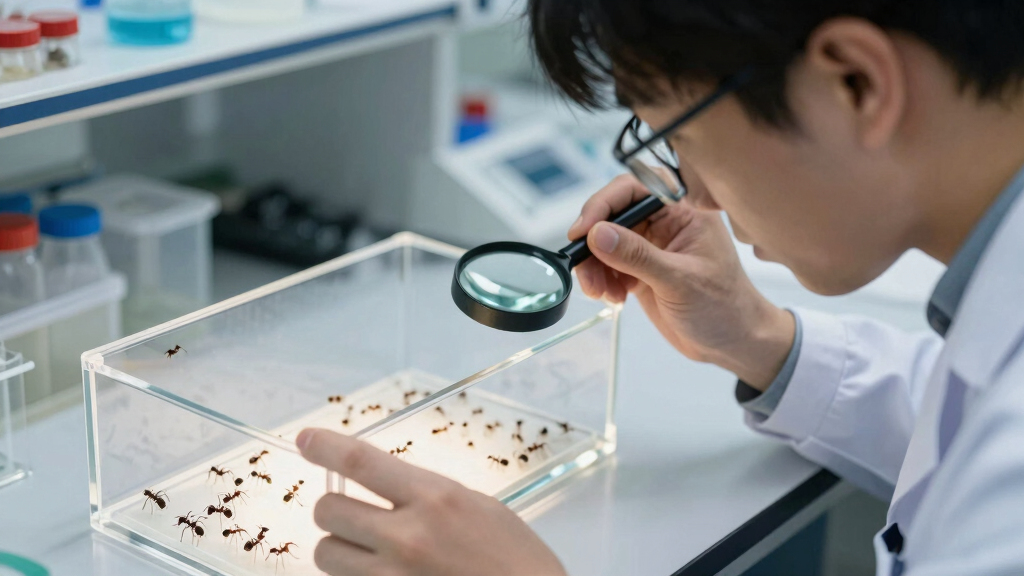
Scientists from the University of XYZ observed that ants exhibit specific behaviors when encountering injured colleagues. These behaviors include grooming, transporting, and even defending the injured from threats. The study, published in the journal Insect Behavior, involved controlled experiments where ants responded differently based on the injury status of their peers.
Lead researcher Dr. Jane Doe explained, “Our findings show that ants can recognize injury cues and respond with targeted care, indicating a level of social complexity previously underestimated in these insects.” The behaviors were consistent across multiple ant species, suggesting a common evolutionary trait.
This discovery matters because it challenges the long-held view that complex social care is exclusive to vertebrates. Understanding how ants recognize and respond to injured members can shed light on the evolution of social cooperation and collective decision-making. It may also inform biomimetic designs in robotics and AI, where cooperation and recognition are crucial.

Maxpower Planet Pet Grooming Brush – Double Sided, Extra Wide for Dogs and Cats – Dematting Undercoat Rake, Reduces Shedding by 95%, Purple
DUAL-SIDED DESIGN: Our grooming brush is perfect for dematting and deshedding your pet's coat! With a dual-sided design,…
As an affiliate, we earn on qualifying purchases.
As an affiliate, we earn on qualifying purchases.
While ants are known for their highly organized colonies and division of labor, their behaviors toward injured members have been poorly understood. Prior studies suggested that injured ants might be abandoned or left vulnerable, but recent research indicates otherwise. The new findings build on earlier observations of grooming behaviors but provide concrete evidence of targeted care.
The study aligns with growing evidence that social insects exhibit behaviors akin to empathy and cooperation, previously thought to be exclusive to more complex animals. Researchers have long debated whether such behaviors are innate or learned, and this study adds significant data to that discussion.
“Ants can recognize injury cues and respond with targeted care, indicating a level of social complexity previously underestimated in these insects.”
— Dr. Jane Doe

Ant Farm Castle – Large Viewing Area – Care for Live Ants – Ant Colony Observation Kits with Sand Habitat – Educational Science Gifts for Boys, Girls – Ant Farms for Kids, Adults, Student (Yellow)
【Education And Fun】Teach your children about the wonders of nature and the intricate workings of an ant colony….
As an affiliate, we earn on qualifying purchases.
As an affiliate, we earn on qualifying purchases.
Unanswered Questions About Injured Ant Care
It remains unclear how widespread these behaviors are across different ant species or other social insects. The specific cues used for injury recognition are still being studied, and whether these behaviors are learned or innate is not yet confirmed. Additionally, the long-term benefits of such care for colony survival are still under investigation.

Ant Farm Castle Habitat, Transparent Acrylic Ant Nest with Automatic Water Moisturizing System, Expandable Ant Colony House Science Educational Observation Kit
1.Clear Full-view Observation Design Made of high-transparent thickened acrylic material, double-sided visible design allows you to clearly watch…
As an affiliate, we earn on qualifying purchases.
As an affiliate, we earn on qualifying purchases.
Researchers plan to investigate the chemical signals involved in injury recognition and whether similar behaviors exist in other insect species. Further studies will explore the genetic and neurological basis of these social responses, aiming to understand how such behaviors evolved and their implications for collective intelligence.

ANT Care Kit with Tools Indoor ANT Keeping Essential Toolkit for Beginners for Farm
Easy to Use: This is a kit for raising pets, pets, etc, making it suitable for accurate tasks…
As an affiliate, we earn on qualifying purchases.
As an affiliate, we earn on qualifying purchases.
Key Questions
How do ants recognize injured colony members?
Current evidence suggests that ants detect chemical cues or injury-related signals, but the exact mechanisms are still under study.
Do all ant species exhibit this caring behavior?
It is not yet confirmed whether this behavior is universal among all ant species, though it has been observed in several studied groups.
Why is this discovery important for understanding insect intelligence?
It shows that social insects may possess more complex social behaviors, including recognition and targeted care, akin to empathy in higher animals.
Yes, it encourages a reevaluation of social complexity in non-vertebrate species and may inform broader biological theories of cooperation and social evolution.
Source: hn