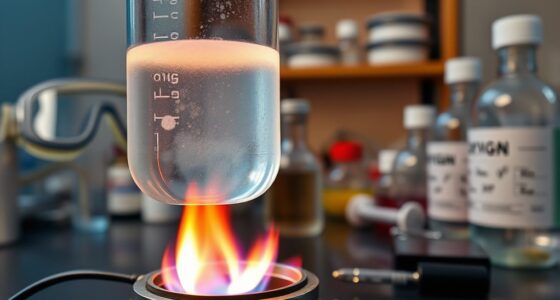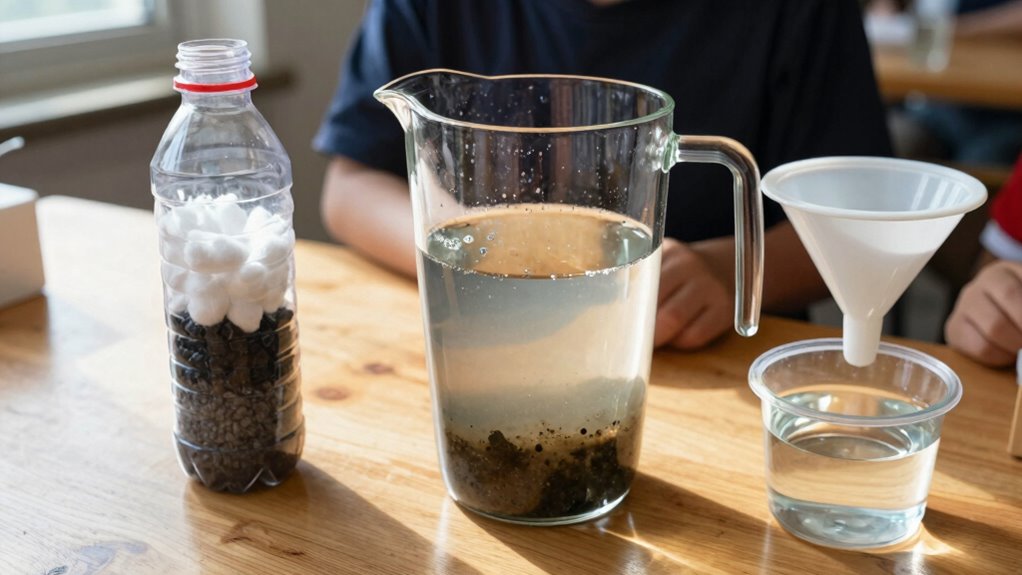

To create a simple DIY water filtration demo, start with a clean container like a plastic bottle. Cut the top off and layer coarse gravel, fine sand, and activated charcoal inside, topped with a cloth filter. Pour contaminated water slowly through the layers into a clean container below. This setup reduces dirt and some chemicals but doesn’t eliminate all pathogens, so boiling afterward is recommended. Keep exploring to discover how you can improve your filtration system further.

Prime made for students and young adults
- Fast, free delivery for dorm and study essentials
- Prime Video and Amazon Music included
- Member-only deals
Key Takeaways
- Use household items like plastic bottles, sand, gravel, and activated charcoal to build a simple water filter.
- Layer filtration materials in a specific order: coarse gravel, fine sand, and activated charcoal for effective purification.
- Place a cloth or coffee filter on top to prevent materials from washing out during pouring.
- Pour contaminated water slowly through the filter and collect the purified water underneath.
- Remember that DIY filters reduce dirt and chemicals but may not eliminate bacteria; boiling is recommended for safety.
Have you ever wondered how to improve your drinking water quality without relying on commercial filters? If so, you’re in the right place. Building your own water filtration system is a straightforward way to understand water purification and ensure you’re drinking cleaner water. The key lies in selecting proper filtration materials and arranging them effectively. You don’t need expensive equipment—just some basic household items and a bit of know-how.
Learn how to create an effective homemade water filter with simple household materials for cleaner drinking water.
The first step is understanding what water purification really involves. It’s about removing contaminants, impurities, and unwanted particles from water, making it safer to drink. When you’re choosing filtration materials, think about the different types of impurities you want to target. For example, activated charcoal is excellent for absorbing chemicals, odors, and some bacteria, while sand and gravel can trap larger particles like dirt and debris. Using multiple layers of these filtration materials will improve the overall quality of your filtered water. Incorporating filtration concepts can help you select the most effective materials and arrangement for your needs. Additionally, understanding the horsepower of electric dirt bikes can give insights into how powerful some filtration systems need to be if powered electrically or for other equipment involved. Knowing about content quality and topical authority can help you create more reliable and trustworthy DIY projects.
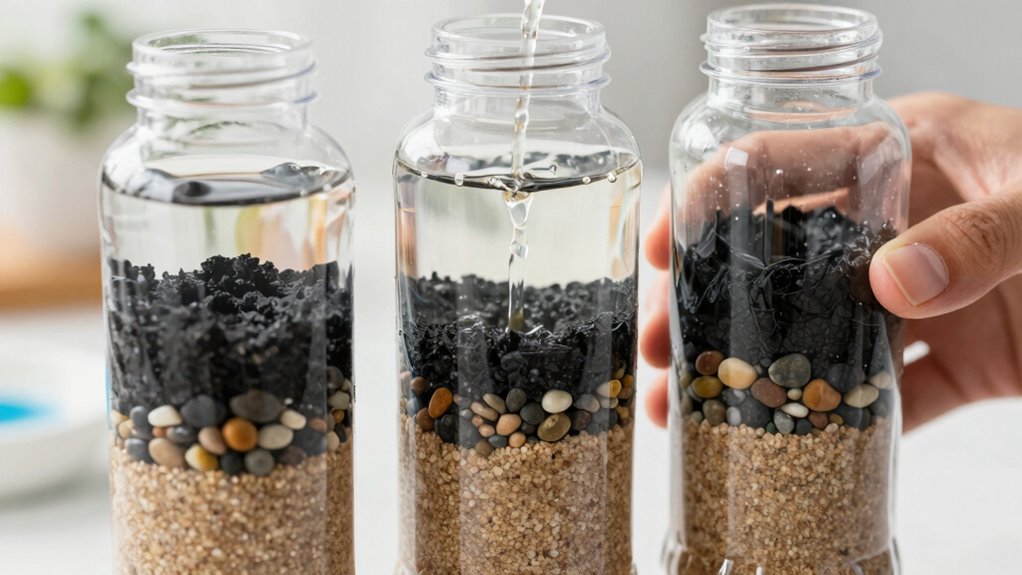
Start with a clean container, like a large plastic bottle or a bucket, to serve as your filtration chamber. Cut the top off if you’re using a bottle, so you can invert it to pour water through. Layer the filtration materials inside in a specific order: at the bottom, place fine gravel or small stones to trap larger debris; above that, add coarse sand to catch smaller particles; and finally, top it with activated charcoal, which will absorb chemicals and improve taste. If available, adding a piece of cloth or a coffee filter on top can help prevent the filtration materials from washing out when you pour water in.
When you’re ready to test your DIY filter, pour contaminated water slowly through the layered materials. Collect the filtered water in a clean container underneath. Keep in mind that this homemade filtration system isn’t perfect; it’s excellent for reducing dirt and some chemicals but may not eliminate bacteria or viruses. For full safety, you should consider boiling the filtered water or adding a chemical disinfectant afterward. Understanding the science behind sound waves can also help you explore alternative methods of water purification, such as using sound-based techniques to influence microbial activity.
This simple setup not only demonstrates the principles of water purification but also empowers you to take control of your water quality. By understanding how filtration materials work together, you get a clearer picture of how professional systems operate. Plus, it’s a cost-effective, environmentally friendly way to improve your drinking water. Incorporating knowledge of filtration concepts can help you optimize your setup for better results. Whether for emergency preparedness, outdoor adventures, or everyday use, a DIY water filtration system is a practical project that enhances your knowledge and your health.
As an affiliate, we earn on qualifying purchases.
Frequently Asked Questions
Can I Use Household Items for Filtration?
Yes, you can use household alternatives for DIY filtration, but be cautious. Items like activated charcoal, sand, and gravel are effective for basic filtering. Avoid using household items that aren’t safe or proven, like certain chemicals or plastics. Focus on simple materials to remove debris and improve water clarity. Remember, DIY filtration with household alternatives can help, but it might not remove all contaminants, so don’t rely solely on this for clean drinking water.
How Long Does the Filtration Process Take?
The filtration process typically takes about 10 to 30 minutes, depending on your setup and water quality. As you work, you’ll notice the filtration speed varies based on the type of materials used and the water’s initial clarity. If your water is murky, it may take longer to filter. Keep an eye on the flow rate to make certain you’re achieving the best filtration without rushing, which helps improve overall water quality.
Is Filtered Water Safe to Drink Immediately?
Think of filtered water as a freshly painted masterpiece—appealing but needing a moment to settle. You might be tempted to drink right away, but for water safety, it’s best to wait until filtration accuracy confirms it’s clean. Rushing could let impurities slip through, like smudges on the canvas. Giving it a little time guarantees your water is safe and tastes just right, turning your DIY effort into a truly revitalizing experience.
What Are Common Mistakes to Avoid?
You should avoid common mistakes like chemical interference and equipment contamination. Make certain to thoroughly clean your filtration equipment before use to prevent contamination. Be cautious of chemicals that might seep into the water during filtration, as they compromise safety. Using the wrong materials or unclean filters can introduce contaminants. Regularly check your setup, and replace filters as needed to guarantee the water remains safe and clean to drink.
How Often Should I Replace Filter Materials?
While filters seem durable, they actually have a limited lifespan. You should replace your filter materials according to the recommended replacement schedule, typically every 2 to 4 weeks, depending on usage and water quality. Ignoring this can result in reduced filtration efficiency and compromised water quality. Keep a close eye on your filter’s condition and change it promptly to make certain your DIY system continues to work effectively and safely.
As an affiliate, we earn on qualifying purchases.
Conclusion
Now that you’ve built your own water filter, you’re basically a modern-day Aquaman, able to turn muddy water into crystal-clear refreshment. Remember, even in a world of smartphones and space travel, simple DIY projects like this connect you to a timeless tradition of resourcefulness. So go ahead, experiment and improve your design, just like the pioneers of old. After all, sometimes the best innovations start with just a few everyday materials and a bit of curiosity.
As an affiliate, we earn on qualifying purchases.
homemade water purifier materials
As an affiliate, we earn on qualifying purchases.
As an affiliate, we earn on qualifying purchases.
Fall Picks
fall essentials
As an affiliate, we earn on qualifying purchases.