
TL;DR
Archaeologists have discovered a previously unknown city beneath Egypt’s desert, including an ancient church believed to date back to early Christianity. The find offers new evidence about historical settlements in the region.
Archaeologists have announced the discovery of a lost city beneath Egypt’s desert, which includes an ancient church believed to date back to early Christianity. The find provides new insights into the region’s historical settlements and religious history, making it a significant breakthrough in Egyptian archaeology.
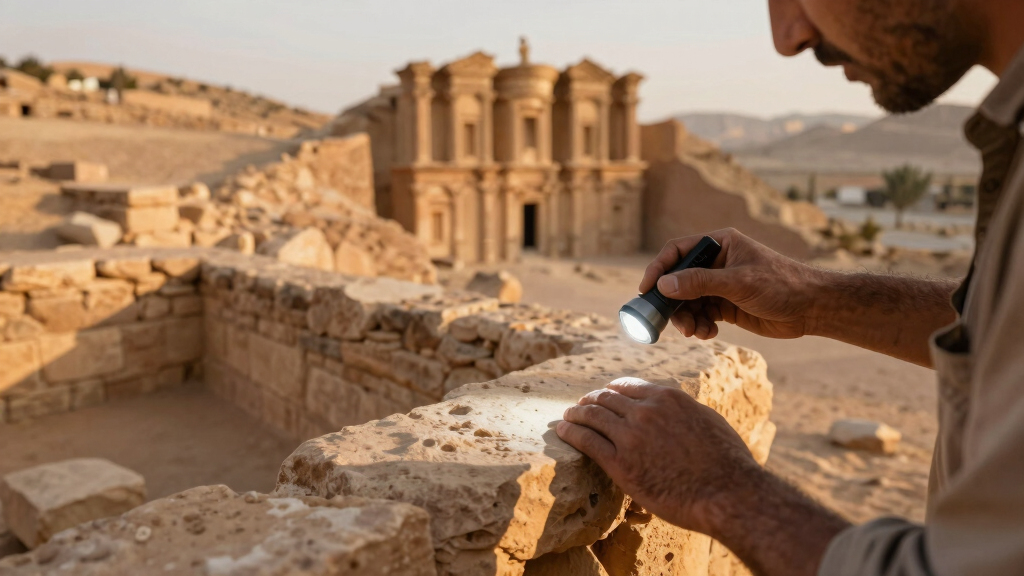
The discovery was made during recent excavations led by a team from the Egyptian Ministry of Antiquities, working in the Western Desert. The city is estimated to be over 1,500 years old, with structures that include residential buildings, public spaces, and a well-preserved church. The church features frescoes and inscriptions consistent with early Christian art, according to preliminary reports from archaeologists.
Initial surveys suggest the site was abandoned around the 7th century, possibly due to changing political or environmental conditions. The team has also uncovered pottery, coins, and other artifacts that help date the settlement and its religious structures. The discovery was announced publicly on March 15, 2026, after initial excavations confirmed the presence of these structures.
Implications for Early Christian and Egyptian History
This discovery is significant because it provides tangible evidence of early Christian communities in Egypt, which was a major center of Christianity during late antiquity. The preserved church and artifacts can shed light on religious practices, architectural styles, and daily life of early Christians in the region. It also challenges previous assumptions about the extent of Christian settlements in Egypt and their relationship with other ancient cities.

Whdifsag Ark of The Covenant Model Replica – Biblical Tabernacle with Aaron's Rod, Manna & Stone Tablets for Collectors, Religious Decor, Bible Study(Small)
【Authentic Biblical Replica】Highly Detailed Ark of the Covenant Model Faithfully crafted based on Exodus 25:10-22 descriptions, this set…
As an affiliate, we earn on qualifying purchases.
As an affiliate, we earn on qualifying purchases.
Recent Discoveries and Historical Background of Egypt’s Desert Sites
Egypt has long been a focal point for archaeological discoveries, with well-known sites like Luxor and the Pyramids of Giza drawing global attention. However, much of the desert remains unexplored, holding potential for uncovering lost cities and artifacts. Past discoveries, such as early Christian monasteries and tombs, have provided insights into Egypt’s diverse historical periods. This recent find adds to the growing body of evidence that the desert was once home to thriving communities, including early Christian groups that settled in remote areas for religious reasons.
Previous excavations in the Western Desert have uncovered Roman and Byzantine artifacts, but a city with a church of this scale is unprecedented in recent history. The site’s location and preservation state suggest it was a significant center in its time, possibly linked to trade routes or religious networks.
“This is one of the most important discoveries in recent Egyptian archaeology. The church’s frescoes and inscriptions are remarkably well-preserved, offering a window into early Christian life.”
— Dr. Ahmed El-Sayed, lead archaeologist
Egyptian archaeological excavation tools
As an affiliate, we earn on qualifying purchases.
As an affiliate, we earn on qualifying purchases.
Unanswered Questions About the Site’s Origin and Use
While the discovery confirms the existence of a city and an early Christian church, many details remain unclear. It is not yet confirmed exactly when the city was founded, how long it was inhabited, or the full extent of its significance. The precise reasons for its abandonment and whether it had links to other known settlements are still under investigation. Further excavations and analysis are needed to clarify these points.

Helikon-Tex Bushcraft Line, Chest Pack Numbat Coyote Brown
Lightweight mesh shoulder straps
As an affiliate, we earn on qualifying purchases.
As an affiliate, we earn on qualifying purchases.
Upcoming Excavations and Research Goals for the Site
Researchers plan to conduct detailed excavations to uncover more artifacts, inscriptions, and structural details. Radiocarbon dating and other scientific tests are scheduled to establish a more precise timeline. The team also aims to explore the site’s connections to other ancient settlements and to better understand its role in early Christian history. Public announcements and academic publications are expected as new findings emerge.
early Christian artifacts display
As an affiliate, we earn on qualifying purchases.
As an affiliate, we earn on qualifying purchases.
Key Questions
How old is the city and the church?
The city is estimated to be over 1,500 years old, dating back to the early medieval period, with the church likely built around the same time or slightly earlier.
What makes this discovery unique?
It is the first known large-scale city with a well-preserved early Christian church found beneath Egypt’s desert, offering rare insights into early Christian communities in the region.
Will the site be open to the public?
It is too early to determine if the site will be accessible to tourists; further excavations and preservation efforts are ongoing.
What artifacts have been found so far?
Initial finds include pottery, coins, frescoes, inscriptions, and structural remains of the church and surrounding buildings.
What are the next steps for archaeologists?
Further excavations, scientific dating, and analysis of artifacts are planned to better understand the site’s history and significance.
Source: hn





![The early History of the Singular Value Decomposition (1993) [pdf]](https://varietychem.com/wp-content/uploads/2026/07/the-early-history-of-the-singular-value-decomposition-1993-pdf-featured-260x140.jpg)