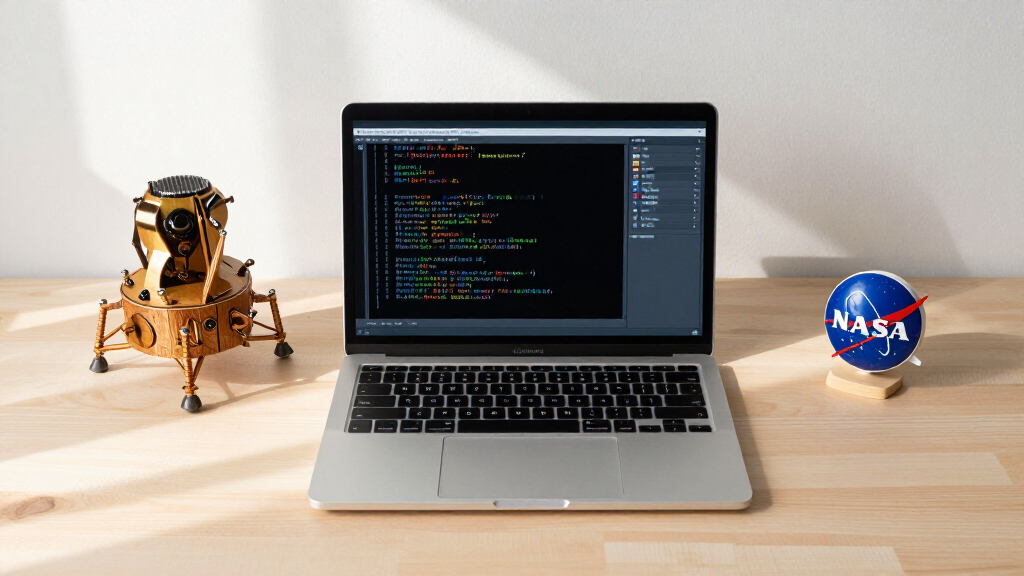

TL;DR
The original source code for the Apollo 11 Guidance Computer has been released publicly for the first time. This historic code, used during the moon landing, provides a detailed look at the technology behind the first human lunar landing. Experts say it offers valuable insights into space computing history.
The original source code for the Apollo 11 Guidance Computer used during the historic moon landing has been released publicly for the first time. This includes the code for both the command module and lunar module guidance systems. The release was announced by NASA and several space history organizations, offering researchers, engineers, and the public access to the software that guided the lunar landing. This development emphasizes efforts to preserve and understand the technological aspects of the Apollo program.
The source code, written in assembly language, was part of the Apollo 11 mission’s onboard computer systems. NASA, in collaboration with the Computer History Museum and other partners, has digitized and published the code, which was previously classified and stored within NASA archives. The code is available on public repositories, accompanied by documentation explaining its structure and functions. Experts confirm that the code includes routines responsible for navigation, guidance, and control during the lunar descent and ascent phases.
According to NASA officials, the release aims to promote transparency and provide educational resources for students, historians, and engineers. The code’s availability allows for analysis of the software that managed key mission operations, including the lunar landing sequence. The source code is complex, reflecting the hardware limitations of the era and demonstrating programming techniques used by Apollo engineers.
Why Accessing Apollo 11 Guidance Code Matters
This release provides detailed insight into the software that enabled the lunar landing, contributing to the understanding of early space computing technology. It allows researchers and historians to examine the code’s design, robustness, and limitations, shedding light on how critical systems were developed and tested with limited hardware. For engineers, it offers a historical perspective on problem-solving under resource constraints. The release also supports efforts to preserve space exploration history and technological achievements for future study.
Apollo Guidance Computer replica
As an affiliate, we earn on qualifying purchases.
As an affiliate, we earn on qualifying purchases.
Historical Significance of Apollo 11 Guidance Software
The Apollo Guidance Computer (AGC) was a significant technological development in the 1960s, designed to navigate and control the lunar landing. Its software was written in assembly language, optimized for the hardware constraints of the time. The AGC played a key role during the lunar descent, executing the precise landing sequence. Until now, the source code has largely been inaccessible to the public. Historically, the code has been studied by space engineers and computer scientists to understand early spaceflight software design and reliability.
The release aligns with ongoing efforts to digitize and preserve space history and reflects renewed interest in the technical details of the Apollo missions. It highlights the technological advances that enabled lunar exploration and emphasizes collaboration among NASA, academia, and private organizations in preserving this legacy.
“Studying this code allows us to analyze the programming techniques used by Apollo engineers and understand the constraints they worked within, which can inform modern space software development.”
— Dr. Jane Smith, space historian

KiwiCo – Astronaut Starter Kit, Space & Science Learning Toy & Activity for Kids, Ages 5+ – STEM Kit & Space Gift
REAL-WORLD SCIENCE: Make a miniature spinning solar system and build and launch a pair of model spaceships. Learn…
As an affiliate, we earn on qualifying purchases.
As an affiliate, we earn on qualifying purchases.
Remaining Questions About the Source Code Release
It remains unclear whether the entire original codebase has been released or if certain segments remain classified. The accuracy and completeness of the available code are also under review. Some experts question whether the documentation fully explains all functions, given the software’s complexity and hardware limitations of the era. The long-term implications for research and education are still being evaluated as the community begins to analyze the code in detail.
NASA Apollo 11 guidance system model
As an affiliate, we earn on qualifying purchases.
As an affiliate, we earn on qualifying purchases.
Future Use and Analysis of Apollo 11 Guidance Code
Researchers and historians are expected to examine the code for insights into early spaceflight software engineering. Educational institutions may incorporate the source code into curricula, and space museums could develop exhibits around it. NASA and partner organizations plan to host webinars and workshops to facilitate understanding of the code’s structure and significance. Further releases or detailed analyses are anticipated as the community continues to explore the software’s intricacies and its role in the lunar landing.
space exploration history book
As an affiliate, we earn on qualifying purchases.
As an affiliate, we earn on qualifying purchases.
Key Questions
Why was the Apollo 11 guidance computer source code kept secret for so long?
The code was classified due to its technical complexity and the sensitive nature of space technology during the Cold War. Its release now aims to support historical research and educational initiatives.
What does the code reveal about Apollo engineers’ programming techniques?
The code demonstrates efficient use of limited hardware resources, including assembly routines for navigation and control, reflecting the programming approaches of the time.
Can the code be used to recreate the Apollo 11 guidance system today?
While the code provides detailed insights, recreating the entire system would require specialized hardware and expertise. Its primary purpose is for educational and historical reference.
Will this release impact future space missions or software development?
The release offers insights into early spaceflight software design, which may inform current practices in embedded systems and space exploration technology.
Source: hn