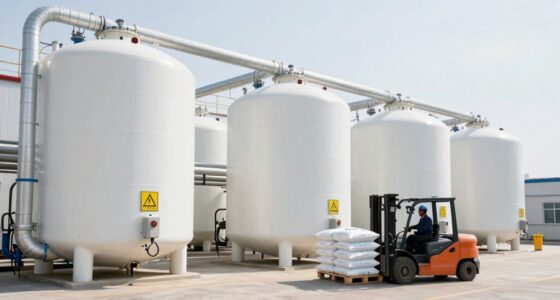

To enhance nitrogen use efficiency, focus on improving soil health with organic matter, practicing crop rotation, and timing fertilizer applications carefully. Incorporate cover crops to recycle nitrogen and prevent leaching. Use precision agriculture tools like soil testing and remote sensing to apply fertilizers more accurately. Combining these strategies with advanced fertilizers and integrated practices boosts crop yields and reduces environmental impact. Keep exploring these methods to unseal even more sustainable farming solutions tailored to your needs.
Key Takeaways
- Implement crop rotation and cover crops to naturally enhance nitrogen cycling and reduce synthetic fertilizer reliance.
- Use soil testing and remote sensing tools for precise, timely nitrogen application aligned with crop needs.
- Incorporate organic matter and improve soil health to boost microbial activity and nitrogen availability.
- Apply split fertilizer doses and utilize slow-release formulations to minimize nitrogen losses through leaching and volatilization.
- Combine integrated practices like soil management, technology, and crop planning for sustainable nitrogen use efficiency.

Improving nitrogen use efficiency (NUE) is vital for sustainable agriculture and reducing environmental impact. When you focus on optimizing how plants absorb and utilize nitrogen, you not only boost crop yields but also minimize nitrogen runoff and emissions that harm ecosystems. One of the most effective ways to achieve this is by maintaining healthy soil. Healthy soil provides a balanced supply of nutrients, good structure, and active microbial communities that enhance nitrogen cycling. By improving soil health, you create an environment where plants can access nitrogen more effectively, reducing the need for excessive fertilizer application. Incorporating organic matter, such as compost or cover crops, helps build soil structure and promotes beneficial microorganisms that assist in nitrogen fixation and mineralization, making nitrogen more available to crops when they need it most.
Healthy soil boosts nitrogen efficiency, reducing fertilizer needs and supporting sustainable, productive farming systems.
Crop rotation plays a vital role in enhancing NUE as well. When you rotate crops thoughtfully, you interrupt pest and disease cycles, but you also influence soil nitrogen dynamics positively. For instance, including legumes in your crop rotation introduces plants capable of fixing atmospheric nitrogen through symbiosis with rhizobia bacteria. This biological nitrogen fixation naturally enriches the soil, decreasing your reliance on synthetic fertilizers. Additionally, rotating crops with varying root structures and nutrient demands improves soil aeration and reduces nutrient depletion. This strategic practice ensures that nitrogen is more evenly distributed and accessible to subsequent crops, boosting their growth and nitrogen uptake efficiency.
Another key strategy involves timing and precision in fertilizer application. Instead of applying large amounts of nitrogen at once, you can use split applications aligned with the crop’s growth stages. This approach guarantees that nitrogen is available when plants need it most, reducing losses from leaching and denitrification. Technologies like soil testing and remote sensing help you monitor nitrogen levels in real-time, allowing for more exact adjustments. Using slow-release or stabilized fertilizers can further improve NUE by providing a steady supply of nitrogen over time, minimizing waste and environmental runoff.
Incorporating cover crops during off-season periods is another effective tactic. Cover crops, such as clover or vetch, take up residual nitrogen and prevent it from leaching away. When you terminate these cover crops, their biomass decomposes, releasing nitrogen gradually back into the soil for the next planting cycle. This natural recycling reduces your dependency on synthetic nitrogen inputs and promotes a more sustainable nutrient cycle.
Ultimately, integrating soil health practices with crop rotation, timing, and advanced technologies creates a thorough approach to enhancing nitrogen use efficiency. By doing so, you support healthier soils, more resilient crops, and a healthier environment, all while maintaining productive and profitable farming systems.

7 in 1 Soil Tester, Nitrogen Phosphorus Potassium NPK Tester, Handheld Soil PH Meter Kit, Temperature, Conductivity, Moisture, EC Meter for Petrochemical, Agriculture – Yellow
【7 IN 1 MULTIFUNCTIONAL SOIL TESTER】: Discover the power of our 7 in 1 Fast Soil Tester, which…
As an affiliate, we earn on qualifying purchases.
As an affiliate, we earn on qualifying purchases.
Frequently Asked Questions
How Does Soil Health Influence Nitrogen Use Efficiency?
Soil health directly influences your nitrogen use efficiency by supporting a vibrant soil microbiome that promotes effective nutrient cycling. When your soil is healthy, beneficial microbes break down organic matter and convert nitrogen into forms plants can absorb, reducing wastage. Healthy soil also improves retention and minimizes leaching, ensuring you get the most out of your nitrogen inputs. By maintaining good soil health, you optimize nitrogen availability and boost crop productivity.
Can Organic Farming Improve Nitrogen Utilization Better Than Synthetic Methods?
Yes, organic farming can improve nitrogen utilization better than synthetic methods. By using organic fertilizers, you provide nutrients slowly and sustainably, reducing runoff and leaching. Implementing crop rotation, you enhance soil health, build organic matter, and naturally replenish nitrogen levels. These practices work together to optimize nitrogen use, increase crop yields, and promote environmental sustainability, making organic farming a more efficient and eco-friendly approach to managing nitrogen in your fields.
What Role Do Microbial Inoculants Play in Nitrogen Efficiency?
Microbial inoculants boost your nitrogen efficiency by promoting nitrogen fixation, where microorganisms convert atmospheric nitrogen into plant-usable forms. When you apply these inoculants, they enhance soil health and increase crop yields by naturally supplying nitrogen, reducing your reliance on synthetic fertilizers. Incorporating microbial inoculants into your farming practices supports sustainable nitrogen management, making your system more environmentally friendly and cost-effective while ensuring your plants get the nutrients they need to thrive.
How Do Climate Change Impacts Affect Nitrogen Management Strategies?
As climate variability intensifies, you face unpredictable weather patterns that disrupt nitrogen management. Droughts dry out soils, reducing nitrogen uptake, while heavy rains wash away nutrients, increasing emissions. To adapt, you must implement emission mitigation strategies like precision application and cover cropping. These approaches help you maintain nitrogen efficiency despite shifting climate conditions, ensuring your practices are resilient and sustainable amid the changing environment.
Are There Specific Crop Varieties More Efficient in Nitrogen Uptake?
Yes, certain crop varieties are more efficient in nitrogen uptake. You should look for specific crop varieties bred for higher nitrogen efficiency, as they can absorb and utilize nitrogen better, reducing fertilizer needs. These varieties often have improved root systems and metabolic traits that enhance nitrogen use. By choosing the right crop variety, you can boost nitrogen efficiency, minimize environmental impacts, and increase your overall crop productivity effectively.

Remote Sensing in Precision Agriculture: Transforming Scientific Advancement into Innovation (Earth Observation)
As an affiliate, we earn on qualifying purchases.
As an affiliate, we earn on qualifying purchases.
Conclusion
By adopting advanced strategies and technologies, you can markedly improve nitrogen use efficiency, reducing environmental impact and increasing crop yields. While some might worry about the costs or complexity, investing in precision agriculture and best management practices ultimately saves money and benefits the ecosystem. Embracing these innovations isn’t just beneficial—it’s essential for sustainable farming. With careful implementation, you’ll see both economic gains and a healthier environment, proving that efficiency and sustainability go hand in hand.

Milorganite All-Purpose Eco-Friendly Slow-Release Nitrogen 6-4-0 Fertilizer, 32 lb Bag – for Lawns, Flowers, and Gardens – Includes Bonus Feeding & Spreader Tips Brochure
Bonus brochure includes seasonal application timing, spreader settings, and tips for lawns, gardens, and trees.
As an affiliate, we earn on qualifying purchases.
As an affiliate, we earn on qualifying purchases.
![No-Till Cover Crop 13-Seed Mix (1 lb. Bag): [50% Clovers Plus Fenugreek, Vetch, Flax, Cowpeas, Buckwheat, Forage Peas, Millet, Lentils, Crimson Clover, Sweet Yellow, White Clover, Medium Red Clover]](https://m.media-amazon.com/images/I/61tz3UL4ZfL._SL500_.jpg)
No-Till Cover Crop 13-Seed Mix (1 lb. Bag): [50% Clovers Plus Fenugreek, Vetch, Flax, Cowpeas, Buckwheat, Forage Peas, Millet, Lentils, Crimson Clover, Sweet Yellow, White Clover, Medium Red Clover]
High-Quality, Nitro-Coated, All-Natural Seed Mix, From USA only
As an affiliate, we earn on qualifying purchases.
As an affiliate, we earn on qualifying purchases.