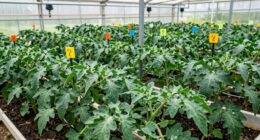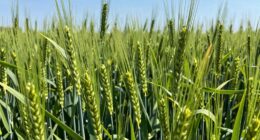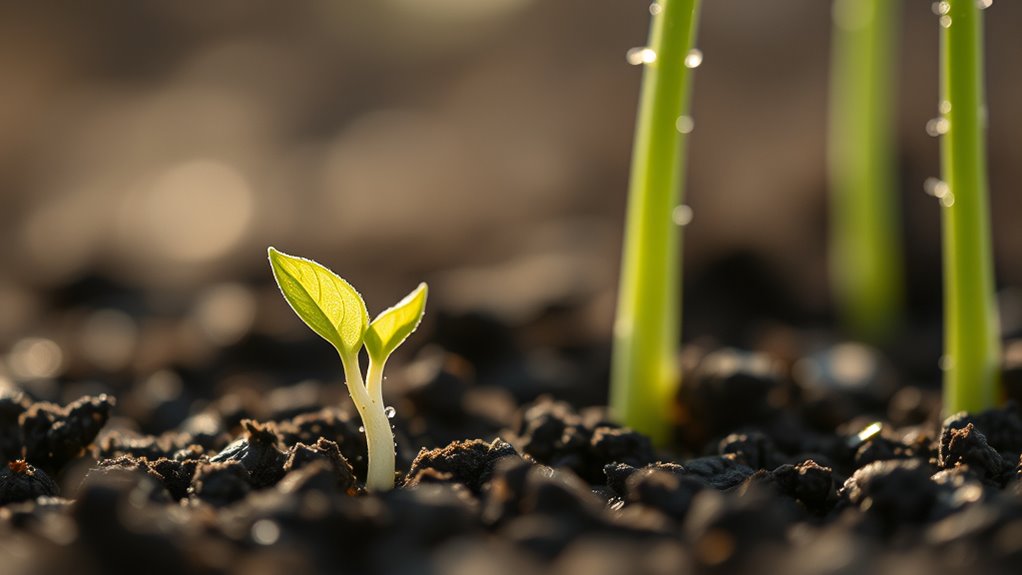

Gibberellins are hormones that make your plants grow taller by promoting stem elongation and help seeds sprout by activating genes that stimulate cell growth. They do this by increasing cell wall flexibility and mobilizing stored nutrients, especially when environmental conditions are favorable. Their levels are controlled by environmental signals like light and water, ensuring growth occurs at the right time. Keep exploring to discover how these hormones coordinate plant development in detail.
Key Takeaways
- Gibberellins promote stem elongation by stimulating cell division and elongation in plant stems.
- They increase cell wall extensibility, enabling taller and stronger stems for better sunlight access.
- During seed germination, gibberellins activate enzymes that weaken seed coats and mobilize stored nutrients.
- They are synthesized in response to environmental cues like moisture and warmth, ensuring germination occurs optimally.
- Gibberellin levels are regulated by synthesis and degradation, aligning growth responses with external and internal signals.

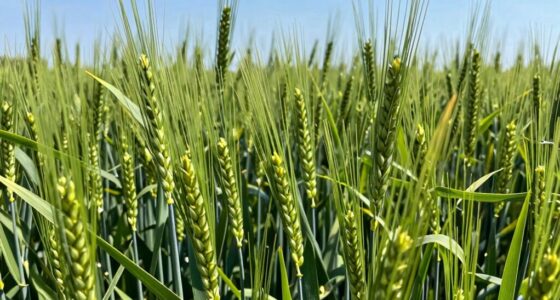
Have you ever wondered how plants control their growth and overcome dormancy? The secret lies in a complex interplay of hormonal regulation and environmental influences. Among the key hormones involved, gibberellins stand out as essential players that promote stem elongation and trigger seed germination. When conditions are just right, these hormones activate specific genes that stimulate cell division and elongation, helping your plant grow taller and stronger. But their activity isn’t random; it’s finely tuned by signals from the environment, such as light, temperature, and water availability.
Gibberellins balance growth and dormancy, responding to environmental cues for healthy plant development.
In terms of hormonal regulation, gibberellins act as messengers, coordinating growth responses with internal and external cues. For stem elongation, they increase cell wall extensibility and promote cell division in the shoot apical meristem. This results in longer, more vigorous stems that allow the plant to reach for sunlight more effectively. The levels of gibberellins within the plant are tightly controlled by synthesis and degradation processes, ensuring growth occurs only when it’s advantageous. When environmental conditions are favorable—like adequate light and warmth—plants ramp up gibberellin production, signaling that it’s time to grow. Conversely, during unfavorable conditions, their levels decline, and growth slows or stops, conserving resources until circumstances improve.
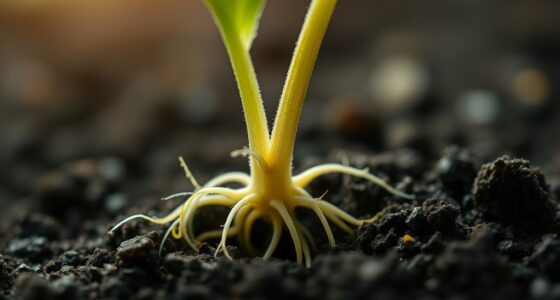
Seed germination provides another example of how hormonal regulation and environmental influences work together. When a seed is exposed to the right environmental cues—such as moisture, warmth, and oxygen—gibberellins are synthesized within the embryo. These hormones then travel to the seed’s tissues, breaking dormancy by stimulating enzymes that weaken seed coats and mobilize stored nutrients. This process allows the seed to sprout and develop into a seedling. The presence of light, temperature changes, and water availability directly influence gibberellin production, ensuring that germination only occurs when conditions are suitable for seedling survival.
Your understanding of this hormonal control highlights how plants are finely attuned to their surroundings. By adjusting gibberellin levels in response to environmental signals, plants optimize their growth and development. This delicate balance between internal hormonal cues and external environmental influences allows them to thrive in diverse conditions. So, next time you see a plant growing tall or sprouting after a rainy day, remember that gibberellins are silently orchestrating this growth, responding to the environment and guiding the plant’s journey from seed to maturity.

Gibberellic Acid 90%+ for Plants 26g GA3, .15ml Measuring Spoon, Instructions, 232 pg Plant Bible ebook & The Gibberellic Advantage on Request
gibberellic acid for plants 26g GA3 .15ml measuring spoon, instructions, 232 pg plant bible, & The Gibberellic Advantage…
As an affiliate, we earn on qualifying purchases.
As an affiliate, we earn on qualifying purchases.
Frequently Asked Questions
How Do Gibberellins Interact With Other Plant Hormones?
You see that gibberellins interact with other plant hormones through hormonal synergy, enhancing or moderating each other’s effects. During signal transduction, gibberellins often work with auxins or cytokinins to promote growth processes like stem elongation and seed germination. This interaction guarantees plants respond efficiently to environmental cues, coordinating development. By influencing hormone balance, gibberellins help optimize growth and adaptation in various conditions.
Are Gibberellins Used Commercially to Enhance Crop Yields?
Imagine lush fields bursting with tall, healthy plants—gibberellins make this possible. Yes, they’re used in commercial applications to enhance crop yields, promoting stem growth and seed germination. Farmers apply these hormones to boost productivity and ensure better harvests. By manipulating gibberellin levels, you can help crops grow stronger and taller, ultimately improving food security and profitability. Their role in crop enhancement is essential for modern agriculture.
What Environmental Factors Influence Gibberellin Production?
You should know that light intensity and soil nutrients greatly influence gibberellin production. When light is abundant, plants boost gibberellin synthesis, promoting growth. Similarly, nutrient-rich soil, especially with adequate nitrogen and potassium, encourages higher gibberellin levels, supporting stem elongation and seed germination. By optimizing these environmental factors, you can enhance plant development and improve crop yields effectively.
Can Gibberellins Be Applied to Control Plant Growth Artificially?
Applying gibberellins synthetically is like giving plants a boost, helping you control their growth more precisely. You can use them for growth regulation, encouraging taller stems or faster seed germination. This method allows you to manage plant development effectively, especially in agriculture or horticulture. Just remember, proper dosage and timing are key to prevent unintended effects and ensure your plants grow just as you want.
Do Gibberellins Affect Plant Resistance to Pests and Diseases?
Gibberellins mainly promote growth, but they don’t directly improve pest resistance or reduce disease susceptibility. In fact, increased stem elongation can make plants more vulnerable to pests and diseases by weakening structural defenses. However, you can use gibberellins alongside other pest-resistant strategies to maintain healthy plants. Keep in mind, their primary role is enhancing growth, not boosting pest resistance or lowering disease susceptibility.

Garden Safe TakeRoot Rooting Hormone for Plants, 2-Ounce (1 Pack) Made in USA
As an affiliate, we earn on qualifying purchases.
As an affiliate, we earn on qualifying purchases.
Conclusion
Understanding how gibberellins influence stem elongation and seed germination helps you appreciate the intricate dance of plant growth. These hormones are key players, guiding plants from tiny seeds to towering structures. By grasping their role, you realize that nature’s growth process isn’t just a walk in the park—it’s a finely tuned system. When you see plants thrive, remember, they’re taking things in stride, thanks to the powerful action of gibberellins.
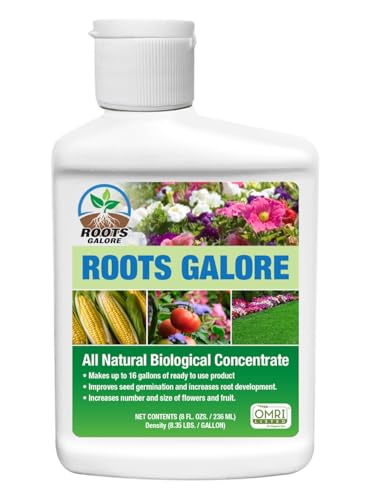
Roots Galore RG800147 Fertilizer – Improves Seed Germination & Root Growth, 8 oz Liquid Concentrate
ROOT DEVELOPMENT & PLANT GROWTH: Boosts root mass for stronger, deeper roots to access nutrients. Improves seed germination…
As an affiliate, we earn on qualifying purchases.
As an affiliate, we earn on qualifying purchases.
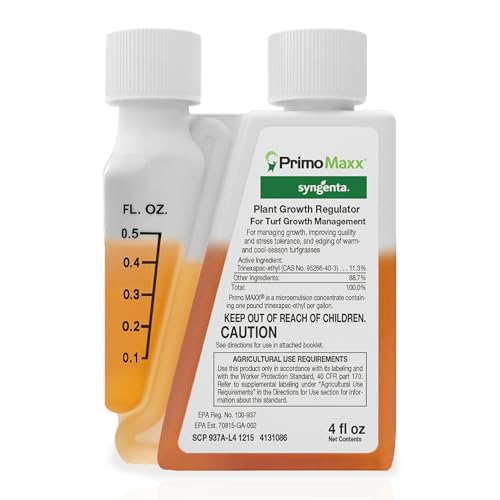
Primo Maxx Plant Growth Regulator
Useful in the management of difficult-to-mow areas and can be used to minimize the need for edging turfgrass
As an affiliate, we earn on qualifying purchases.
As an affiliate, we earn on qualifying purchases.