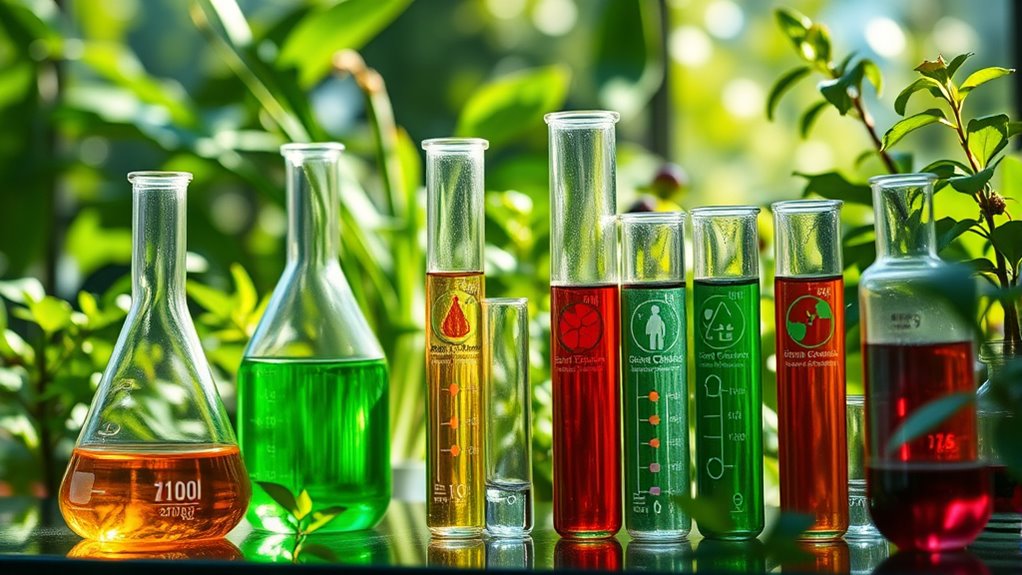

Understanding the 12 principles of green chemistry helps you design sustainable and safer chemical processes by focusing on waste reduction, energy efficiency, and the use of eco-friendly materials. It encourages you to create reactions that produce fewer byproducts, use reusable catalysts, and minimize hazardous substances. By adopting these principles, you can contribute to environmentally responsible innovation. Exploring these concepts further will reveal practical ways to make your chemical practices more sustainable and responsible.
Key Takeaways
- The 12 Principles promote designing chemical processes that reduce waste, toxicity, and environmental impact.
- They emphasize using safer, renewable, and biodegradable materials over hazardous substances.
- Process efficiency, energy conservation, and reusable catalysts are central to sustainable chemistry practices.
- Lifecycle assessment and pollution prevention are key to minimizing long-term environmental harm.
- Responsible innovation encourages eco-friendly solutions aligned with sustainable development goals.
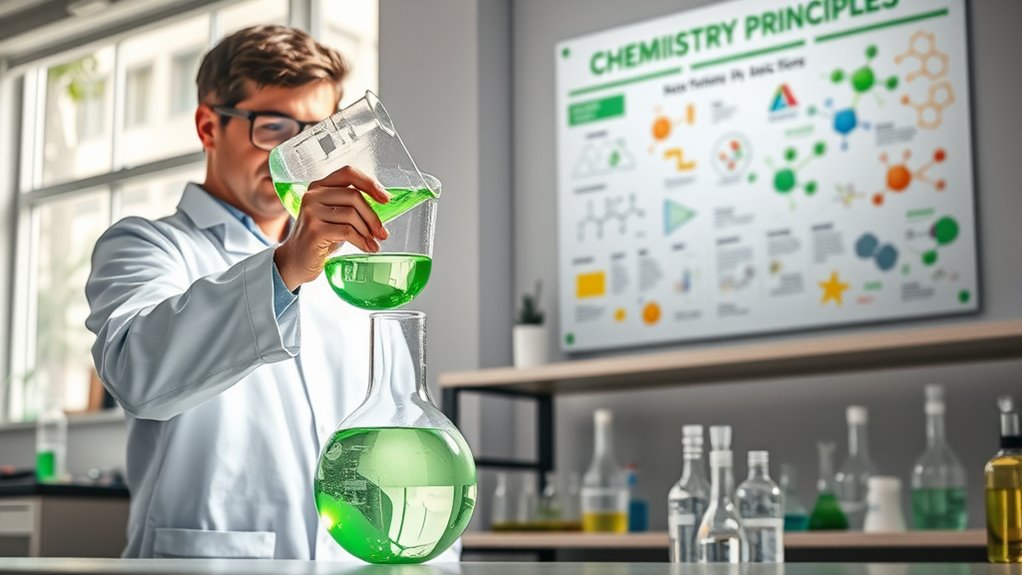
Have you ever wondered how chemistry can be safer for the environment? Green chemistry offers a way to achieve that by emphasizing sustainable practices and the use of eco friendly materials. Instead of relying on hazardous chemicals or processes that harm ecosystems, green chemistry encourages designing products and methods that minimize environmental impact from the start. This approach isn’t just about reducing waste; it’s about fundamentally reshaping how chemical processes are conceived and executed to be more responsible and sustainable.
At the core of green chemistry are principles that guide you in creating safer, more sustainable products. One key idea is designing chemical reactions that produce fewer byproducts or waste. This means you focus on processes that are inherently more efficient, using fewer resources and generating less pollution. For example, choosing catalysts that are reusable or selecting reactions that occur under milder conditions helps you reduce energy consumption and avoid toxic emissions. These practices align with sustainable practices, ensuring that your work contributes to a healthier planet.
Another essential principle involves selecting eco friendly materials whenever possible. Instead of relying on toxic solvents or hazardous reagents, you opt for safer alternatives that are biodegradable or derived from renewable resources. This shift not only reduces the environmental footprint but also improves safety in laboratories and manufacturing facilities. For instance, using water or ethanol instead of chloroform or benzene as solvents minimizes health risks and environmental hazards. By prioritizing eco friendly materials, you’re actively supporting the development of greener products and processes that are compatible with ecological systems.
Implementing green chemistry principles also means thinking ahead about the lifecycle of your chemicals. You aim to design substances that are less persistent in the environment, reducing long-term pollution. This can involve using biodegradable compounds or developing processes that recover and recycle materials efficiently. Such practices ensure that your innovations don’t just serve immediate needs but also contribute to a sustainable future.
Additionally, advancements in catalyst design, such as the use of reusable catalysts, exemplify how green chemistry can enhance efficiency and reduce waste in chemical reactions. Ultimately, embracing green chemistry principles equips you to make smarter choices—choices that favor sustainability and safety. By integrating sustainable practices and eco friendly materials into your work, you help reduce the negative impact of chemical processes on the environment. This proactive approach not only advances scientific progress but also fosters responsibility toward the planet. Green chemistry isn’t just a set of rules; it’s a mindset that encourages you to innovate thoughtfully, with an eye on creating a cleaner, safer world for generations to come.

Catalysts
As an affiliate, we earn on qualifying purchases.
As an affiliate, we earn on qualifying purchases.
Frequently Asked Questions
How Does Green Chemistry Impact Industrial Manufacturing Processes?
Green chemistry transforms your industrial manufacturing processes by emphasizing sustainable solvents and waste reduction. You’ll reduce hazardous materials, making operations safer and more environmentally friendly. Incorporating sustainable solvents minimizes toxic emissions and lowers disposal costs. Waste reduction strategies help you optimize resource use, cutting down on excess materials and energy consumption. Overall, green chemistry enables you to produce cleaner, safer products while improving efficiency and aligning with eco-conscious regulations.
What Are the Economic Benefits of Adopting Green Chemistry Practices?
Imagine cutting through costs like a hot knife through butter—that’s what adopting green chemistry can do for your business. You’ll see significant cost savings through reduced waste and energy use, while also boosting your market competitiveness. Green practices attract eco-conscious consumers and meet strict regulations, giving you a financial edge. Embracing these principles turns sustainability into a profit-generating engine, helping your company thrive in an eco-aware economy.
How Can Consumers Identify Products Made With Green Chemistry?
You can identify products made with green chemistry by looking for eco labels on packaging, which indicate environmentally friendly practices. Also, check ingredient transparency; companies committed to green chemistry often list ingredients clearly and avoid harmful chemicals. By paying attention to these signs, you guarantee you’re choosing products that prioritize sustainability and safety, supporting greener choices in your everyday life.
What Are the Challenges in Implementing Green Chemistry Globally?
You face challenges in implementing green chemistry globally, mainly due to inconsistent regulations and limited awareness across countries. Technological barriers also hinder development, as some regions lack access to advanced eco-friendly technologies. To overcome these obstacles, you need to promote international collaboration, invest in research, and adapt green chemistry principles to local industries. This way, you can help accelerate global adoption and create more sustainable practices worldwide.
How Does Green Chemistry Influence Regulatory Policies and Standards?
Think of green chemistry as a compass guiding policy development. It influences environmental regulations by encouraging safer, more sustainable practices. For example, when a company adopted green solvents, regulators updated standards to promote their use. Your awareness of green chemistry’s principles helps shape policies that prioritize health and environment, driving change at local and global levels. This proactive approach guarantees regulations evolve to support innovative, eco-friendly solutions.

Quality Chemical Denatured Ethyl Alcohol 190 Proof/Laboratory Grade/Not for Use on Body or Skin/Made in USA – 128 oz (Combo)
✔️Pure Denatured Alcohol – 190 proof
As an affiliate, we earn on qualifying purchases.
As an affiliate, we earn on qualifying purchases.
Conclusion
By embracing these 12 principles, you hold the keys to transforming chemistry into a lush, green garden instead of a barren wasteland. Think of each principle as a guiding star, lighting your path toward sustainable innovation. When you apply them, you’re planting seeds for a healthier planet, watching your efforts blossom into a vibrant future. Together, you and green chemistry can cultivate a world where science and nature thrive side by side, in perfect harmony.

Synthetic applications of organometallic reagents in eco-friendly chemical reactions
As an affiliate, we earn on qualifying purchases.
As an affiliate, we earn on qualifying purchases.

The Sustainability of Science: How Science Impacts the Environment, and What Can Be Done
As an affiliate, we earn on qualifying purchases.
As an affiliate, we earn on qualifying purchases.