
Metal-organic frameworks (MOFs) provide an innovative solution for extracting water directly from desert air. They trap atmospheric moisture by maximizing surface area, even in low humidity, and can condense dew overnight. MOFs are lightweight, energy-efficient, and adaptable for small or large setups, making them ideal for arid environments. By harnessing natural humidity, they can transform deserts into sustainable water sources. Keep exploring to discover more about how MOFs are revolutionizing water harvesting in extreme conditions.
Key Takeaways
- MOFs efficiently extract atmospheric moisture in arid desert environments, enabling sustainable water collection from low-humidity air.
- They enhance dew formation by maximizing surface area and cooling surfaces at night, increasing water harvests.
- MOF-based systems allow for humidity regulation and water release through temperature or airflow adjustments.
- These lightweight, durable materials require minimal energy and infrastructure, making them suitable for remote desert regions.
- Integrating MOFs with renewable energy enables continuous, autonomous water harvesting, addressing desert water scarcity.

In arid deserts where water is scarce, innovative water harvesting systems are transforming the way we extract moisture from the air. Metal-organic frameworks, or MOFs, are emerging as a groundbreaking solution, harnessing their unique properties to gather water efficiently even in extreme conditions. These porous materials are designed to trap moisture at the molecular level, making dew collection and humidity control more effective than traditional methods. When you deploy a MOF-based system, you’re tapping into a technology that actively captures water vapor directly from the atmosphere, regardless of low humidity levels common in deserts.
MOFs efficiently extract atmospheric moisture, transforming arid deserts into sustainable water sources.
Dew collection plays an indispensable role here. During cooler nights, moisture in the air condenses on surfaces coated with MOFs, which are engineered to maximize dew formation. Unlike conventional dew collection techniques that rely on simple surfaces, MOFs can be tailored to maximize surface area and enhance condensation, ensuring more water is harvested overnight. This process markedly increases the efficiency of water extraction without requiring large amounts of energy, making it ideal for remote desert locations where resources are limited.
Humidity control is another fundamental benefit of MOF-based systems. These frameworks are highly sensitive to changes in atmospheric moisture, allowing you to regulate and adapt to fluctuating humidity levels throughout the day. By adjusting temperature or airflow in the system, you can maintain ideal conditions for moisture adsorption and desorption. This means your water harvesting setup can operate continuously, harvesting dew during the cooler periods and releasing the captured water when conditions are favorable. Such precise humidity control guarantees a steady supply of water, even in environments where humidity can swing drastically from day to night.
In addition, MOFs are lightweight, durable, and customizable, making them suitable for various deployment scenarios. You can install small units for personal use or larger arrays for community water supplies, all while maintaining low energy consumption. Their ability to effectively control humidity and facilitate dew collection means you won’t need complex infrastructure or large-scale energy inputs, which are often impractical in desert settings. Instead, these systems capitalize on the natural atmospheric processes, converting them into a reliable source of freshwater.
Furthermore, integrating metal-organic frameworks with renewable energy sources can enhance the sustainability of these systems, reducing reliance on external power and increasing their practicality in remote locations. Ultimately, MOF-based water harvesting systems are revolutionizing how we access water in some of the most extreme environments. By leveraging the principles of dew collection and humidity control, you can turn the desert air into a sustainable water source. This innovative approach not only addresses water scarcity but also promotes resilience and independence in arid regions, making it a promising solution for future water needs.

Rain Harvesting WDIG10 First Flush Diverter for In Ground Systems
- First Flush Isolation Capacity: Isolates up to 80 gallons of first flush
- Contaminant Removal: Keeps organic and inorganic particles out
- Adjustable Release Valve: Allows control over flush frequency and duration
As an affiliate, we earn on qualifying purchases.
As an affiliate, we earn on qualifying purchases.
Frequently Asked Questions
How Do Mof-Based Systems Compare to Traditional Water Harvesting Methods?
You’ll find MOF-based systems outperform traditional water harvesting methods because they use innovative materials that efficiently extract moisture from desert air. These systems are highly adaptable to various climates, making them more reliable in arid environments. Unlike conventional techniques, MOF-based systems can operate with less energy and offer sustainable solutions, ensuring you can harvest water even in the most challenging conditions, thanks to their advanced design and climate adaptability.
What Are the Cost Implications of Implementing Mof-Based Water Harvesting?
Implementing MOF-based water harvesting can be economically feasible if you consider long-term benefits, but scalability challenges might increase initial costs. You may face higher setup expenses compared to traditional methods, yet the system’s efficiency in arid environments can offset these costs over time. Careful evaluation of your specific needs and resources will help determine if the investment makes sense, balancing economic feasibility against potential scalability hurdles.
Can Mof Materials Be Reused or Recycled After Deployment?
They say “what’s old is new again,” and with MOF materials, you can definitely reuse or recycle them after deployment. Thanks to their material durability, MOFs can withstand multiple cycles. Recycling processes enable you to break down and regenerate these materials, extending their lifespan. This not only reduces waste but also makes your water harvesting system more sustainable and cost-effective in the long run.
How Does Ambient Humidity Affect Mof-Based Water Collection Efficiency?
You’ll find that ambient humidity notably impacts MOF-based water collection efficiency due to humidity dependence. When humidity levels are high, you’ll see better water uptake because moisture in the air is more abundant. Conversely, during low humidity or high ambient variability, efficiency drops as less moisture is available for extraction. As a result, understanding local humidity patterns helps optimize system performance and guarantees consistent water harvesting in desert environments.
Are There Environmental Impacts Associated With Mof Production and Use?
You should consider that MOF production has an environmental footprint, mainly due to energy use and raw material extraction. While some MOFs are recyclable, others may pose challenges for material recyclability, affecting sustainability. Using these systems responsibly involves evaluating their lifecycle impacts and seeking eco-friendly manufacturing methods to minimize environmental harm. Overall, understanding these impacts helps guarantee you make informed, environmentally conscious decisions when deploying MOF-based water harvesting systems.
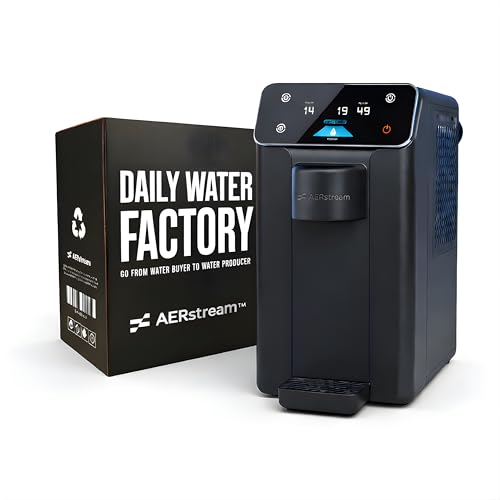
AERstream GW Pro Daily Water Factory™ Atmospheric Water Generator, 10L/Day
- Daily Water Production: Produces up to 10L of water daily
- Air-to-Water Technology: Extracts water from ambient humidity
- No Installation Needed: No plumbing or permanent setup required
As an affiliate, we earn on qualifying purchases.
As an affiliate, we earn on qualifying purchases.
Conclusion
You might worry that desert air can’t provide enough water, but with MOF-based systems, you can efficiently harvest moisture even in arid conditions. These systems adapt to low humidity, ensuring a reliable water source without relying on traditional sources. By harnessing the power of metal-organic frameworks, you can turn dry desert air into a sustainable water supply, making desert living more feasible and reducing dependency on distant water sources.
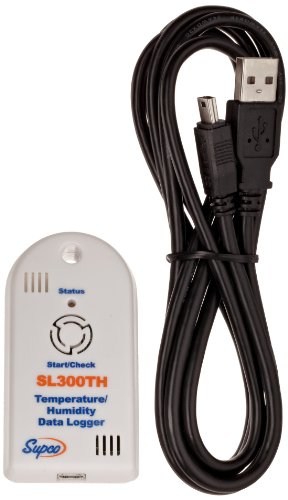
Supco SL300TH Miniature Data Logger, Temperature, Humidity and Dew Point, 3" Length x 1-19/32" width x 19/32" Height
- Compatibility: Windows 98SE to Vista and above
- Control Options: Delayed start and push button recording
- Alarm Features: Temperature alarm with visual indicator
As an affiliate, we earn on qualifying purchases.
As an affiliate, we earn on qualifying purchases.

Humidity Controller IHC200 Inkbird Humidistat Mushroom Greenhouse Pre Wired Outlet Dual Stage Humidifier Dehumidifier.
- Humidity Range: 5% to 99.99% RH
- Digital Display: Easy-to-read digital interface
- High Accuracy: ±3% RH precision
As an affiliate, we earn on qualifying purchases.
As an affiliate, we earn on qualifying purchases.