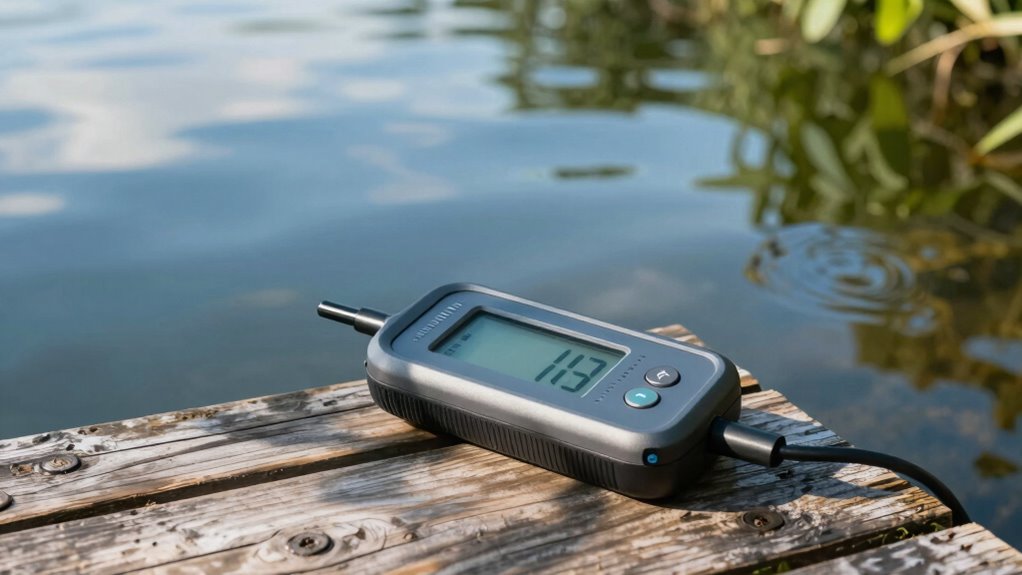

Dissolved oxygen meters help you make informed water management decisions by providing real-time data on oxygen levels vital for aquatic health and water quality. You can quickly identify issues like low oxygen that threaten fish and ecosystems, allowing you to respond promptly. These meters also guide pollution control, optimize wastewater treatment, and support sustainable use of water resources. Keep exploring to discover how these tools can further enhance your ability to protect and manage water environments effectively.

Prime made for students and young adults
- Fast, free delivery for dorm and study essentials
- Prime Video and Amazon Music included
- Member-only deals
Key Takeaways
- Provide real-time data to quickly identify and address water quality issues.
- Guide operational adjustments in wastewater treatment to optimize biological pollution breakdown.
- Support early detection of hypoxia or pollution events, enabling swift corrective actions.
- Help manage oxygen levels in aquaculture, preventing fish mortality and promoting healthy growth.
- Inform long-term ecosystem restoration and conservation strategies for sustainable water management.
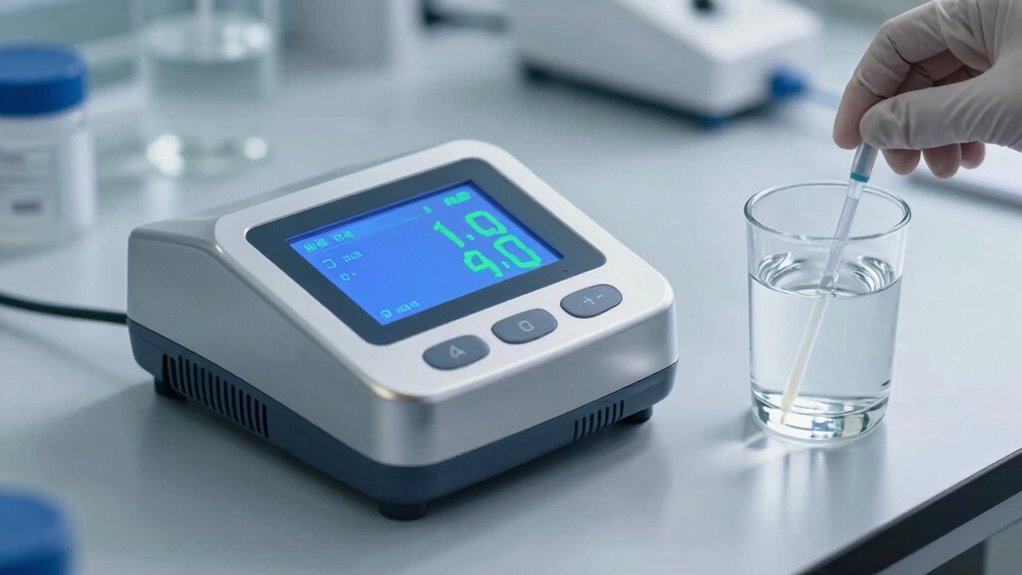
Monitoring dissolved oxygen levels is essential for making informed water management decisions, especially in environmental and industrial settings. When you measure dissolved oxygen, you’re directly evaluating the quality of water, which is critical for maintaining aquatic health. Low oxygen levels can lead to the death of fish and other aquatic organisms, disrupting ecosystems and threatening biodiversity. By consistently checking oxygen concentrations, you can identify problems early, preventing irreversible damage to aquatic habitats. This proactive approach allows you to implement targeted pollution control measures, such as adjusting wastewater discharge or controlling nutrient runoff that causes oxygen depletion.
Regular dissolved oxygen monitoring helps protect aquatic ecosystems and prevents irreversible water quality damage.
Using dissolved oxygen meters gives you real-time data, enabling swift responses to fluctuating water conditions. If oxygen levels drop unexpectedly, you can investigate potential sources of pollution, like sewage spills or excessive algal blooms, and take corrective action before the situation worsens. This level of monitoring helps you uphold water quality standards, guaranteeing the sustainability of aquatic life and protecting water resources. It also supports compliance with environmental regulations, avoiding penalties and fostering community trust.
In industrial settings, dissolved oxygen measurements guide operational decisions that impact pollution control. For instance, in wastewater treatment plants, maintaining ideal dissolved oxygen levels is essential for effective biological treatment processes. When oxygen is insufficient, bacteria can’t break down pollutants efficiently, leading to higher contaminant levels in discharged water. By regularly checking oxygen levels, you can fine-tune aeration systems, improving treatment performance and reducing environmental impact. This guarantees that your operations adhere to pollution control standards, minimizing the ecological footprint of your activities.
Beyond regulatory compliance, understanding dissolved oxygen dynamics helps you make smarter decisions about water use and conservation. For example, in aquaculture, maintaining appropriate oxygen levels is essential for fish health and growth. If oxygen drops too low, you risk mass mortalities, which can be devastating financially and ecologically. Continuous monitoring allows you to manage aeration systems effectively, optimizing energy use while safeguarding aquatic health. Additionally, understanding dissolved oxygen levels helps predict and prevent hypoxic conditions that threaten aquatic ecosystems. Recognizing the importance of water quality monitoring can also help in early detection of pollution events, ensuring prompt responses. This knowledge is vital for preserving biodiversity and maintaining resilient ecosystems. Properly monitoring oxygen levels can also improve the longevity of water bodies by aiding in habitat restoration efforts. Similarly, in natural water bodies, tracking oxygen levels guides habitat restoration efforts, ensuring the environment remains suitable for native species.
dissolved oxygen meter for water testing
As an affiliate, we earn on qualifying purchases.
As an affiliate, we earn on qualifying purchases.
Frequently Asked Questions
How Often Should Dissolved Oxygen Meters Be Calibrated?
You should calibrate your dissolved oxygen meter at least once a week to guarantee accurate readings. Regular sensor calibration helps maintain device durability and prevents drift in measurements. If you use the meter frequently or in harsh conditions, consider calibrating more often, like daily or before each use. Proper calibration keeps your device reliable, ensuring your water quality decisions are based on precise data.
What Maintenance Is Required for Dissolved Oxygen Meters?
Imagine you’re monitoring a freshwater lake for ecological health. To keep your dissolved oxygen meter accurate, you need to regularly clean the sensor and check its calibration frequency, ensuring sensor durability. Replace membranes or electrodes as needed, and store the device properly. These routine maintenance steps help prevent drift and prolong equipment lifespan, so your data remains reliable for making informed water quality decisions.
Are Portable Dissolved Oxygen Meters Accurate for Field Testing?
Yes, portable dissolved oxygen meters are accurate for field testing when they have durable sensors and reliable data logging features. These meters are built to withstand rugged conditions, ensuring sensor durability during use. You can trust their measurements, especially if you regularly calibrate them. Data logging helps you track oxygen levels over time, providing valuable insights for making informed water management decisions on-site, quickly and accurately.
How Do Water Temperature Variations Affect Readings?
Temperature fluctuations can considerably impact your dissolved oxygen readings because sensor sensitivity varies with water temperature. As water warms or cools, oxygen levels change naturally, and your meter must accurately account for these variations. If you don’t adjust for temperature differences, your readings might be misleading, leading you to incorrect water quality decisions. Ensuring your meter is calibrated and aware of temperature variations helps you get precise, reliable data in any environment.
Can Dissolved Oxygen Meters Detect Other Water Quality Parameters?
Dissolved oxygen meters primarily measure oxygen levels, but some models can also detect other water quality parameters like pH, temperature, or turbidity through integrated sensors. You need to guarantee the device’s sensor durability, especially in challenging water chemistry conditions, to get accurate readings. While not all meters have these capabilities, choosing multi-parameter models can help you monitor extensive water quality, aiding better water management decisions.
aquarium dissolved oxygen tester
As an affiliate, we earn on qualifying purchases.
As an affiliate, we earn on qualifying purchases.
Conclusion
With dissolved oxygen meters, you can see the health of your water in real-time, much like a heartbeat reveals importance. Imagine the difference it makes—detecting low oxygen levels before they cause harm, preventing fish kills, and ensuring safe, thriving ecosystems. These meters turn guesswork into certainty, guiding your decisions with precision. Trusting this tool is like having a window into water’s well-being, giving you the power to protect and preserve with confidence.
wastewater treatment dissolved oxygen sensor
As an affiliate, we earn on qualifying purchases.
As an affiliate, we earn on qualifying purchases.
As an affiliate, we earn on qualifying purchases.
Fall Picks
fall essentials
As an affiliate, we earn on qualifying purchases.