Recent sustainable agriculture regulations aim to support your long-term farm productivity while protecting the environment. You may see new rules promoting soil conservation, crop diversification, and eco-friendly practices like organic farming and pest management. These regulations often provide incentives and support to help you adopt sustainable techniques that boost resilience and profitability. If you want to understand how these changes can benefit your farm and what steps to take, there’s more to explore.
Key Takeaways
- New regulations promote soil conservation techniques like cover cropping and reduced tillage, benefiting long-term farm productivity.
- Policies encourage crop diversification, offering farmers new market opportunities and improved resilience against pests and crop failure.
- Compliance requirements include detailed record-keeping for eco-friendly practices such as organic farming and integrated pest management.
- Financial incentives and subsidies are available to support sustainable practices, making eco-friendly farming more economically viable.
- Overall, regulations aim to balance environmental protection with increased farm resilience and profitability.
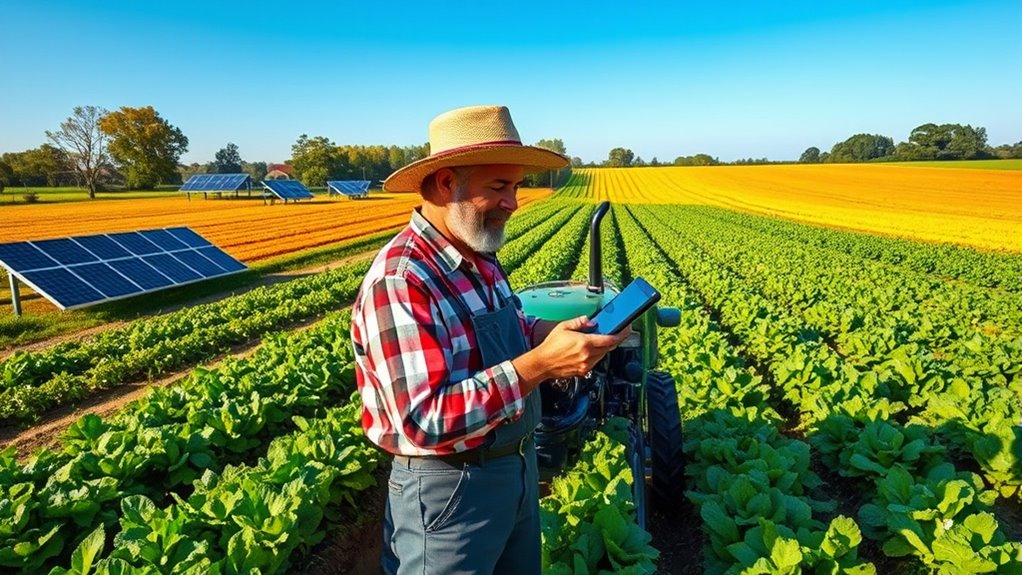
Sustainable agriculture policies are essential for ensuring that farming practices meet current food needs without compromising the environment or future generations. When new regulations come into play, they often focus on key strategies like soil conservation and crop diversification to promote long-term sustainability. As a farmer, you’ll find these policies encouraging you to adopt practices that protect your land and diversify your crops, which can boost resilience against pests, weather fluctuations, and market shifts.
Soil conservation is at the heart of many recent policy changes. You’re likely to see incentives for implementing cover cropping, reduced tillage, and contour farming. These techniques help prevent erosion, improve soil health, and increase water retention. By adopting soil conservation methods, you not only comply with regulations but also enhance your farm’s productivity over time. Healthy soils mean better yields and less dependency on chemical inputs, which benefits both your bottom line and the environment. Policymakers understand that preserving soil integrity is *vital* for sustainable agriculture, so they’re creating frameworks that make it easier and financially rewarding for you to prioritize these practices.
Crop diversification is another *fundamental* aspect of the new regulations. Instead of relying on a single crop, you’re encouraged to rotate and plant a variety of crops throughout the year. This reduces the risk of crop failure and helps break pest and disease cycles. Diversification also improves soil health, as different crops contribute various nutrients back into the soil. Many policies offer support or subsidies for farmers who diversify, recognizing that this approach strengthens the entire agricultural system. You might find new markets opening up for diverse crops, providing additional income streams and reducing economic vulnerability. It’s a win-win situation: you meet regulatory requirements, improve your farm’s sustainability, and increase your resilience.
The regulations also promote integrated pest management and organic farming practices, aligning with crop diversification efforts. These policies aim to reduce reliance on chemical pesticides and fertilizers, fostering healthier ecosystems on your farm. As you adapt to these new rules, you’ll likely need to update your management plans and record-keeping to demonstrate compliance, but the long-term benefits—healthier soil, fewer pests, and better crop yields—make it worthwhile.

Small-Scale Grain Raising: An Organic Guide to Growing, Processing, and Using Nutritious Whole Grains for Home Gardeners and Local Farmers, 2nd Edition
New
As an affiliate, we earn on qualifying purchases.
As an affiliate, we earn on qualifying purchases.
Frequently Asked Questions
How Will New Policies Affect Farmers’ Crop Choices?
The new policies will influence your crop choices by encouraging crop diversification and imposing pesticide restrictions. You’ll likely shift to a broader range of crops to meet sustainability standards and reduce reliance on harmful chemicals. This means exploring alternative crops that are more eco-friendly and adaptable to new regulations. You’ll need to stay informed about these changes to effectively plan your planting strategies and guarantee compliance while maintaining profitability.
What Financial Support Options Are Available for Sustainable Practices?
You can access government grants and loan programs designed to support sustainable practices. These financial options help cover costs for eco-friendly equipment, soil health improvements, and water conservation systems. Applying for grants can reduce upfront expenses, while low-interest loans provide flexible repayment terms. By taking advantage of these resources, you’ll make your farm more sustainable and compliant with new regulations, ultimately boosting your productivity and environmental impact.
How Do Regulations Impact Small Versus Large Farms?
Regulations impact small and large farms differently due to farm size disparities and resource allocation. Small farms often struggle with compliance costs, making it harder to meet new standards without extra support. Large farms, with more resources, adapt more easily and benefit from economies of scale. You might find that policies unintentionally favor bigger operations, emphasizing the need for tailored regulations that consider the unique challenges of small-scale farmers.
Are There Penalties for Non-Compliance With New Rules?
If you don’t comply with new regulations, penalties can be enforced through fines or operational restrictions. For example, a farm caught ignoring water usage limits might face penalties imposed through compliance monitoring, leading to costly fines. Penalty enforcement varies depending on the violation severity, but authorities actively monitor compliance to ensure rules are followed. Staying compliant helps you avoid penalties and maintain good standing with regulators.
What Training Resources Are Provided for Farmers Adapting to Policies?
You’ll find training resources readily available to help you adapt to new policies, focusing on crop diversification and organic certification. Workshops, online courses, and government programs guide you through implementing sustainable practices, meeting certification standards, and maximizing benefits. These resources empower you to stay compliant and boost your farm’s sustainability, ensuring you understand the regulations and can effectively incorporate eco-friendly methods into your operations.

No-Till Garden Farm and Garden Cover Crop Mix Seeds – 5 Lbs – Blend of Gardening Cover Crop Seeds: Hairy Vetch, Daikon Radish, Forage Collards, Triticale, More
🌱 Diverse 9-Seed Cover Crop Mix – Non-GMO & Heirloom – Includes Austrian Field Pea, Hard Red Winter…
As an affiliate, we earn on qualifying purchases.
As an affiliate, we earn on qualifying purchases.
Conclusion
So, congratulations, farmer! With these new regulations, you’re now officially part of the eco-friendly elite—whether you like it or not. Who knew that tilling your fields with a sprinkle of sustainability could turn your farm into a bureaucratic playground? But don’t worry; as you adapt to these policies, you’ll soon discover that saving the planet is just another way to keep the government busy—and your wallet lighter. Cheers to “green” progress!

2PCS Hand Rakes 9 Prongs Ergonomic Handle Ideal for Tillage Loose Soil Foliage Gardening Landscaping and Farming Gardening Equipment Set
Features a contoured handle with anti slip texture to minimize hand fatigue during extended use Designed for gardening…
As an affiliate, we earn on qualifying purchases.
As an affiliate, we earn on qualifying purchases.

Pests of Landscape Trees and Shrubs
As an affiliate, we earn on qualifying purchases.
As an affiliate, we earn on qualifying purchases.