Freeze drying preserves your lab samples by freezing them first, then removing moisture through sublimation under a vacuum. This process keeps delicate biological or chemical materials intact, preventing damage and extending their shelf life. The vacuum lowers water’s boiling point, allowing ice to turn directly into vapor without melting. Precise control of temperature and pressure is essential for a successful outcome. Keep exploring to discover how this method guarantees your samples stay safe and functional over time.

Prime made for students and young adults
- Fast, free delivery for dorm and study essentials
- Prime Video and Amazon Music included
- Member-only deals
Key Takeaways
- Freeze drying preserves lab samples by freezing them and then removing moisture via sublimation under vacuum.
- Vacuum technology lowers water’s boiling point, enabling moisture removal at low temperatures.
- Precise control of temperature and pressure ensures sample integrity and prevents damage during drying.
- The process extends shelf life, simplifies storage, and maintains biological or chemical properties of samples.
- Proper freeze drying maintains sample structure, preventing deterioration and enabling long-term preservation and rehydration.
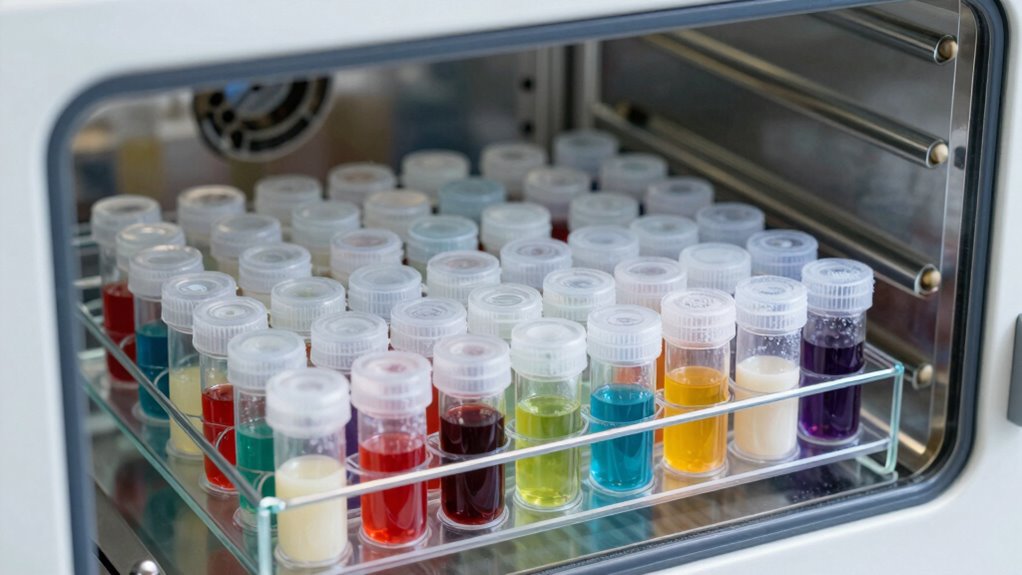
Have you ever wondered how scientists preserve delicate lab samples for long-term storage? The answer often lies in a process called freeze drying, which combines freezing and dehydration to keep samples intact without compromising their integrity. This technique is especially valuable when working with biological materials, pharmaceuticals, or sensitive chemicals that can deteriorate over time. Central to the success of freeze drying is vacuum technology, a vital component that enables the removal of moisture efficiently and effectively. By creating a low-pressure environment, vacuum technology lowers the boiling point of water, allowing sublimation—the transition of ice directly into vapor—to occur at relatively low temperatures. This gentle removal of water prevents heat damage and preserves the sample’s structure and function.
During freeze drying, your sample is first frozen solid, often at very low temperatures, to lock in its original state. Once frozen, it is placed in a chamber where vacuum technology is applied. The vacuum reduces the pressure around the sample, facilitating sublimation. As the ice turns directly into vapor, it is drawn out of the chamber, leaving behind a dry, porous structure. This process is carefully controlled to prevent collapse or damage to the sample’s delicate components. Proper control of temperature and pressure is essential to ensure the process proceeds smoothly without damaging the sample. Additionally, maintaining the correct vacuum environment is crucial for efficient sublimation and preventing contamination. The effectiveness of the process also depends on precise regulation of conditions, ensuring that the sublimation occurs uniformly and reliably. Properly managing these critical parameters helps optimize the process and maintain sample quality. The result is a dry product that retains the original biological or chemical properties, making it ideal for long-term storage and later rehydration.
Effective vacuum technology is crucial for ensuring the sublimation process occurs smoothly without damaging the samples. Sample preservation through freeze drying offers significant advantages. Not only does it greatly extend the shelf life of sensitive materials, but it also makes transportation easier and safer, as there’s no need for refrigeration. Additionally, it reduces the risk of microbial growth or enzymatic activity that could spoil the sample. The success of this process depends on the precise application of vacuum technology, which guarantees the removal of moisture without exposing your samples to damaging heat or oxidation. Properly executed, freeze drying maintains the integrity of your samples, allowing you to analyze or use them months or even years later without loss of quality.
In essence, freeze drying combines the principles of refrigeration, sublimation, and vacuum technology to provide an effective method for sample preservation. It’s a sophisticated process that requires careful control of temperature and pressure but offers reliable results for preserving the delicate nature of lab samples. When done correctly, it guarantees your samples remain as close to their original state as possible, ready for future analysis or use.
As an affiliate, we earn on qualifying purchases.
Frequently Asked Questions
How Long Does the Freeze-Drying Process Typically Take?
The freeze-drying procedure typically lasts between 24 to 48 hours, depending on sample size and type. To guarantee proper sample preservation, you need well-calibrated equipment that maintains the right temperature and pressure. Rushing the process can compromise sample integrity, so it’s crucial to follow precise protocols. Accurate equipment calibration helps achieve consistent results, making your freeze-drying efficient and dependable for long-term preservation.
What Types of Lab Samples Are Best Suited for Freeze Drying?
Did you know that over 80% of laboratories use freeze drying for sample preservation? You’ll find this drying technique best suited for sensitive, biological, or perishable samples like DNA, tissues, and vaccines. These samples benefit from freeze drying because it maintains their integrity and prolongs shelf life. By choosing the right drying techniques, you guarantee your lab samples stay viable, making freeze drying an ideal method for delicate and valuable specimens.
Can Freeze Drying Alter the Chemical Properties of Samples?
Freeze drying can sometimes alter the chemical properties of your samples if not carefully controlled. It helps maintain chemical stability by removing moisture, but improper settings might cause sample degradation or chemical changes. To prevent this, guarantee the process parameters are optimized for your specific samples. Proper freeze drying preserves the integrity of sensitive compounds, but you need to monitor conditions closely to avoid unintended chemical reactions or stability issues.
Is Special Training Required to Operate Freeze-Drying Equipment?
You might think anyone could operate freeze-drying equipment, but surprisingly, it requires operator training to guarantee safety and accuracy. Handling complex machinery and maintaining it properly isn’t intuitive—so, don’t skip the training. Proper operation involves understanding the process, troubleshooting, and routine equipment maintenance. Skipping these steps could compromise your samples or cause equipment failure, making training essential for effective and safe freeze-drying in the lab.
What Are the Costs Associated With Implementing Freeze Drying in a Lab?
Implementing freeze drying in your lab involves costs like equipment purchase, which varies based on size and capacity. You should conduct a thorough cost analysis to estimate expenses accurately. Additionally, factor in ongoing equipment maintenance and supplies, such as cryogenic fluids and filters. While initial costs can be high, the benefits of preserving samples efficiently often justify the investment, especially when you plan for long-term use and proper upkeep.
As an affiliate, we earn on qualifying purchases.
Conclusion
You might think freeze drying is just a preservation method, but it’s actually a game-changer for lab samples. Recent studies suggest it can preserve cellular structures better than traditional methods, raising the exciting possibility that it could revolutionize research and storage. So, next time you consider sample preservation, remember—freeze drying isn’t just a convenience; it might hold the key to more accurate and long-lasting scientific results.
biological sample freeze drying system
As an affiliate, we earn on qualifying purchases.
As an affiliate, we earn on qualifying purchases.
chemical freeze drying equipment
As an affiliate, we earn on qualifying purchases.
As an affiliate, we earn on qualifying purchases.
Fall Picks
fall essentials
As an affiliate, we earn on qualifying purchases.