

Vacuum pumps are essential in supporting your routine chemistry work by creating controlled environments for experiments, such as evacuating air and gases to prevent contamination and guarantee precise results. They help you handle hazardous or volatile chemicals safely by reducing explosion and vapor exposure risks. Regular maintenance of these pumps keeps your equipment dependable, minimizing downtime. With their assistance in tasks like filtration, degassing, and distillation, you can achieve safer, more efficient outcomes—plus, you’ll find more useful tips if you keep exploring.
Key Takeaways
- Enable solvent evaporation and filtration processes for efficient sample preparation.
- Facilitate degassing of solutions to prevent air bubbles during experiments.
- Support concentration of samples and delicate operations like distillation.
- Maintain controlled environments to prevent contamination and unwanted reactions.
- Enhance safety by removing hazardous vapors and minimizing explosion risks.
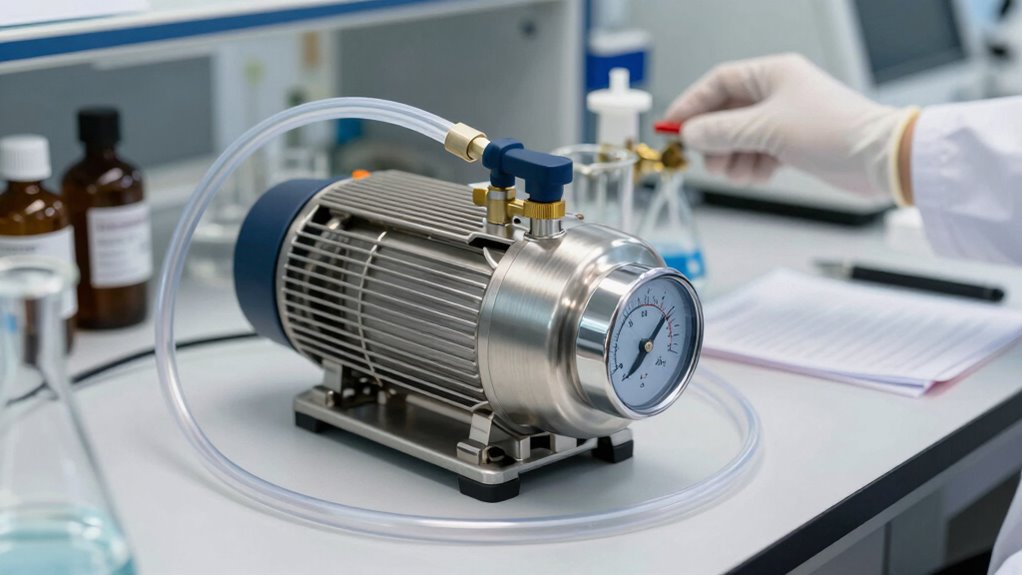
Have you ever wondered how chemists create controlled environments for experiments or remove air from vessels? Vacuum pumps play a pivotal role in achieving these conditions, enabling precise and safe scientific work. When you’re working with sensitive chemicals or conducting reactions that require an oxygen-free environment, a vacuum pump is your go-to tool. Its ability to evacuate air and other gases from containers helps prevent unwanted reactions and contamination, guaranteeing the accuracy and reliability of your results.
One of the key aspects of working safely in a chemistry lab is maintaining high standards of chemical safety. Vacuum pumps contribute to this by allowing you to handle volatile or hazardous substances more securely. For example, when you’re working with toxic or flammable chemicals, removing air from the system minimizes the risk of explosions or leaks. Properly functioning vacuum pumps prevent the buildup of pressure and reduce exposure to dangerous vapors, protecting you and your colleagues. It’s essential, however, to keep these pumps in excellent condition. Regular equipment maintenance is necessary to avoid malfunctions that could compromise safety or experiment integrity. Cleaning filters, checking for leaks, and replacing worn-out seals are simple steps that keep your vacuum system operating smoothly and safely. Additionally, understanding the operation of vacuum pumps helps ensure proper usage and maintenance. Regularly monitoring the performance of vacuum systems can help identify potential issues before they lead to equipment failure or safety hazards. Incorporating preventive maintenance practices further enhances safety and prolongs the lifespan of your equipment. Staying informed about emerging technologies in vacuum systems can also provide opportunities to upgrade and optimize your lab operations.
Using vacuum pumps also streamlines routine laboratory work. They help you perform tasks such as solvent evaporation, filtration, and degassing efficiently. When you need to concentrate solutions or prepare samples without introducing contaminants, vacuum-assisted processes save time and improve outcomes. They also allow you to carry out delicate operations that demand precise control over atmospheric conditions, such as freeze-drying or vacuum distillation. With reliable equipment maintenance, you guarantee that your vacuum pump maintains peak performance, reducing downtime and preventing costly repairs.
In addition to supporting your experimental techniques, vacuum pumps contribute to a safer working environment. They reduce the risk of chemical exposure and help contain hazardous vapors, which is particularly important in busy labs. Regular checks and maintenance of your vacuum system ensure it operates safely and effectively over the long term. When you prioritize chemical safety and equipment maintenance, you not only protect yourself and others but also enhance the quality of your scientific work. In essence, vacuum pumps are indispensable tools that help you uphold the highest standards of safety, precision, and efficiency in your routine chemistry tasks.
As an affiliate, we earn on qualifying purchases.
Frequently Asked Questions
What Are the Different Types of Vacuum Pumps Used in Chemistry Labs?
You’ll find several pump types used in chemistry labs, including rotary vane, diaphragm, and scroll pumps. Each offers different performance factors like ultimate vacuum, pumping speed, and noise level. When choosing, you consider your specific needs, such as the required vacuum level and compatibility with chemicals. Understanding these pump types and performance factors helps you select the best vacuum pump for safe, efficient lab work.
How Do Vacuum Pumps Improve Safety During Chemical Procedures?
Vacuum pumps substantially enhance safety by reducing hazard exposure during chemical procedures. Studies show they help prevent over 80% of accidents linked to volatile fumes and pressure buildup. You mitigate risks by using vacuum pumps to control hazardous vapors, prevent leaks, and maintain a safe environment. This hazard prevention minimizes exposure to toxic substances and prevents dangerous reactions, ensuring your safety and that of your team during routine laboratory work.
What Maintenance Is Required for Laboratory Vacuum Pumps?
You need to regularly inspect your vacuum pump for leaks by performing leak detection, ensuring no air enters and maintaining efficiency. Additionally, choose the right lubricant based on your pump type and operating conditions to prevent wear and overheating. Regularly change or top off the lubricant, keep the pump clean, and check seals and hoses. Proper maintenance prolongs pump life and guarantees consistent performance in your laboratory routines.
Can Vacuum Pumps Be Used for Both Small-Scale and Large-Scale Processes?
Yes, vacuum pumps can be used for both small-scale and large-scale processes. Miniature systems suit small-scale applications, like laboratory experiments or portable setups, providing precise control and efficiency. For industrial applications, larger vacuum pumps handle extensive tasks such as manufacturing or large-volume evacuations. Their versatility allows you to choose the right size pump, ensuring peak performance whether you’re working on a tiny project or a large-scale operation.
How Energy-Efficient Are Modern Vacuum Pumps in Chemistry Applications?
Modern vacuum pumps are surprisingly energy-efficient, helping you cut down energy consumption without sacrificing performance. They incorporate advanced technology and sustainability measures, meaning you get reliable operation while reducing your environmental footprint. As you use these pumps, you might wonder how much energy you’re saving—rest assured, many models are designed to optimize efficiency, making your routine chemistry work not just effective, but also greener and more sustainable.
chemical vacuum pump for distillation
As an affiliate, we earn on qualifying purchases.
As an affiliate, we earn on qualifying purchases.
Conclusion
In your chemistry work, vacuum pumps are more than just tools—they’re your silent partners that help you tackle complex tasks efficiently. By using them, you’re not just getting the job done; you’re setting yourself up for success. Remember, every tool has its place, and knowing when to lean on a vacuum pump can often make all the difference. It’s true what they say—sometimes, it’s the little things that make the biggest impact.
vacuum pump for solvent evaporation
As an affiliate, we earn on qualifying purchases.
As an affiliate, we earn on qualifying purchases.
benchtop vacuum pump for chemistry
As an affiliate, we earn on qualifying purchases.
As an affiliate, we earn on qualifying purchases.


![Navier-Stokes – Tristan Buckmaster [Pdf]](https://varietychem.com/wp-content/uploads/2026/09/navier-stokes-tristan-buckmaster-pdf-featured-260x140.jpg)

