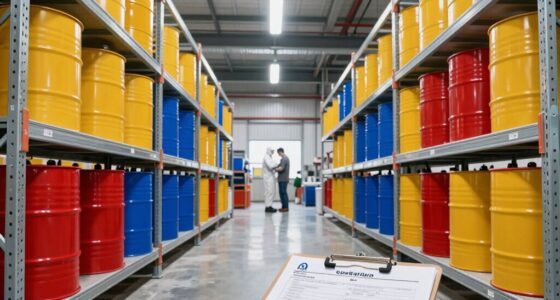
Bulk chemicals are produced in large quantities, made for broad uses and cost-effective in industries like plastics and agriculture. Specialty chemicals are customized for specific tasks, often in smaller amounts, offering advanced properties and environmental benefits. Your choice depends on your needs for volume, performance, and sustainability. Understanding these differences helps you make smarter decisions for your processes. Keep exploring to discover how these chemical types impact industries and applications.
Key Takeaways
- Bulk chemicals are produced in large volumes as standardized, cost-effective commodities, while specialty chemicals are customized for specific, niche applications.
- Bulk chemicals are generally cheaper, widely available, and used across industries like plastics and agriculture; specialty chemicals focus on enhanced performance.
- Bulk chemicals pose higher environmental risks due to scale, whereas specialty chemicals often feature eco-friendly properties like biodegradability.
- Market demand for bulk chemicals remains steady, while demand for specialty chemicals is growing rapidly in sectors like pharmaceuticals and electronics.
- Choosing between them depends on operational needs, environmental impact, and market trends, impacting sustainability and competitiveness.

When selecting chemicals for your industrial processes, understanding the difference between bulk chemicals and specialty chemicals is crucial. Bulk chemicals are typically produced in large quantities, often in commodity forms, and are used across a broad range of industries. They’re generally standardized, cost-effective, and readily available, making them ideal for applications where high volume and low cost are priorities. Specialty chemicals, on the other hand, are crafted for specific uses, often in smaller quantities. They usually feature unique properties tailored to particular needs, such as enhanced performance, safety, or environmental considerations. Recognizing these distinctions helps you optimize your manufacturing, reduce costs, and meet regulatory standards.
Understanding bulk versus specialty chemicals helps optimize manufacturing, reduce costs, and ensure regulatory compliance.
Environmental impact plays a noteworthy role in choosing between bulk and specialty chemicals. Bulk chemicals can sometimes pose greater environmental risks due to their production scale and potential for widespread use. Their manufacturing processes may generate significant waste or emissions if not carefully managed. Conversely, specialty chemicals often incorporate environmentally friendly features, such as lower toxicity or biodegradability, because their applications demand higher safety standards or regulatory compliance. As market demand shifts toward greener, more sustainable solutions, you might find that specialty chemicals better align with your company’s environmental goals, helping you reduce your carbon footprint and ensure compliance with evolving regulations.
Market demand heavily influences your choice between bulk and specialty chemicals. The demand for bulk chemicals tends to be stable and driven by industries like plastics, textiles, and agriculture, where large volumes are necessary for cost efficiency. However, as innovation accelerates and consumer preferences change, market demand for specialty chemicals is growing rapidly. These chemicals cater to niche markets, including pharmaceuticals, electronics, and high-performance materials, which often require advanced properties and customization. If your business focuses on specialized products or is aiming for innovation, investing in specialty chemicals could give you a competitive edge. Conversely, if your operations prioritize mass production and cost savings, bulk chemicals are likely the more practical choice.
Ultimately, choosing between bulk and specialty chemicals depends on your specific needs, environmental considerations, and market trends. Both types serve essential roles in industrial processes but differ markedly in application, cost, and environmental impact. By understanding these differences, you can make informed decisions that support your operational goals, sustainability commitments, and market positioning. Whether aiming for volume efficiency or product differentiation, aligning your chemical selection with market demand and environmental standards ensures your processes stay competitive and sustainable in a rapidly evolving industrial landscape.

Isopropyl Alcohol 99% Strength – 5 Gallons Packed in 20-32 Oz Bottles- 100% Pure
- Pure Isopropyl Alcohol: 99% strength, no additives
- Large 5-Gallon Supply: Packed in 20-32 oz bottles
- Ideal for 3D Printing: Suitable for printer cleaning
As an affiliate, we earn on qualifying purchases.
As an affiliate, we earn on qualifying purchases.
Frequently Asked Questions
How Do Pricing Strategies Differ Between Bulk and Specialty Chemicals?
You’ll find that pricing strategies differ because bulk chemicals often use cost-plus or volume-based pricing models to appeal to broad market segments, emphasizing low prices for large quantities. In contrast, specialty chemicals rely on value-based pricing, targeting niche market segments where customers are willing to pay premium prices for unique qualities. This approach allows you to maximize profitability by aligning your pricing with the specific needs and perceptions of each market segment.
What Are the Environmental Impacts of Bulk Versus Specialty Chemicals?
Ever wonder how your chemical choices impact the environment? Bulk chemicals often have a larger environmental footprint due to their widespread production and raw material extraction, leading to significant waste management challenges. Specialty chemicals, while produced in smaller quantities, may contain hazardous components requiring careful disposal. Ultimately, both types impact the environment, but bulk chemicals tend to pose greater risks regarding pollution and sustainability.
How Does Supply Chain Management Vary for These Chemical Types?
You need to understand that supply chain management differs markedly for bulk and specialty chemicals. For bulk chemicals, you prioritize efficient storage requirements, focusing on large-scale storage and transportation, while maintaining quality control to prevent contamination. With specialty chemicals, you must emphasize precise storage conditions due to their sensitive nature, ensuring strict quality control to meet specific standards. Overall, managing these supply chains requires tailored strategies to address their unique storage and quality needs.
What Safety Regulations Specifically Apply to Each Chemical Category?
You need to follow specific safety regulations for each chemical category. For bulk chemicals, handling protocols emphasize large-scale storage requirements, such as tank integrity and spill containment. Specialty chemicals require precise handling protocols to prevent contamination and guarantee safety during smaller, controlled transfers. Storage requirements vary; bulk chemicals often need specialized infrastructure, while specialty chemicals demand strict environmental controls, proper labeling, and adherence to Material Safety Data Sheets (MSDS).
How Are Innovations and Research Prioritized Differently?
You prioritize innovations and research differently based on chemical categories. For bulk chemicals, you focus on optimizing manufacturing processes and reducing costs through research funding that emphasizes efficiency and scalability. In contrast, for specialty chemicals, you pursue innovation pathways that enhance product customization and performance, often investing more in targeted R&D. This approach guarantees each category advances according to its market needs and regulatory landscape.
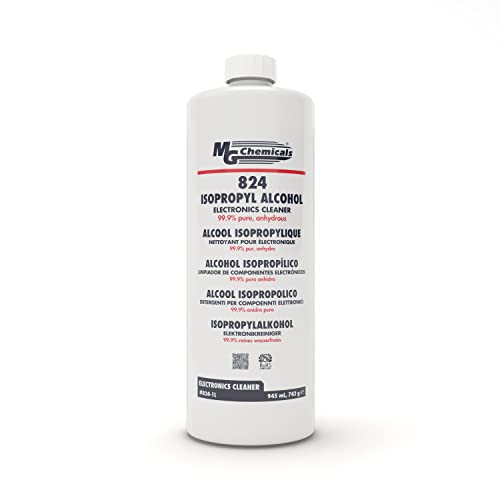
MG Chemicals – 824-1L 99.9% Isopropyl Alcohol Electronics Cleaner, 945 mL (1 Quart) Liquid Bottle
- High Purity Isopropyl Alcohol: 99.9% anhydrous solvent
- Effective Electronics Cleaner: Removes water and humidity
- Certified Quality Standards: Meets ACS, MIL, ASTM standards
As an affiliate, we earn on qualifying purchases.
As an affiliate, we earn on qualifying purchases.
Conclusion
Think of bulk and specialty chemicals as two sides of the same coin—one spins out in endless, steady streams, while the other sparkles with unique, tailored brilliance. Whether you’re steering through the vast ocean of bulk chemicals or diving into the vibrant depths of specialty chemicals, understanding their roles helps you chart a course with confidence. Embrace their differences, and you’ll reveal the full potential of your chemical journey—like a master painter wielding both broad strokes and fine details.

Tyler Glam Wash Laundry Detergent, Diva 907g, Liquid, 32 FL Oz (0.95L) HE Safe
- Natural and Hypoallergenic: All-natural, hypoallergenic laundry detergent
- Gentle on Delicates: Suitable for delicate fabrics and lingerie
- Cleans and Softens: Removes dirt and stains, softens fabrics
As an affiliate, we earn on qualifying purchases.
As an affiliate, we earn on qualifying purchases.

Quality Chemical Reusable 1-Gallon Plastic Jug – BPA-Free, Leak-Resistant, Secure Screw-on Lid, Ergonomic Handle, BPA Free, HDPE Plastic, Stackable, Versatile Design for Storage (Pack of 4)
- All-Purpose Storage: Suitable for cleaning and industrial liquids
- Child Safety Caps: Heat-sealable, spill-proof screw-on lids
- Versatile Application: Ideal for residential and commercial use
As an affiliate, we earn on qualifying purchases.
As an affiliate, we earn on qualifying purchases.