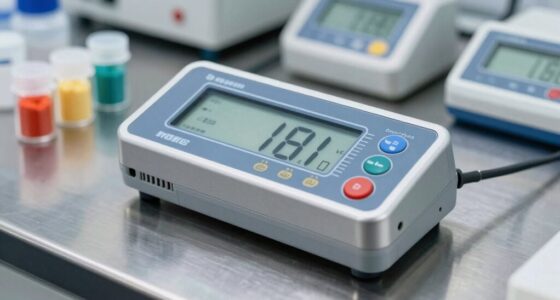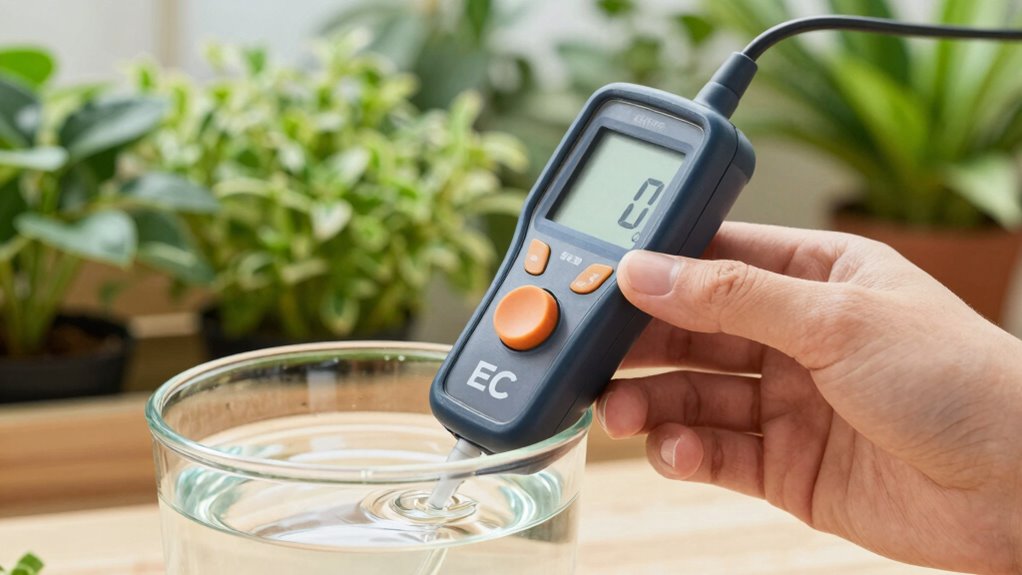

Monitoring your soil’s EC levels helps you make smarter fertilizer decisions by indicating nutrient and salt levels. If the EC is high, it suggests excess salts that could harm roots, so you might need to reduce fertilization or flush the soil. Low EC signals nutrient deficiencies, meaning you should adjust your fertilizer application. To keep your plants healthy, pay attention to these changes, and if you keep exploring, you’ll find ways to optimize your soil management efforts.

Get school and study supplies delivered free — and shop member deals
- Fast, free delivery on millions of items
- Access to Prime Big Deal Days deals on October 6–7
- Prime Video, Amazon Music and more included
Key Takeaways
- Use EC readings to determine optimal fertilizer application timing and dosage for balanced nutrient levels.
- High EC indicates excess nutrients or salts, suggesting a need to reduce or adjust fertilization.
- Low EC signals potential nutrient deficiencies, prompting increased or targeted fertilizer inputs.
- Regular EC monitoring helps detect early nutrient imbalances, enabling timely fertilization adjustments.
- Consider soil and crop-specific EC thresholds to make informed, effective fertilization decisions.
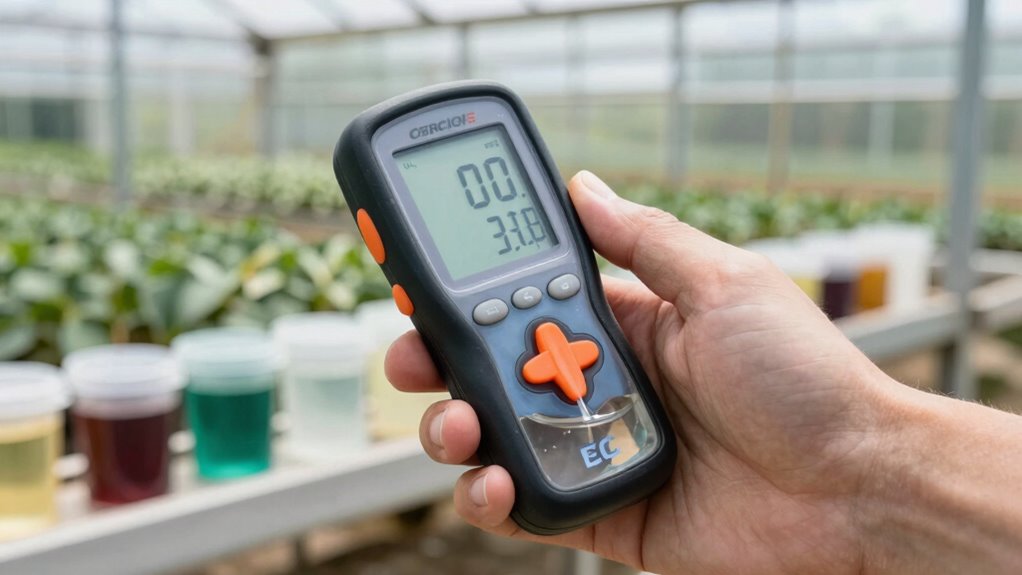
Understanding your EC (electrical conductivity) meter readings is vital for making informed fertilizer decisions. When you measure EC, you’re evaluating how well your soil conducts electricity, which directly relates to the concentration of soluble salts and nutrients present. This information plays a fundamental role in maintaining a proper soil nutrient balance, ensuring your plants receive the right amount of nutrients without risking toxicity or deficiencies. By regularly monitoring water conductivity analysis, you can detect changes in nutrient levels over time and adjust your fertilization strategies accordingly. A high EC reading indicates a surplus of soluble salts, which can harm plant roots and inhibit water uptake, while a low reading suggests deficiencies that could stunt growth.
To interpret your EC readings effectively, you need to understand what they signify in the context of your specific crop and soil type. For instance, some plants thrive in higher salinity conditions, so a higher EC might be acceptable, whereas others require a more delicate balance. When you focus on water conductivity analysis, you’re fundamentally tracking the movement and availability of nutrients through your soil and irrigation water. This enables you to fine-tune your fertilizer application, applying the right amount at the right time to optimize growth and minimize waste. It’s not just about avoiding over-fertilization; it’s about creating a balanced environment where nutrients are readily available but not excess.
Monitoring EC regularly allows you to catch issues early before they become severe. If your readings start trending upward, you might need to leach salts with additional water or reduce fertilizer inputs. Conversely, if the EC drops unexpectedly, it could signal nutrient leaching or insufficient fertilization. In either case, your goal is to maintain a stable soil nutrient balance that supports healthy plant development. Remember, soil nutrient levels are dynamic, influenced by factors like rainfall, crop uptake, and fertilizer application. Water conductivity analysis helps you stay ahead of these changes, giving you the data needed to make timely adjustments. Additionally, understanding the relationship between EC and soil salinity can help prevent potential damage caused by excessive soluble salts. Regular EC monitoring is also a valuable tool in managing irrigation practices, ensuring efficient water use and nutrient delivery. Recognizing how soil conditions impact EC readings can further refine your approach to fertilizer management. Furthermore, understanding how water quality influences EC readings can help you better interpret the data in different environments. Being aware of soil moisture levels is also crucial, as they can significantly affect EC measurements and nutrient availability.
As an affiliate, we earn on qualifying purchases.
Frequently Asked Questions
How Often Should I Calibrate My EC Meter?
You should calibrate your EC meter at least once a month to guarantee accurate readings. Regular calibration is a essential part of meter maintenance and helps prevent measurement errors that could affect your fertilizer decisions. If you use your meter frequently or work with varying solutions, consider calibrating more often. Always follow the manufacturer’s guidelines for calibration frequency to keep your EC meter reliable and precise.
Can High EC Readings Harm My Plants?
High EC readings are like a floodgate opening too wide, potentially harming your plants. Excessively high EC levels can hinder plant nutrient absorption and lead to nutrient burn. Regular water quality testing helps you monitor and adjust fertilizer levels accordingly. By maintaining ideal EC, you guarantee your plants absorb nutrients efficiently without risking damage, promoting healthier growth and preventing the adverse effects that come with overly salty or concentrated solutions.
What Is the Ideal EC Range for Different Crops?
The ideal EC range varies by crop, as each has specific nutrient requirements. For most vegetables, an EC of 1.2-2.0 mS/cm provides ideal nutrient concentrations, while fruits like strawberries thrive around 1.2-1.8 mS/cm. You should adjust your EC levels based on crop-specific nutrient requirements, ensuring plants receive the right balance. Monitoring regularly helps you maintain ideal nutrient concentrations, promoting healthy growth and maximizing yield.
How Do Temperature Changes Affect EC Readings?
Temperature changes can influence EC readings because as soil moisture and temperature fluctuate, nutrient absorption rates also shift. Warmer temperatures often increase water evaporation, concentrating nutrients and raising EC levels, while cooler temperatures may lower EC by reducing nutrient availability. You should regularly monitor soil moisture and temperature, as these factors directly impact EC accuracy and nutrient uptake, helping you make better fertilizer decisions for ideal crop growth.
Is There a Difference Between Electrical Conductivity and EC?
Electrical conductivity (EC) and electrical conductivity (EC) are the same, measuring how well soil or water conducts electricity. When comparing soil versus water, EC indicates nutrient levels or salinity. You need to guarantee your instrument’s accuracy because readings can vary based on calibration and temperature. While they measure the same property, understanding the context—soil or water—helps you interpret the readings correctly for ideal fertilization decisions.
digital soil conductivity tester
As an affiliate, we earn on qualifying purchases.
As an affiliate, we earn on qualifying purchases.
Conclusion
By keeping a close eye on your EC meter readings, you hold the key to smarter fertilizer decisions. Just as a captain navigates through turbulent waters with a steady hand, your careful monitoring guides your plants toward ideal growth. Don’t let guesswork steer your crop’s future—trust the numbers. With each reading, you’re charting a course to healthier, more vibrant plants, turning knowledge into nourishment and ensuring your garden’s success blossoms like a well-tended dream.
fertilizer and soil salinity meter
As an affiliate, we earn on qualifying purchases.
As an affiliate, we earn on qualifying purchases.
water conductivity tester for plants
As an affiliate, we earn on qualifying purchases.
As an affiliate, we earn on qualifying purchases.
Evergreen bestsellers Picks
bestsellers
As an affiliate, we earn on qualifying purchases.