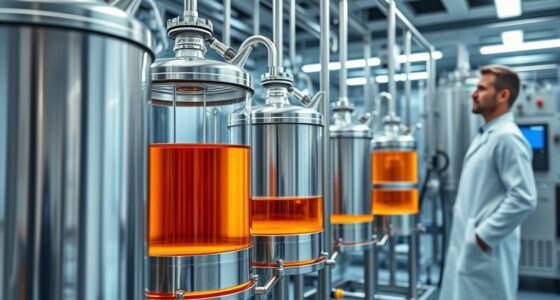
Petrochemical feedstocks like ethylene and propylene are essential for your everyday products, from plastics to fibers and chemicals. You’ll find they’re mainly sourced from crude oil and natural gas through complex processes like refining and cracking. Market forces, such as oil prices and demand, influence their costs and availability. Understanding how these feedstocks are sourced and their industry impact helps you appreciate their role in manufacturing. Continue to explore how these essentials shape the chemical landscape.

Prime made for students and young adults
- Fast, free delivery for dorm and study essentials
- Prime Video and Amazon Music included
- Member-only deals
Key Takeaways
- Ethylene and propylene are primary petrochemical feedstocks used to produce plastics, fibers, and chemicals.
- They are derived from refining crude oil and natural gas through cracking processes.
- Market fluctuations in oil prices and demand directly impact their availability and cost.
- Ethylene mainly produces polyethylene, while propylene is essential for polypropylene manufacturing.
- Industry adapts sourcing and refining techniques to meet changing market demands and ensure supply stability.
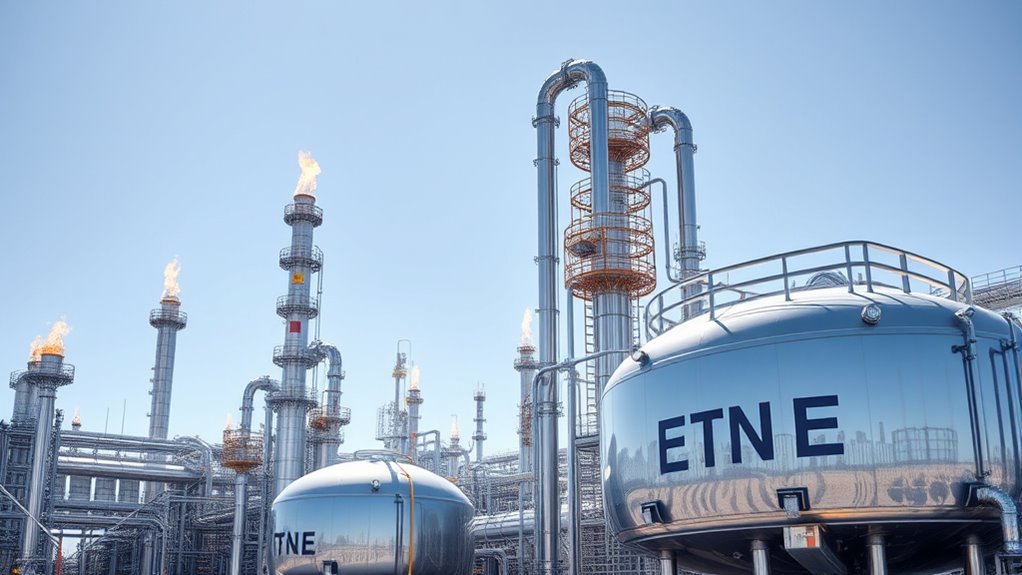
Have you ever wondered what fuels the production of plastics, synthetic fibers, and chemicals? The answer lies in petrochemical feedstocks, primarily ethylene and propylene, which are essential building blocks for countless products you encounter daily. These feedstocks are derived from complex processes that start with feedstock sourcing, where crude oil and natural gas are processed to extract the hydrocarbons necessary for manufacturing. The sourcing process is critical because it influences the availability and cost of ethylene and propylene, which in turn impacts the entire supply chain. The market demand for these feedstocks drives investment and technological development, ensuring that production keeps pace with global needs. When demand rises, producers often ramp up extraction and refining activities, seeking to meet the increasing requirements for plastics, fibers, and chemicals used across industries.
Your understanding of feedstock sourcing reveals how interconnected the petrochemical industry truly is. Crude oil and natural gas undergo refining and cracking processes to produce ethylene and propylene. These processes are sensitive to market forces; for example, fluctuations in oil prices or geopolitical events can impact the availability and cost of feedstocks. This sensitivity means that petrochemical companies must carefully forecast market demand to align production with consumer needs. When demand surges for items like packaging materials, automotive parts, or clothing fibers, producers respond by increasing output, which often prompts expansions in plant capacity or advancements in cracking technology. Conversely, if market demand dips, companies might scale back, focusing on optimizing existing facilities and reducing excess inventory.
Petrochemical production responds to market fluctuations, expanding or contracting based on demand for plastics, fibers, and chemicals.
The market demand for ethylene and propylene is driven by their versatility. Ethylene, for instance, is used to produce polyethylene, the most common plastic worldwide, while propylene is vital for manufacturing polypropylene, a key material in packaging and automotive parts. As consumer preferences shift toward sustainable products or new technologies emerge, the demand for these feedstocks evolves. Industry players constantly analyze market trends to adjust their sourcing strategies, ensuring they secure enough raw materials to meet future needs without oversupply that could lower prices. This balancing act requires innovation in feedstock sourcing, such as exploring alternative natural gas sources or developing more efficient refining techniques.
Your awareness of how market demand influences feedstock sourcing highlights the dynamic nature of the petrochemical industry. It’s not just about extracting raw materials but strategically managing resources to match global consumption patterns. As the world continues to produce more plastics, fibers, and chemicals, the importance of reliable feedstock sourcing and understanding market demand becomes even more essential. These factors shape the industry’s growth, technological progress, and ability to adapt to changing economic and environmental conditions. Ultimately, ethylene and propylene are more than just raw materials—they’re the backbone of modern manufacturing, driven by the constant interplay of market forces and sourcing strategies. Additionally, innovations in feedstock sourcing and refining processes are crucial for maintaining a competitive edge in this evolving industry.
chemical feedstock safety gloves
As an affiliate, we earn on qualifying purchases.
As an affiliate, we earn on qualifying purchases.
Frequently Asked Questions
How Do Ethylene and Propylene Prices Fluctuate Annually?
You’ll notice ethylene and propylene prices fluctuate annually due to market volatility influenced by supply and demand shifts, feedstock costs, and geopolitical factors. Price forecasting helps you anticipate these changes, but uncertainty remains, making it challenging to predict exact trends. Typically, prices rise during periods of high demand or supply constraints and fall when oversupply occurs. Staying informed on industry trends allows you to better navigate these cyclical price movements.
What Are the Environmental Impacts of Ethylene and Propylene Production?
Like a storm brewing on the horizon, ethylene and propylene production can cause significant environmental impacts. You might see high environmental emissions, including greenhouse gases and volatile organic compounds, which contribute to air pollution and climate change. To reduce these effects, industry players adopt sustainability practices, such as cleaner technologies and waste management. However, ongoing efforts are essential to minimize their ecological footprint and protect ecosystems from harmful byproducts.
Which Alternative Feedstocks Are Emerging in the Industry?
You should explore bio-based feedstocks and recycling methods as emerging alternatives. Bio-based feedstocks, like those derived from renewable biomass, reduce reliance on fossil fuels and lower environmental impact. Recycling methods, such as chemical recycling, enable you to reuse plastics efficiently, minimizing waste and resource consumption. These innovations help you create more sustainable processes, cutting down greenhouse gas emissions and supporting a circular economy in the chemical industry.
How Does Global Demand Influence Feedstock Supply Chains?
Think of the global demand as a tidal wave that shapes your supply chain. When demand surges, you need supply chain resilience to keep up; otherwise, shortages hit like crashing waves. Geopolitical effects can cause ripples, disrupting flows and raising costs. You must adapt quickly, diversifying sources and strengthening logistics, to make certain your feedstock supply remains steady amid fluctuating global needs.
What Innovations Are Improving Feedstock Efficiency?
You can improve feedstock efficiency through catalyst advancements and process optimization. New catalysts increase conversion rates and reduce energy consumption, making reactions more efficient. Process optimization streamlines production, minimizes waste, and enhances yield, ensuring you get the most from your feedstocks. Embracing these innovations helps you cut costs, lower environmental impact, and adapt to changing demand, keeping your operations competitive and sustainable in the evolving chemical industry.
As an affiliate, we earn on qualifying purchases.
Conclusion
So, next time you’re marveling at your plastic gadgets or sipping from a PET bottle, remember—it’s all thanks to ethylene and propylene, the unglamorous heroes of the petrochemical world. They’re quietly fueling your convenience, all while playing hard to get with environmental concerns. But hey, who needs sustainability when you can have a world full of shiny, synthetic wonders? Cheers to the petrochemical duo—making life easier, one molecule at a time!
As an affiliate, we earn on qualifying purchases.
As an affiliate, we earn on qualifying purchases.
Fall Picks
fall essentials
As an affiliate, we earn on qualifying purchases.