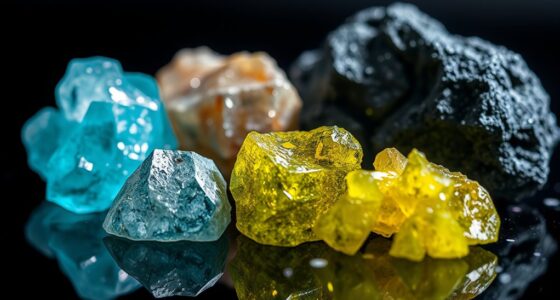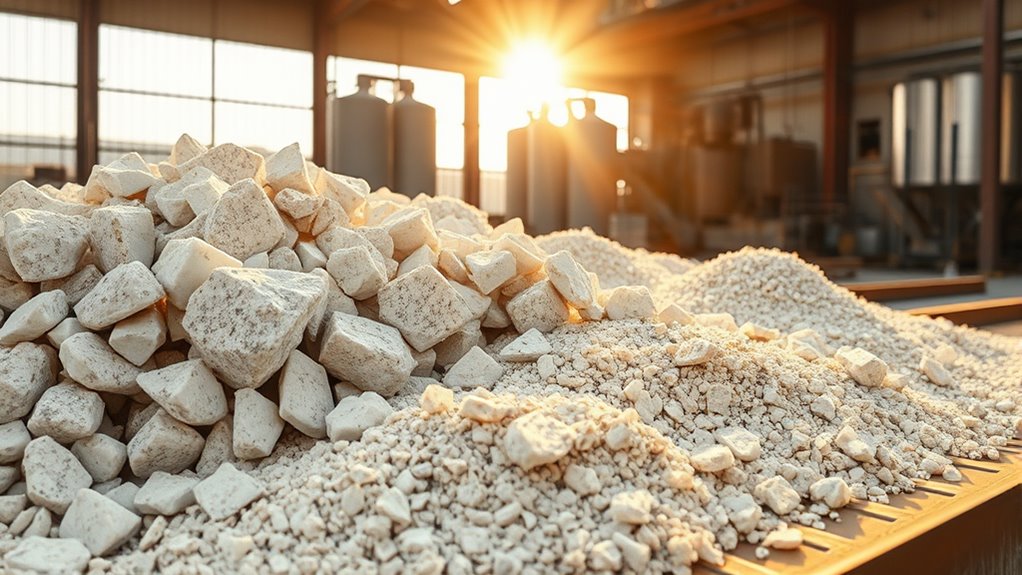

Limestone and dolomite play essential roles in many industries because of their unique properties. You’ll find limestone used in cement, lime, and soil improvement, while dolomite supplies magnesium for refractory materials and steelmaking. Their physical and chemical traits determine their specific applications. The extraction and processing impact the environment, so responsible practices are important. To understand how these minerals support various industries and the importance of sustainable methods, keep exploring further.

Prime made for students and young adults
- Fast, free delivery for dorm and study essentials
- Prime Video and Amazon Music included
- Member-only deals
Key Takeaways
- Limestone’s high calcium carbonate content makes it essential for cement, lime, and soil conditioning industries.
- Dolomite contains magnesium, serving in refractory materials and as a flux in steelmaking.
- Physical properties like hardness and porosity determine suitability for specific industrial applications.
- Processing and refining ensure mineral purity and appropriate sizing for targeted uses.
- Sustainable practices focus on waste management, energy efficiency, and recycling of mineral byproducts.
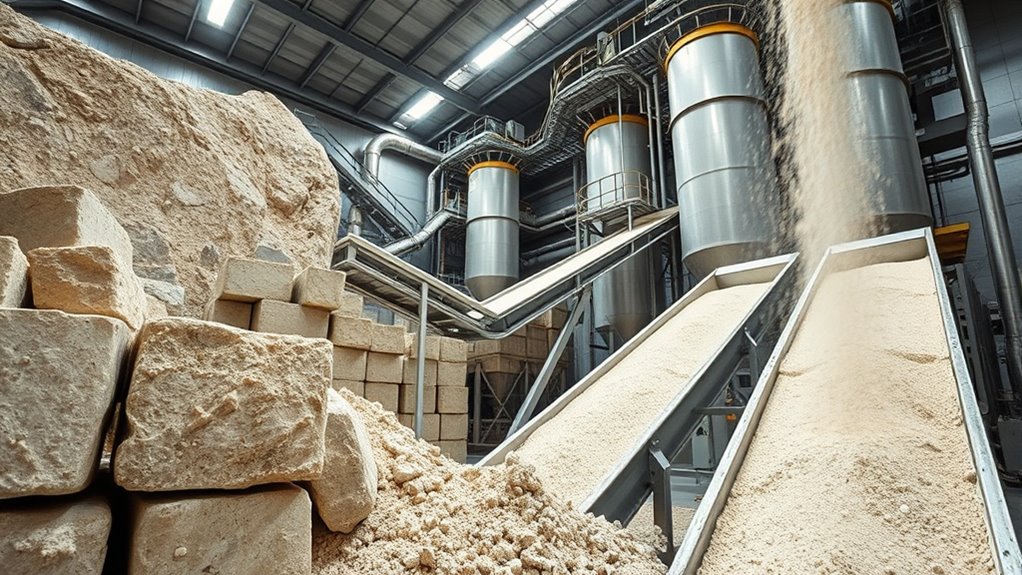
Limestone and dolomite are essential minerals widely used across various industries due to their unique chemical and physical properties. Their versatility makes them key ingredients in manufacturing, construction, agriculture, and environmental applications. When you work with these minerals, understanding their role in mineral processing is crucial, as it directly affects the efficiency and quality of the final product. In mineral processing, you typically crush, grind, and refine limestone and dolomite to extract valuable components or prepare them for specific industrial uses. This process not only guarantees proper sizing and purity but also influences the environmental impact of extraction and processing activities. You need to consider how to minimize waste, reduce energy consumption, and manage byproducts effectively, all of which contribute to more sustainable practices.
Limestone and dolomite’s physical properties, such as their hardness, porosity, and mineral composition, make them suitable for different applications. For example, limestone’s calcium carbonate content makes it ideal for producing cement, lime, and as a soil conditioner in agriculture. Dolomite, containing magnesium, is often used in refractory materials, as a flux in steelmaking, or as a source of magnesium in chemical industries. You should be aware that the extraction and processing of these minerals can have environmental impacts, including habitat disruption, dust emissions, and water use. Implementing environmentally conscious practices, like dust suppression and water recycling, can help mitigate these effects.
Furthermore, the environmental impact of limestone and dolomite isn’t limited to extraction. During mineral processing, you might generate waste materials or release particulate matter into the environment. Managing these byproducts responsibly, through proper disposal or recycling, is essential to reduce pollution. You should also stay informed about regulations and standards that govern the environmental impact of mineral operations, ensuring compliance and promoting sustainability. Advances in processing technology can also help lessen ecological footprints by increasing energy efficiency and reducing waste. Additionally, utilizing innovative waste management strategies can promote recycling and reuse of byproducts, further reducing environmental impacts.
Popular right now

Hisense 65-Inch U8 Series Mini-LED 4K UHD Smart Google TV (65U8QG)

KitchenAid 5.5-Qt Bowl-Lift Stand Mixer, Porcelain White

Sony 65 Inch BRAVIA 3 LED 4K HDR Smart Google TV (K-65S30)
As an affiliate, we earn on qualifying purchases.
Frequently Asked Questions
How Are Limestone and Dolomite Environmentally Sourced?
You can environmentally source limestone and dolomite through sustainable extraction practices that minimize environmental impact. This involves careful planning, reducing waste, and using eco-friendly methods during quarrying. By choosing suppliers committed to environmental sourcing, you help protect ecosystems and conserve resources. Sustainable extraction guarantees these materials are renewable and responsibly obtained, allowing industries to meet their needs while safeguarding the environment for future generations.
What Are the Latest Innovations in Limestone Processing?
You’ll find that recent innovations focus on improving limestone processing through advanced limestone beneficiation techniques, which enhance purity and reduce waste. Additionally, dolomite purification methods now incorporate eco-friendly, energy-efficient processes that improve quality. These innovations streamline extraction, minimize environmental impact, and lower costs, enabling you to produce higher-quality products. Embracing these advancements helps you stay competitive while supporting sustainable practices in your operations.
How Do Limestone Impurities Affect Industrial Quality?
Impurities in limestone can substantially impact its industrial quality, causing issues like reduced strength or unwanted chemical reactions. You need to focus on impurity impact during quality control to guarantee the limestone meets industry standards. Contaminants like clay, silica, or organic matter can compromise the final product’s effectiveness, so thorough testing and purification processes are essential. By managing impurities carefully, you optimize limestone’s performance in your industrial applications.
Are There Specific Safety Concerns in Handling Dolomite?
Handling dolomite is like walking through a powdery storm—you need to watch out for dust inhalation, which can irritate your lungs. It’s chemically reactive, so avoid mixing it with acids or moisture to prevent hazardous reactions. Always wear protective gear, work in well-ventilated areas, and handle it carefully to minimize health risks. Staying cautious keeps you safe in environments where dolomite’s dust and reactivity come into play.
What Future Applications Are Being Researched for These Minerals?
You’ll see researchers exploring new uses for limestone and dolomite, like incorporating them into synthetic composites to enhance strength and durability. They’re also investigating their potential in carbon capture technologies, which could help reduce greenhouse gases. These minerals might play a key role in sustainable development, offering eco-friendly solutions. As advancements continue, expect to see innovative applications that leverage their natural properties for environmental and industrial benefits.
Conclusion
You might be surprised to learn that limestone and dolomite account for over 70% of the world’s crushed stone production. Their versatility makes them essential in industries like construction, steel manufacturing, and environmental protection. Whether you’re building infrastructure or producing glass, these minerals play a crucial role. Understanding their significance helps you appreciate their impact on everyday life and the economy. Next time you see limestone or dolomite, remember how vital they are to countless industrial processes.