Renewable feedstocks are essential for creating bio-based chemicals and sustainable alternatives that lessen your reliance on finite fossil fuels. They support eco-friendly manufacturing, reduce greenhouse emissions, and boost local economies. By converting biomass from agricultural waste and other renewable sources, you can help promote a circular economy and protect ecosystems. Continuing your exploration will reveal how these innovative materials shape a greener, more resilient industrial future.
Key Takeaways
- Renewable feedstocks are replenishable raw materials used to produce bio-based chemicals, reducing dependence on finite fossil resources.
- Biomass conversion processes transform agricultural residues and waste into valuable sustainable chemicals and materials.
- Responsible sourcing of renewable feedstocks ensures environmental protection and supports sustainable resource management.
- Utilizing bio-based chemicals from renewable feedstocks lowers carbon emissions and enhances manufacturing eco-friendliness.
- The adoption of renewable feedstocks promotes circular economy principles and fosters resilient, sustainable industrial growth.
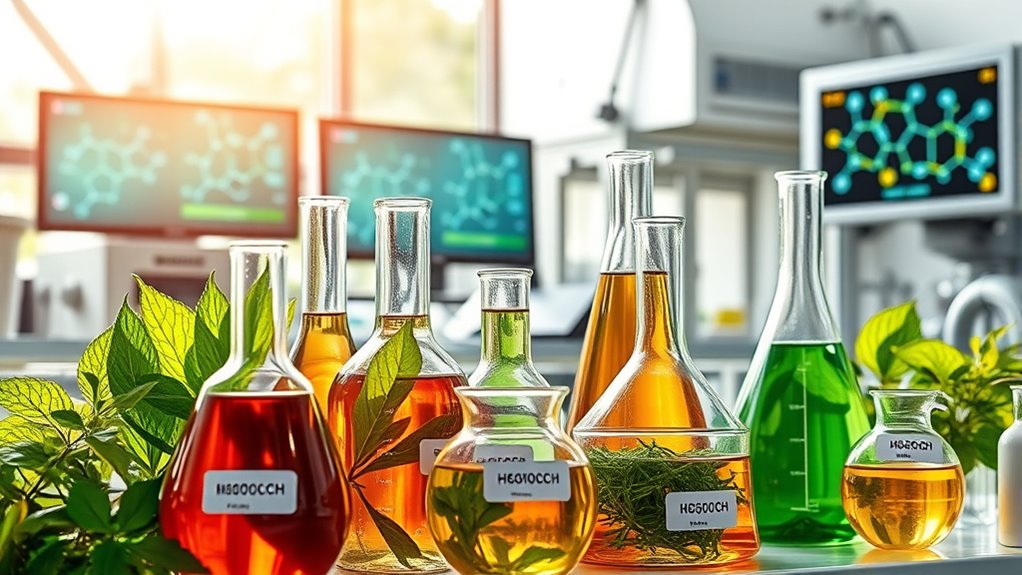
Have you ever wondered what fuels the future of sustainable manufacturing? It’s a question that’s becoming more urgent as industries seek greener alternatives. The answer lies in renewable feedstocks—materials that can be replenished naturally and used as raw inputs for producing bio-based chemicals and materials. These feedstocks are crucial because they help reduce reliance on finite fossil fuels and promote a circular economy. One of the key processes here is biomass conversion, where organic materials like agricultural residues, wood, or waste are transformed into valuable products. This process not only taps into abundant, renewable resources but also emphasizes feedstock sustainability—ensuring that the materials used are managed responsibly and won’t deplete resources or harm ecosystems.
Biomass conversion involves breaking down complex organic matter into simpler, useful compounds through various methods such as fermentation, pyrolysis, or gasification. This approach allows you to produce a wide array of chemicals, from bioethanol and bioplastics to specialty chemicals used in pharmaceuticals and cosmetics. The beauty of biomass conversion is that it leverages existing waste streams—like crop leftovers or forestry byproducts—thus turning trash into treasure. It’s an effective way to close the loop, minimize waste, and lower greenhouse gas emissions. When you prioritize feedstock sustainability, you’re ensuring that these raw materials are sourced responsibly, with attention to land use, water consumption, and biodiversity. This careful management guarantees that the shift toward renewable feedstocks doesn’t create new environmental problems.
Biomass conversion transforms waste into valuable chemicals while ensuring sustainable resource management.
Choosing renewable feedstocks also means supporting local economies and reducing supply chain vulnerabilities. Since many biomass sources are available locally, they can foster regional industries and decrease dependence on imported fossil fuels. Plus, advances in biomass conversion technology continue to improve efficiency, making bio-based chemicals more competitive in terms of cost and quality. As you explore sustainable alternatives, you’ll find that integrating renewable feedstocks into manufacturing processes not only cuts carbon footprints but also aligns with consumer demand for environmentally responsible products.
In essence, renewable feedstocks powered by biomass conversion represent a practical, forward-looking solution for a sustainable future. They allow you to produce essential chemicals without depleting finite resources, all while promoting feedstock sustainability. This approach ensures that your manufacturing processes become more resilient, eco-friendly, and aligned with global efforts to combat climate change. By embracing these materials, you’re helping to shape a cleaner, greener industrial landscape—one that balances economic growth with environmental stewardship.
Frequently Asked Questions
What Are the Main Challenges in Scaling Bio-Based Chemical Production?
You face challenges in scaling bio-based chemical production due to economic feasibility and feedstock variability. High costs and inconsistent feedstock quality can hinder process efficiency and profitability. To overcome these hurdles, you need to develop cost-effective methods and establish reliable supply chains. Addressing these issues is vital for making bio-based chemicals a viable, sustainable alternative on a larger industrial scale.
How Do Bio-Based Chemicals Compare in Cost to Traditional Petrochemicals?
You’ll find that bio-based chemicals typically cost 20-50% more than petrochemicals, mainly due to current market dynamics and production scale. While costs are decreasing as technology advances and demand grows, the price gap remains a challenge. This cost comparison influences industry adoption, with many companies weighing environmental benefits against economic feasibility. As market dynamics shift, expect bio-based chemicals to become more competitive over time.
What Policies Support the Adoption of Renewable Feedstocks Globally?
You can benefit from policies like government incentives and international agreements that promote renewable feedstocks. These policies provide financial support, tax breaks, and research funding to encourage bio-based chemical development. International agreements foster global collaboration, setting sustainability goals and standards. By leveraging these policies, you’ll find it easier to adopt renewable feedstocks, reduce reliance on fossil fuels, and contribute to a more sustainable and eco-friendly chemical industry worldwide.
How Do Bio-Based Chemicals Impact the Environment Over Their Lifecycle?
You’ll find that bio-based chemicals generally reduce environmental impact over their lifecycle, thanks to lower greenhouse gas emissions and biodegradability. Conducting a lifecycle assessment reveals their benefits, like decreased reliance on fossil fuels and less pollution. However, you should also consider potential trade-offs, such as land use and resource consumption, which could impact ecosystems. Overall, they tend to be more sustainable, but careful evaluation guarantees you comprehend their full environmental footprint.
What Are the Latest Technological Advancements in Biomass Conversion?
You’ll find that recent advancements in biomass conversion include genetic engineering, which optimizes microbes for more efficient breakdown of biomass. Catalytic breakthroughs also play a vital role, enabling faster and more selective chemical transformations. These innovations reduce energy consumption and increase yields, making bio-based chemicals more sustainable and economically viable. As a result, you benefit from cleaner processes and improved products, driving the shift toward greener industrial practices.
Conclusion
By choosing renewable feedstocks, you embrace a cleaner future, yet the journey isn’t without challenges. While bio-based chemicals promise sustainability, they still compete with food resources and require careful management. The contrast between innovation and conservation highlights that progress isn’t just about new solutions — it’s about balancing growth with responsibility. Ultimately, you hold the power to shape a greener world, where sustainability isn’t just a goal, but a shared reality.