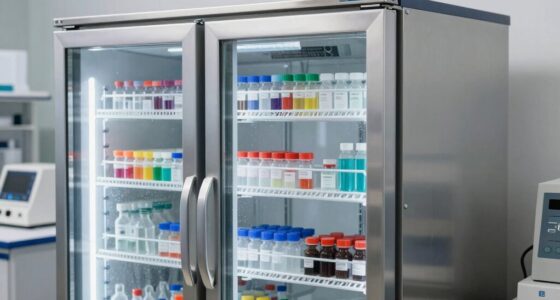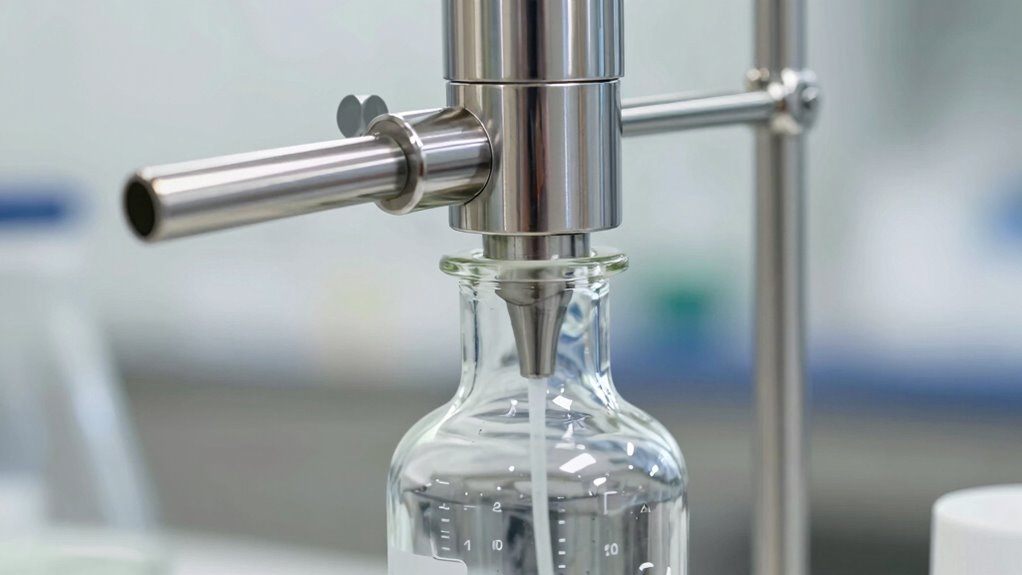

To guarantee safe liquid handling with bottle top dispensers, it’s important to choose models made from compatible, corrosion-resistant materials like stainless steel, PTFE, or glass. Properly matching materials to the chemicals you handle prevents leaks, contamination, and damage. Regularly maintain and train yourself on correct use to extend equipment life and safety. If you stay attentive to material resistance and device compatibility, you’ll find yourself better prepared for reliable, secure dispensing—more details follow.

Prime made for students and young adults
- Fast, free delivery for dorm and study essentials
- Prime Video and Amazon Music included
- Member-only deals
Key Takeaways
- Choose dispensers made from corrosion-resistant materials like PTFE or glass to ensure chemical compatibility and safety.
- Properly match dispenser materials with the chemical properties of liquids to prevent leaks, degradation, and contamination.
- Use CAD-designed, custom or replacement parts to enhance safety, performance, and durability of the dispensing system.
- Regular training on safe handling and maintenance extends equipment lifespan and minimizes chemical exposure risks.
- Select chemically resistant materials to maintain accuracy, prevent damage, and ensure long-term safe liquid dispensing.
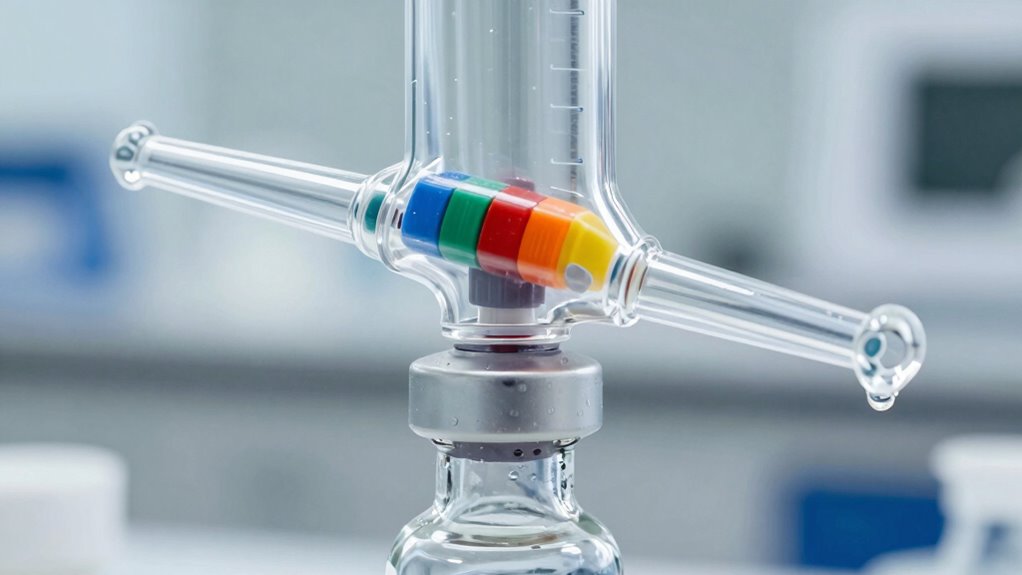
Material compatibility is another critical aspect to consider when using bottle top dispensers. These devices are made from various materials—such as stainless steel, PTFE, or glass—that must be compatible with the liquids you handle. If you’re working with aggressive chemicals or solvents, selecting a dispenser with corrosion-resistant materials like PTFE-lined components will prevent leaks and degradation. Conversely, for aqueous solutions, stainless steel or high-grade plastics may suffice. Confirming material compatibility minimizes contamination risks and avoids damage to the dispenser, which could compromise both safety and accuracy. Additionally, understanding CAD modeling can help in designing custom components or replacement parts tailored to specific chemical compatibilities, enhancing safety and performance. Proper knowledge of material resistance is essential for selecting the right materials for different chemical environments. To ensure lasting performance, it’s important to consider the chemical resistance of the materials used in your dispenser as well. Regular training on safe handling procedures can further reduce risks associated with chemical exposure and mishandling. Being aware of chemical compatibility also plays a vital role in maintaining the integrity and longevity of your dispensing equipment.
stainless steel bottle top dispenser
As an affiliate, we earn on qualifying purchases.
As an affiliate, we earn on qualifying purchases.
Frequently Asked Questions
How Long Do Bottle Top Dispensers Typically Last?
Bottle top dispensers usually last around 1 to 3 years, depending on usage and maintenance. Durability concerns often relate to the dispenser’s material compatibility with the liquids you handle, which can cause wear or degradation over time. To extend its lifespan, regularly inspect for leaks and cracks, clean it properly, and select a model made from compatible materials. Proper care ensures you get the most out of your dispenser.
Are Bottle Top Dispensers Suitable for All Liquids?
Bottle top dispensers aren’t suitable for all liquids. You need to take into account chemical compatibility and temperature resistance before use. Some chemicals may corrode or damage the dispenser, while extreme temperatures can affect its performance or cause leaks. Always check the manufacturer’s specifications to ensure the dispenser is compatible with your liquid’s chemical properties and temperature range. This way, you’ll ensure safety, accuracy, and longevity of your dispensing equipment.
What Maintenance Is Required for Bottle Top Dispensers?
You’ll be surprised to learn that maintaining bottle top dispensers is quite simple—almost too simple. Regularly check material compatibility to prevent corrosion or damage, and clean the dispenser after each use to guarantee user safety. Lubricate moving parts if necessary, and inspect for leaks or wear. Forgetting these steps risks compromising performance and safety, but with minimal effort, you keep your liquids safe and your process running smoothly.
Can Bottle Top Dispensers Be Calibrated Easily?
Yes, you can calibrate bottle top dispensers easily. Following proper calibration procedures helps maintain dispenser accuracy. You’ll need to measure the dispensed liquid against a known standard, adjust the calibration settings as needed, and verify the accuracy again. Regular calibration ensures consistent performance, minimizes errors, and guarantees safe, precise liquid handling. Always refer to the manufacturer’s instructions for specific calibration procedures tailored to your dispenser model.
Are There Disposable Options for Bottle Top Dispensers?
Yes, disposable options for bottle top dispensers are available, offering convenience for single-use applications. These dispensers are often made from recyclable materials, making them an environmentally friendly choice. You can select disposable dispensers to minimize cleaning and contamination risks. Just make sure you check product labels for recyclability information, and follow proper disposal guidelines to support sustainable practices while maintaining safe liquid handling.
PTFE chemical resistant liquid dispenser
As an affiliate, we earn on qualifying purchases.
As an affiliate, we earn on qualifying purchases.
Conclusion
With bottle top dispensers, you can reduce spills by up to 80%, making your workspace safer and more efficient. Imagine handling liquids with precision, knowing you’re markedly decreasing waste and risk. These dispensers aren’t just convenient—they’re a smart choice for safety and accuracy. By choosing the right dispenser, you guarantee smoother operations and better control, turning complex liquid handling into a simple, safe task. It’s a small change that makes a big difference.
As an affiliate, we earn on qualifying purchases.
custom replacement parts for bottle dispensers
As an affiliate, we earn on qualifying purchases.
As an affiliate, we earn on qualifying purchases.
Halloween Picks
halloween
As an affiliate, we earn on qualifying purchases.