
Lab refrigeration safeguards your samples and standards by maintaining ultra-low, stable temperatures that prevent biological activity and degradation. You can guarantee their integrity with continuous temperature monitoring, backup systems, and robust insulation. Proper maintenance and safeguards against external factors like power failures keep conditions consistent. This thorough approach helps preserve sample quality over time, supporting reliable results. If you want to understand how to make sure your samples stay protected, there’s more to explore below.

Prime made for students and young adults
- Fast, free delivery for dorm and study essentials
- Prime Video and Amazon Music included
- Member-only deals
Key Takeaways
- Maintains ultra-low temperatures below -150°C to prevent biological activity and material degradation.
- Uses continuous temperature monitoring and real-time alerts to ensure sample integrity.
- Incorporates backup systems and insulation to safeguard against power failures and external disruptions.
- Conducts regular maintenance and system checks to prevent equipment failures and ensure consistent performance.
- Implements comprehensive protection strategies combining refrigeration, monitoring, and safeguards for long-term sample preservation.
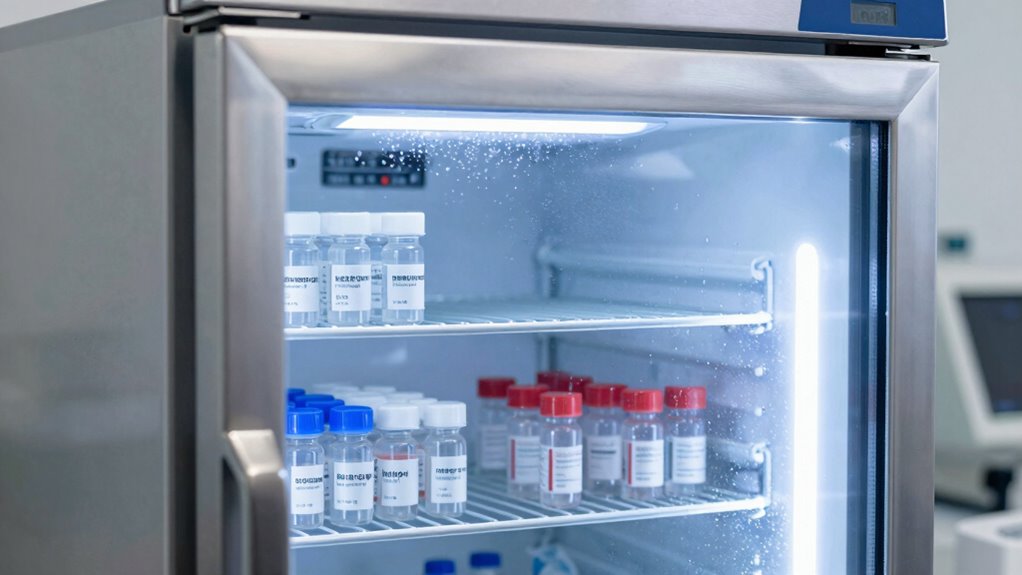
Maintaining proper protection for lab refrigeration units is essential to guarantee the integrity of sensitive samples and experiments. When you ensure your refrigeration systems are functioning correctly, you safeguard the quality and reliability of your research. One of the most critical aspects of this protection involves cryogenic storage, which is used for preserving biological specimens, pharmaceuticals, and other materials that require ultra-low temperatures. Cryogenic storage relies on maintaining extremely low temperatures, often below -150°C, to prevent biological activity and degradation. Properly protected refrigeration units minimize temperature fluctuations and guarantee samples remain in a stable environment, which is indispensable for long-term preservation.
Proper cryogenic storage ensures ultra-low temperatures for long-term preservation of biological samples and pharmaceuticals.
Temperature stability is at the core of effective lab refrigeration. Even minor variations can compromise the integrity of sensitive samples, leading to inaccurate results or deterioration of materials. You need to monitor temperature continuously and employ backup systems to prevent unexpected failures. When your refrigeration units maintain consistent temperatures, you reduce the risk of sample contamination, loss, or degradation. This stability is especially important when working with standards and reference materials, which require precise conditions to be valid and reliable. Ensuring temperature stability involves regular calibration, proper insulation, and reliable cooling mechanisms, all of which work together to keep your samples secure. Additionally, understanding system efficiency can help optimize energy consumption and reduce operational costs without compromising performance. Incorporating advanced monitoring systems can further enhance the reliability of your temperature controls by providing real-time data and alerts. Furthermore, understanding the importance of nail biology can help laboratories design better storage protocols for biological samples. Regular system checks and maintenance also contribute to reliable refrigeration, reducing the risk of unexpected failures.
Protection isn’t just about keeping the temperature low; it’s also about safeguarding against power outages, mechanical failures, and environmental factors. You should consider installing alarm systems that alert you to temperature deviations or equipment malfunctions immediately. This proactive approach allows you to respond quickly, preventing potential damage. Additionally, choosing high-quality refrigeration units designed specifically for laboratory use can make a significant difference. These units often come with advanced temperature control features, redundancy options, and durable insulation to withstand the rigors of daily lab operations.
Proper maintenance is another essential element in protecting your refrigeration systems. Regular inspections, cleaning, and servicing help identify issues before they escalate. Ensuring that all components, such as compressors, sensors, and alarms, function correctly reduces downtime and preserves the integrity of your stored materials. When you implement thorough protection strategies—covering cryogenic storage, temperature stability, backup power, and routine maintenance—you create a reliable environment where your samples and standards remain unaffected by external or internal disruptions. Ultimately, safeguarding your lab refrigeration units is fundamental to achieving accurate, reproducible results that uphold the highest standards of scientific integrity.
cryogenic storage freezer for biological samples
As an affiliate, we earn on qualifying purchases.
As an affiliate, we earn on qualifying purchases.
Frequently Asked Questions
How Often Should Lab Refrigerators Be Serviced for Optimal Performance?
You should service your lab refrigerator at least twice a year to guarantee peak performance. Follow a regular maintenance schedule that includes cleaning, inspecting seals, and checking temperature accuracy. Incorporate calibration procedures during these service visits to verify consistent temperature control. Staying proactive with maintenance helps prevent malfunctions, preserves sample integrity, and extends the lifespan of your equipment. Regular servicing is essential for reliable, accurate laboratory operations.
What Are Common Signs of Refrigerator Malfunction in Labs?
Like a detective noticing clues, you should watch for temperature fluctuations and door seal issues. If your fridge’s temperature varies unexpectedly or if the door doesn’t seal tightly, these are signs of malfunction. You might also hear unusual noises or see frost buildup. These indicators suggest your refrigerator isn’t maintaining proper conditions, risking sample integrity. Regular checks help catch problems early and keep your lab running smoothly.
How Do Lab Refrigerators Prevent Cross-Contamination?
You prevent cross-contamination by guaranteeing your lab refrigerator has separate storage areas for different samples and standards. Using dedicated shelves and containers minimizes contact between substances, maintaining sample integrity. Regularly cleaning and disinfecting interior surfaces further prevents contamination. Additionally, implementing strict lab protocols, such as using gloves and proper labeling, helps avoid accidental transfers. These measures collectively ensure contamination prevention, keeping your samples pure and reliable for accurate testing and analysis.
Can Lab Refrigeration Units Operate in Power Outages?
Lab refrigeration units generally don’t operate during power outages unless equipped with backup power sources like generators or uninterruptible power supplies (UPS). These backups help maintain temperature stability, preventing sample degradation. Without backup power, the fridge will shut down, risking temperature fluctuations that could compromise your samples and standards. To guarantee continuous protection, investing in backup systems is essential for maintaining consistent and safe storage conditions during outages.
What Are the Energy Efficiency Considerations for Lab Refrigeration?
Think of your lab refrigeration as a vigilant guardian, silently conserving energy while safeguarding precious samples. You should prioritize units with advanced cooling technology designed for energy efficiency, reducing energy consumption without sacrificing performance. Regular maintenance and proper insulation keep the system running smoothly, minimizing waste. By choosing eco-friendly models, you not only protect your valuable standards but also contribute to a greener future, ensuring sustainability in your laboratory operations.
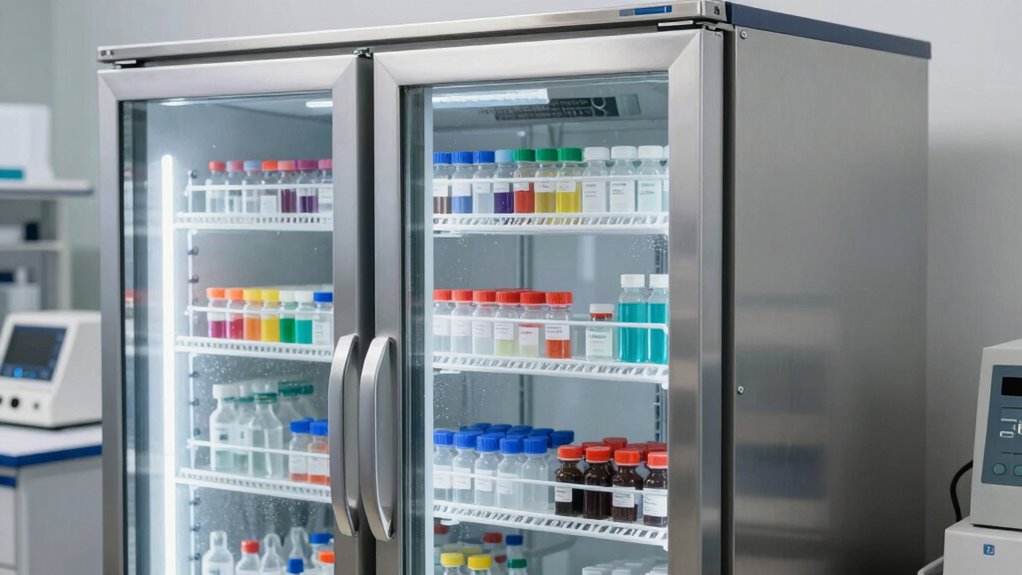
lab refrigeration units with temperature monitoring
As an affiliate, we earn on qualifying purchases.
As an affiliate, we earn on qualifying purchases.
Conclusion
By keeping your samples and standards properly refrigerated, you’re like a guardian safeguarding precious treasures. Your vigilance guarantees they stay stable, accurate, and ready when needed. Proper lab refrigeration isn’t just about storage; it’s about preserving integrity and reliability in every experiment. So, think of it as the silent protector working behind the scenes, much like a shield that keeps your essential research safe from deterioration and error. Trust in refrigeration to keep your work precise and dependable.
ultra-low temperature laboratory refrigerator
As an affiliate, we earn on qualifying purchases.
As an affiliate, we earn on qualifying purchases.
backup power supply for lab freezers
As an affiliate, we earn on qualifying purchases.
As an affiliate, we earn on qualifying purchases.
Fall Picks
fall essentials
As an affiliate, we earn on qualifying purchases.