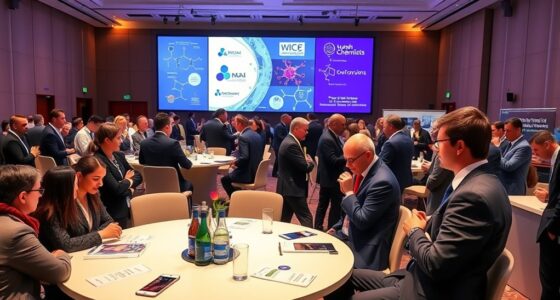
Women and minorities in chemistry still face significant challenges, including systemic barriers and ongoing biases that limit their participation and recognition. Despite progress, underrepresentation persists due to issues like lack of mentorship and implicit biases that influence opportunities. Mentorship programs and bias reduction strategies are helping create a more inclusive environment. By understanding these trends and challenges, you’ll gain insights into how the field is evolving—and how you can contribute to fostering diversity and equity.
Key Takeaways
- Women and minorities remain underrepresented in chemistry due to persistent systemic barriers and biases.
- Mentorship programs are vital for supporting diverse groups and fostering inclusion in the field.
- Unconscious biases influence hiring, recognition, and research opportunities for women and minorities.
- Addressing biases through training and inclusive policies enhances diversity and equitable participation.
- Ongoing efforts are needed to promote policies and cultural shifts that support underrepresented groups in chemistry.

Despite progress over the years, women and minorities remain underrepresented in the field of chemistry. This persistent gap often stems from systemic barriers, including lack of mentorship and ongoing biases that hinder inclusion. As someone invested in fostering diversity, you recognize that mentorship programs play a essential role in bridging these gaps. These programs connect aspiring scientists with experienced mentors who can offer guidance, support, and valuable networks. When you participate in or advocate for mentorship initiatives, you help create an environment where women and minorities feel more welcomed and empowered to pursue their passions in chemistry. Mentorship not only provides technical knowledge but also bolsters confidence, helping mentees navigate the challenges unique to underrepresented groups. Supporting these efforts is crucial for fostering a more equitable emotional support landscape within the scientific community. Bias reduction is another indispensable element in promoting diversity. You understand that unconscious biases, whether explicit or implicit, influence hiring decisions, research opportunities, and recognition within the field. Addressing these biases requires active effort. You can support bias reduction by engaging in training sessions, encouraging transparent evaluation criteria, and fostering inclusive dialogues. When you work to eliminate biases, you contribute to a culture that values merit and diversity equally, breaking down stereotypes that often discourage women and minorities from advancing. It’s about creating a level playing field where talent and dedication take precedence over preconceived notions. Furthermore, these efforts are interconnected. Mentorship programs can serve as platforms for bias reduction by raising awareness among mentors and mentees alike. When mentors recognize their biases and actively work to counteract them, they become more effective in supporting diverse students. Simultaneously, mentees gain confidence in their abilities and learn to navigate biases in academic and professional settings. As an active participant in fostering inclusive environments, you can champion policies and practices that promote equitable opportunities. Whether through formal programs or everyday interactions, your role is indispensable in reshaping the culture of chemistry into one that truly reflects diversity and inclusion. Ultimately, change begins with intentional actions. By supporting mentorship programs and championing bias reduction efforts, you help pave the way for more women and minorities to succeed in chemistry. Your commitment can inspire others to follow suit, gradually transforming a historically exclusive field into one that celebrates diverse perspectives and ideas. With continued dedication, you contribute to building a future where everyone has an equal chance to thrive in the exciting world of chemistry.

Fairy's Gift Candle, Chemistry Gifts for Chemist Professor, Graduation Presents for Chem School Graduates, Cool Chemistry Teacher Gifts, Laboratory, Mothers Day Birthday Presents for Women in Science
Funny chemistry gifts for women men; With a witty 'chemist-themed' saying, our scented candles become delightful, unforgettable gifts…
As an affiliate, we earn on qualifying purchases.
As an affiliate, we earn on qualifying purchases.
Frequently Asked Questions
How Do Mentorship Programs Impact Minority Retention in Chemistry?
Mentorship programs boost minority retention in chemistry by providing peer support and role models they can relate to. When you participate in these programs, you gain guidance, encouragement, and a sense of belonging. Seeing role models succeed shows you what’s possible, and peer support helps you navigate challenges. This active engagement fosters confidence and motivation, making it easier for minorities to stay committed and thrive in the field.
What Are the Most Effective Strategies to Increase Women’s Leadership in Chemistry?
To increase women’s leadership in chemistry, you should focus on addressing gender bias and promoting leadership development programs tailored for women. Create mentorship opportunities, guarantee equitable recognition, and foster inclusive environments that challenge stereotypes. Encouraging women to take on leadership roles and providing targeted training helps build confidence and skills, ultimately advancing gender equity in the field. These strategies empower women to break barriers and thrive as leaders in chemistry.
How Do Cultural Factors Influence Minority Participation in Chemistry Research?
Cultural perceptions and societal stereotypes profoundly influence your participation in chemistry research. These factors can create barriers, making it harder for minorities to pursue or stay in scientific fields. When cultural biases are prevalent, they might discourage your involvement or diminish your confidence. To overcome this, you need supportive environments that challenge stereotypes, promote inclusivity, and recognize diverse contributions, empowering you to thrive and lead in chemistry research.
What Role Do Funding Disparities Play in Minority Representation in Chemistry?
Funding disparities critically impact minority representation in chemistry by limiting access to essential resources and research opportunities. When funding inequality exists, minorities often struggle to secure grants, which hampers their ability to advance their careers. You can see how equitable resource allocation is vital; it ensures all scientists, regardless of background, have the support needed to contribute meaningfully to the field and promote diversity in research.
How Has Virtual Collaboration Affected Diversity Efforts in Chemistry?
Virtual collaboration acts like a bridge, connecting diverse voices across chemistry. You’ve likely noticed that virtual networking expands opportunities, making it easier for minorities to participate. Digital inclusion fosters more equitable access to resources and mentorship, breaking down geographical and social barriers. This shift encourages more diverse perspectives, enriching research and innovation. Overall, virtual collaboration helps promote diversity efforts by creating a more inclusive, accessible environment for everyone involved in chemistry.
bias reduction training for scientists
As an affiliate, we earn on qualifying purchases.
As an affiliate, we earn on qualifying purchases.
Conclusion
Despite progress, women and minorities still face significant hurdles in chemistry. Did you know that only about 30% of chemistry faculty are women, highlighting ongoing disparities? You can help change this by supporting diversity initiatives and mentoring aspiring scientists. Every effort counts in creating an inclusive environment where everyone has the opportunity to thrive. Together, we can foster a future where chemistry truly reflects the diverse talent of our society.
Chemistry: Matter & Change, Student Edition
As an affiliate, we earn on qualifying purchases.
As an affiliate, we earn on qualifying purchases.
professional networking for minority chemists
As an affiliate, we earn on qualifying purchases.
As an affiliate, we earn on qualifying purchases.