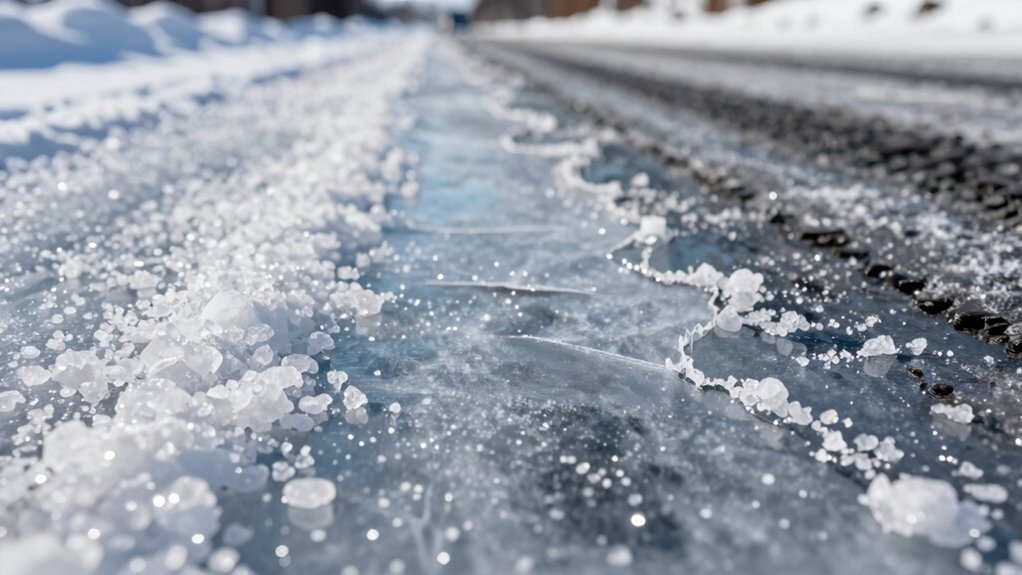

When salt is spread on icy roads, it lowers the water’s freezing point, causing the ice to melt even in cold temperatures. This chemical process makes driving safer by reducing slips and accidents. However, salt runoff can harm plants, soil, and water sources over time. While it’s an affordable and effective solution, understanding its environmental impact is important. Keep exploring to discover how salt’s benefits and downsides are balanced in winter safety strategies.

Prime made for students and young adults
- Fast, free delivery for dorm and study essentials
- Prime Video and Amazon Music included
- Member-only deals
Key Takeaways
- Salt lowers the freezing point of water, causing ice to melt at temperatures below 32°F (0°C).
- When spread on ice, salt dissolves into the thin water film, disrupting the solid ice structure.
- The chemical properties of salt interfere with water molecules, preventing them from refreezing easily.
- Salt’s effectiveness depends on temperature; colder conditions slow down the melting process.
- Melting ice improves road safety by reducing slipperiness and preventing accidents.

Have you ever wondered how roads stay safe during winter storms? It’s a question many drivers ask when icy patches make travel dangerous. The answer lies in the simple yet effective use of salt, which melts ice and helps maintain road safety. Salt lowers the freezing point of water, so when it’s spread on icy surfaces, it causes the ice to melt even when temperatures remain below freezing. This process allows vehicles to move more safely and reduces the risk of accidents caused by slipping and sliding. Without salt, icy roads would be treacherous and nearly impassable in cold weather, making transportation difficult and dangerous for everyone. Understanding the chemical properties of salt helps explain why it is so effective in this role. Additionally, research into environmentally friendly de-icing alternatives is ongoing to reduce ecological impact. The effectiveness of salt is also influenced by temperature conditions, which determine how quickly it can melt ice in different winter scenarios. It is also important to consider the cost efficiency of using salt, as it remains one of the most affordable options for large-scale road treatment.
But while salt plays an essential role in keeping roads safe, it’s important to understand its environmental impact. When salt is applied to roads, some of it washes away with melting ice, running off into nearby soil, water bodies, and groundwater. This runoff can harm ecosystems by increasing salinity levels, which can be toxic to plants, fish, and other aquatic life. Over time, excessive salt use can also degrade soil quality, affecting vegetation and agriculture in surrounding areas. Additionally, the increased salinity can corrode vehicles, bridges, and infrastructure, leading to higher maintenance costs. Recognizing these environmental concerns, many cities and transportation agencies are exploring alternative de-icing methods or using less harmful materials, but salt remains the most effective and economical option for ensuring road safety during winter storms.
As an affiliate, we earn on qualifying purchases.
Frequently Asked Questions
How Does Salt Compare to Other Ice-Melting Chemicals?
Salt is commonly used because it’s effective and affordable, but alternative de-icing methods like calcium chloride or magnesium chloride work faster at lower temperatures. However, they can be more expensive and may have a higher environmental impact. When choosing a method, consider factors like climate, safety, and environmental consequences. You might find that combining methods reduces environmental harm while maintaining effective ice melting, making your roads safer.
Is Salt Environmentally Harmful When Used on Roads?
Like Pandora’s box, using salt on roads can harm the environment. It poses risks to wildlife safety and contributes to environmental impact, especially when runoff reaches soil and water sources. You should be aware that excessive salt can damage vegetation and aquatic life, making it essential to weigh the benefits of safer roads against potential ecological costs. Responsible application and alternative de-icing methods can help minimize these environmental concerns.
Can Salt Damage Vehicle Tires or Undercarriages?
Salt can cause damage to your vehicle’s tires and undercarriage. It accelerates tire corrosion by promoting rust and weakens the metal parts of the underbody. Over time, this can lead to underbody damage and tire deterioration. To protect your vehicle, wash it regularly during winter, especially underneath, and consider applying rust-proofing treatments. Being proactive helps minimize salt-related damage and extends your vehicle’s lifespan.
How Long Does Salt Treatment Last During Winter Storms?
Salt treatment during winter storms typically lasts around 24 to 48 hours, but this can vary depending on the weather. If temperatures stay below freezing, the salt remains effective longer, aiding winter maintenance efforts. Heavy snowfall or rain can wash away the salt, reducing its effectiveness. To guarantee safe roads, authorities often reapply salt as needed. Staying informed about weather updates helps you understand when the salt treatment will be most effective.
Are There Health Risks Associated With Salt Application on Roads?
Yes, there are health concerns related to salt application on roads. You might accidentally ingest salt while walking or driving, which can cause health problems like dehydration or electrolyte imbalance. Additionally, salt can irritate your skin, eyes, and respiratory system if you’re exposed to high levels. To stay safe, wash your hands after contact and avoid inhaling salt dust, especially if you have existing health issues.
de-icing salt for winter driving
As an affiliate, we earn on qualifying purchases.
As an affiliate, we earn on qualifying purchases.
Conclusion
Now that you understand how salt melts ice by lowering its freezing point, remember that it’s a simple solution to a tricky problem. Just like a key opens a lock, salt helps release safer roads during winter. Keep in mind, “A stitch in time saves nine,” so applying salt early can prevent accidents and save you time and trouble later. Stay prepared, and let salt do its job to keep your journeys safe.
As an affiliate, we earn on qualifying purchases.
As an affiliate, we earn on qualifying purchases.
Halloween Picks
halloween
As an affiliate, we earn on qualifying purchases.