Some reactions need heat to get started because heat provides the energy required to overcome activation barriers, the energy threshold molecules must reach to react. It also makes molecules move faster, increasing collision frequency and energy levels. Without enough heat, reactions happen very slowly or not at all. Heating helps molecules collide with enough force to form new bonds. If you want to understand more about how heat influences reactions, keep exploring the details behind these processes.

Prime made for students and young adults
- Fast, free delivery for dorm and study essentials
- Prime Video and Amazon Music included
- Member-only deals
Key Takeaways
- Heat provides the energy needed for molecules to collide with sufficient force to react.
- It helps molecules overcome the activation energy barrier for reaction initiation.
- Higher temperatures increase molecular motion, raising collision frequency and energy.
- Some reactions have high activation energies, requiring heat to proceed at a practical rate.
- Heating accelerates reaction kinetics, enabling reactions to start and proceed efficiently.
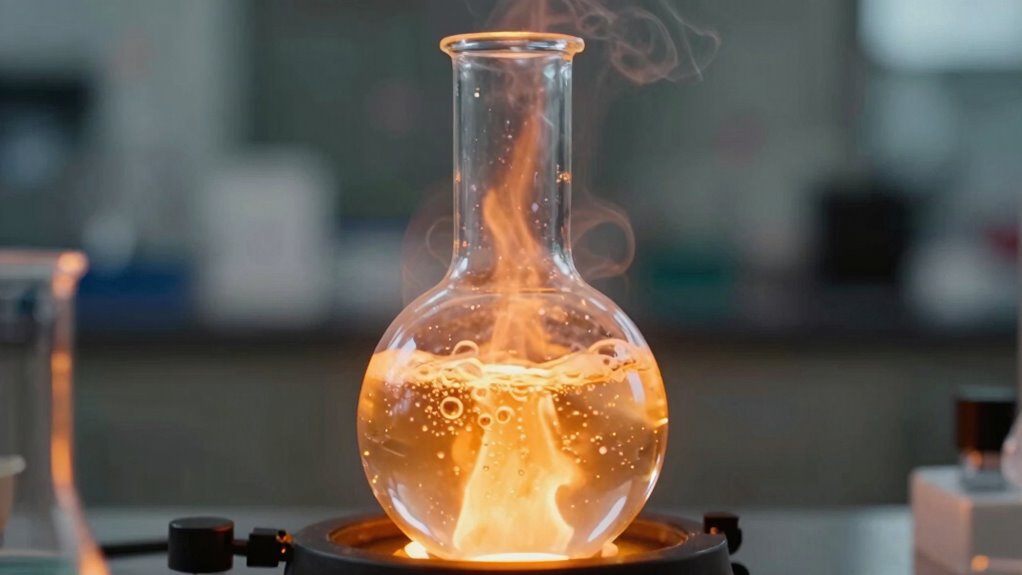
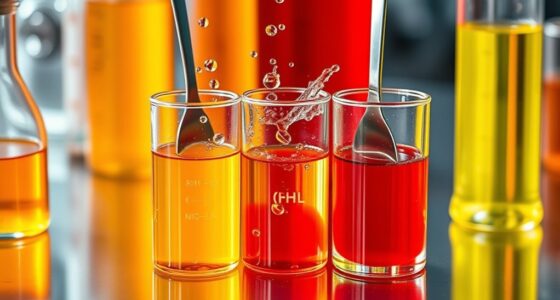
Have you ever wondered why some chemical reactions require heat to proceed? It all comes down to the way molecules interact and the energy needed to overcome certain barriers. When you heat a reaction, you’re fundamentally providing the molecules with the energy they need to collide more forcefully and frequently. This boosts the reaction kinetics, making the process faster and more more efficient. Without this added energy, many reactions just won’t happen at a noticeable rate because the molecules lack the activation energy necessary to break bonds and form new ones. The activation energy acts as an energy barrier that must be overcome for the reaction to proceed.
Catalyst effects play an integral role here as well. Catalysts are substances that speed up reactions without being consumed in the process. They work by lowering the activation energy, which is the energy barrier molecules must surpass for a reaction to occur. When heat is applied, it complements the catalyst’s effect by supplying additional energy, further reducing the energy threshold. This synergy between heat and catalysts makes certain reactions happen quickly enough to be practical, especially in industrial processes or biological systems.
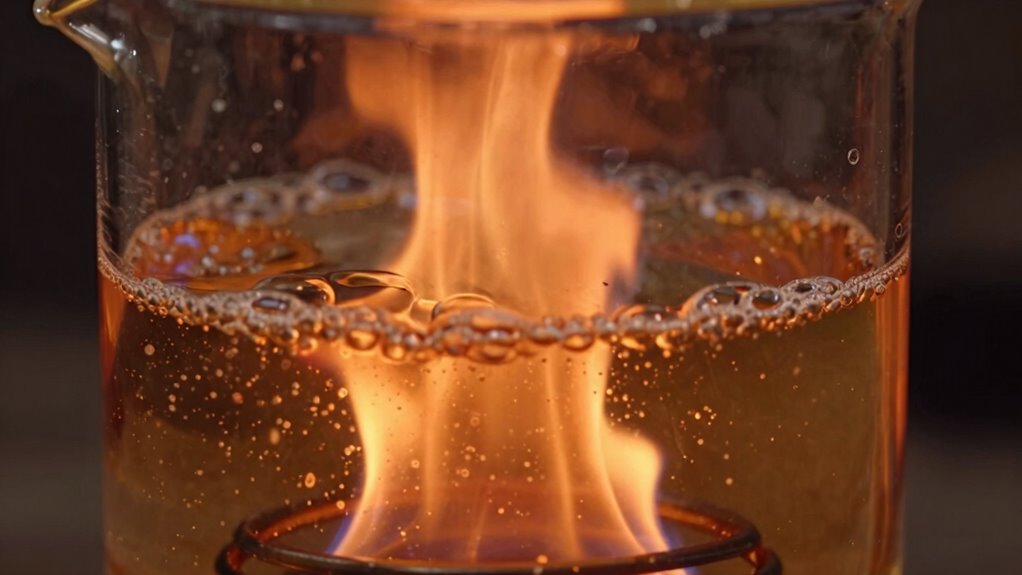
Reaction kinetics explains why heat is so important in initiating many reactions. It studies the rates at which reactions occur and how different factors influence these rates. When you increase the temperature, molecules move faster, increasing the frequency of collisions and the likelihood that these collisions have enough energy to lead to a reaction. Essentially, heat helps molecules reach their activation energy faster, which accelerates the overall process. Without sufficient heat, many molecules simply don’t collide with enough energy to get over the energy barrier, and the reaction remains sluggish or doesn’t occur at all.
In some cases, reactions are so sluggish at room temperature that they’re practically impossible to observe without heating. The energy barrier is simply too high, and the molecules need a thermal boost to get things moving. This is especially true in processes like combustion or synthesis reactions, where high temperatures are necessary to produce meaningful reaction rates. Conversely, some reactions can proceed at room temperature, but heating makes them happen faster and more completely, improving yields and efficiency.
As an affiliate, we earn on qualifying purchases.
Frequently Asked Questions
How Does Heat Influence Reaction Speed at the Molecular Level?
Heat increases reaction speed by boosting molecular vibrations, making molecules move faster and collide more frequently and forcefully. This heightened movement helps molecules reach their activation energy—the minimum energy needed for a reaction to occur. With enough heat, more molecules have sufficient energy to overcome this barrier, accelerating the reaction. So, your reaction speeds up because heat energizes molecules, making it easier for them to react.
Can Reactions Occur Without Heat Under Specific Conditions?
Reactions can occur without heat when alternative energy sources provide enough energy to overcome reaction barriers, like sunlight or electrical sparks. Think of it like a key opening a door without a traditional keyhole. In these cases, the energy supplied bypasses the need for heat, enabling the reaction to proceed. While heat often helps reactions start, specific conditions and alternative energy can make them happen without it.
What Types of Reactions Are Most Affected by Temperature Changes?
You’ll find that reaction mechanisms involving significant energy barriers are most affected by temperature changes. When you increase heat, it provides the energy needed to overcome these barriers, speeding up the reaction. Conversely, reactions with low energy barriers proceed quickly even at lower temperatures. So, temperature plays a vital role in controlling reaction rates, especially when high energy barriers slow down the process without additional heat input.
Is Heat Always Necessary for Chemical Reactions to Proceed?
No, heat isn’t always necessary for chemical reactions to proceed. While heat can provide the energy transfer needed to overcome activation barriers, some reactions occur spontaneously through different reaction pathways. For example, enzymes lower activation energy, allowing reactions at room temperature. However, in many cases, adding heat speeds up reactions by increasing molecular motion, making it easier for reactants to collide with enough energy to react.
How Do Catalysts Interact With Heat to Affect Reactions?
You might wonder how catalysts interact with heat to influence reactions. Catalysts lower energy barriers, making it easier for reactions to proceed, especially when heat alone isn’t enough. They assist in catalyst activation, ensuring the reaction pathway is more efficient. When heat is added, it works with the catalyst to further reduce activation energy, speeding up the reaction without being consumed, leading to faster, more efficient chemical processes.
As an affiliate, we earn on qualifying purchases.
Conclusion
So, next time you’re wondering why some reactions need heat, remember it’s all about providing enough energy to overcome activation barriers. Remarkably, studies show that increasing temperature can speed up reactions by up to a thousand times. This highlights just how essential heat is in kickstarting certain chemical processes. By understanding this, you can better appreciate the role heat plays in everything from cooking to industrial manufacturing, making chemistry both fascinating and practical in everyday life.
reaction kinetics heating mantle
As an affiliate, we earn on qualifying purchases.
As an affiliate, we earn on qualifying purchases.
laboratory heat source for reactions
As an affiliate, we earn on qualifying purchases.
As an affiliate, we earn on qualifying purchases.
Fall Picks
fall essentials
As an affiliate, we earn on qualifying purchases.