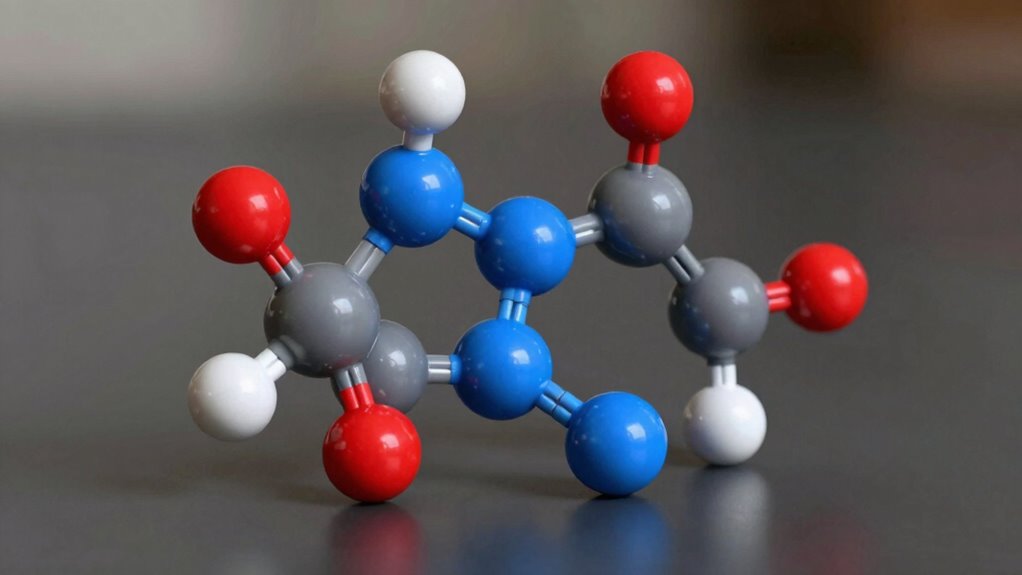

To predict molecular shape with VSEPR theory, start by counting all electron pairs around the central atom, including bonding and lone pairs. These pairs repel each other and arrange themselves to maximize distance, shaping the molecule. Determine the electron pair geometry first, then adjust for any lone pairs that affect the shape. Understanding how these pairs influence the structure helps you forecast molecular shapes and properties. Keep exploring to master how electron arrangements guide molecular forms.
Key Takeaways
- Count all electron pairs (bonding and lone pairs) around the central atom to determine electron pair geometry.
- Identify the number of bonding pairs to predict the initial molecular shape based on electron repulsion.
- Adjust the shape considering lone pairs, which repel bonding pairs and can alter the molecular geometry.
- Use symmetry and bond types to assess whether the molecule is polar or nonpolar.
- Apply these steps systematically to accurately predict the three-dimensional molecular shape.

Ever wonder how scientists determine the shapes of molecules? It’s a fascinating process that starts with understanding the arrangement of electrons around the central atom. This is where VSEPR (Valence Shell Electron Pair Repulsion) theory comes into play. VSEPR helps you predict the three-dimensional shape of a molecule based on the idea that electron pairs, whether bonding or lone pairs, repel each other and try to get as far apart as possible. The first step is to examine the electron pair geometry, which considers all electron pairs around the central atom. This geometry influences the overall shape of the molecule, giving you a foundation to understand its structure. Additionally, recognizing the importance of electron pair geometry can help you better anticipate the molecular shape and properties. To determine the electron pair geometry, you need to count the total number of electron pairs—this includes bonding pairs that connect atoms and lone pairs that stay close to the nucleus without bonding. For example, if there are four electron pairs, the electron pair geometry is tetrahedral. Once you establish this initial shape, you can refine your understanding by considering molecular polarity. Molecular polarity depends on the symmetry of the molecule and the distribution of electrical charge. If the molecule’s shape is symmetrical and the bonds are identical, the molecule tends to be nonpolar because the dipole moments cancel each other out. Conversely, if the shape is asymmetrical or contains different types of bonds, the molecule may be polar, with an uneven distribution of charge.
Knowing the electron pair geometry and how the electrons are arranged helps you predict whether a molecule is polar or nonpolar. For instance, a linear molecule with identical bonds, like carbon dioxide, is nonpolar because its symmetry cancels out dipole moments. On the other hand, water, which has a bent shape due to lone pairs, is polar because its shape causes an uneven charge distribution. When you analyze a molecule with VSEPR, you look at both the electron pair geometry and the molecular shape to determine its polarity, which affects properties like solubility and reactivity. By mastering this process, you can predict the shape and polarity of nearly any molecule, making VSEPR an essential tool in chemistry. It’s all about visualizing how electron pairs repel and how that influences the molecule’s overall structure and behavior.
VSEPR theory molecular model kit
As an affiliate, we earn on qualifying purchases.
As an affiliate, we earn on qualifying purchases.
Frequently Asked Questions
Can VSEPR Theory Predict Molecular Polarity?
Yes, VSEPR theory can help you predict molecular polarity. By examining the electronic geometry and the distribution of electron pairs around the central atom, you can determine if the molecule has an uneven charge distribution. When bond dipoles don’t cancel out due to asymmetrical electron pairs or geometry, the molecule is polar. So, understanding the shape and electron pair arrangement is key to predicting molecular polarity accurately.
How Does VSEPR Handle Molecules With Expanded Octets?
VSEPR handles molecules with expanded octets by considering the additional electron pairs around the central atom, which results from atoms with more than eight electrons. These extra electrons increase electron pair repulsion, shaping the molecule differently. You assign electron groups, including lone pairs and bonds, and then predict the geometry based on electron pair repulsion. This approach helps you accurately determine the molecule’s shape, even with expanded octets.
Is VSEPR Applicable to Transition Metal Complexes?
VSEPR theory isn’t typically applicable to transition metal complexes because they often involve coordination geometries and electron arrangements that differ from simple molecules. Transition metals can have various oxidation states and coordinate with multiple ligands, forming complex geometries like octahedral, tetrahedral, or square planar. To predict their shapes accurately, you need to take into account coordination chemistry principles beyond VSEPR, accounting for d-orbital involvement and ligand effects.
What Are Limitations of VSEPR in Complex Molecules?
About 80% of complex molecules show VSEPR limitations. You’ll find that steric effects can cause deviations from predicted shapes, especially with bulky groups. Additionally, electron distribution isn’t always symmetric, making VSEPR less accurate for transition metal complexes. These factors can lead to unexpected molecular geometries, so don’t rely solely on VSEPR for complex molecules—consider other approaches to account for steric and electronic nuances.
How Does Lone Pair Repulsion Influence Bond Angles?
Lone pair repulsion greatly influences bond angles because lone pair interactions cause electron cloud distortion around the central atom. These lone pairs occupy space and repel bonding pairs, pushing them closer together. As a result, bond angles decrease from their ideal values, especially in molecules with more lone pairs. This distortion helps you predict the actual molecular shape by understanding how lone pairs modify the electron geometry.
As an affiliate, we earn on qualifying purchases.
Conclusion
By mastering VSEPR theory, you can confidently predict molecular shapes and understand their properties. Did you know that over 99% of known molecules are based on VSEPR principles? This makes the theory incredibly useful for chemists worldwide. So, next time you’re faced with a new compound, remember that a simple electron pair arrangement can reveal its structure. With practice, predicting molecular shapes becomes a quick and insightful skill, opening doors to deeper chemical understanding.
As an affiliate, we earn on qualifying purchases.
chemistry molecular structure kit
As an affiliate, we earn on qualifying purchases.
As an affiliate, we earn on qualifying purchases.





![Navier-Stokes – Tristan Buckmaster [Pdf]](https://varietychem.com/wp-content/uploads/2026/09/navier-stokes-tristan-buckmaster-pdf-featured-260x140.jpg)

