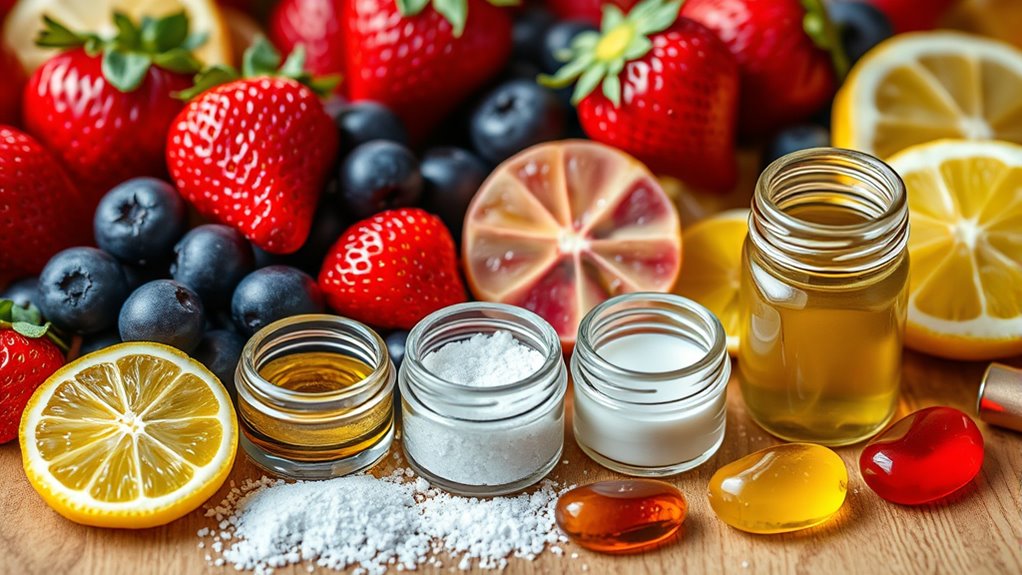

Food additives like preservatives, colorants, and flavorings play important roles in keeping your processed foods safe, visually appealing, and tasty. Preservatives help prevent spoilage, colorants make foods look attractive and fresh, and flavorings enhance taste and aroma. These additives are regulated by agencies like the FDA and EFSA to guarantee safety and transparency. If you want to learn more about how these ingredients work and are regulated, there’s plenty more to discover.
Key Takeaways
- Food additives like preservatives, colorants, and flavorings enhance appearance, taste, and shelf life of processed foods.
- Preservatives prevent spoilage by inhibiting bacteria, molds, and yeasts, ensuring food safety and longevity.
- Colorants improve visual appeal and influence perception of freshness, with regulations ensuring safe and transparent use.
- Flavorings boost taste and aroma, with both artificial and natural options regulated for safety and proper labeling.
- Regulatory agencies (FDA, EFSA) oversee additive safety, usage levels, and labeling to protect consumers and promote transparency.
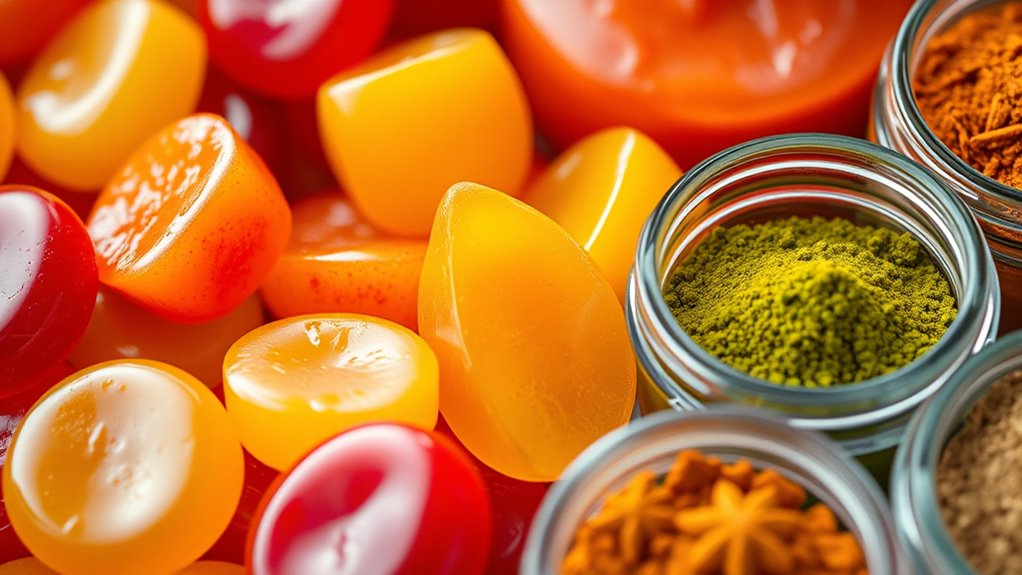
Have you ever wondered what makes your processed foods look brighter, taste better, or last longer? The answer lies in food additives—substances added to enhance appearance, flavor, or shelf life. While they serve important roles, understanding what’s behind these additives helps you make informed choices. One key aspect involves preservatives, colorants, and flavorings, which are carefully regulated to ensure safety and effectiveness.
Food additives like preservatives, colorants, and flavorings are carefully regulated for safety and quality.
When it comes to preservatives, their main goal is to prevent spoilage caused by bacteria, molds, or yeasts. Without them, many foods would spoil quickly, wasting resources and reducing availability. However, some consumers prefer natural alternatives, like vitamin E (tocopherols) or vinegar, instead of synthetic preservatives. These natural options often appeal to those seeking cleaner labels or fewer chemical additives. Nevertheless, food companies must follow strict regulatory standards—set by agencies such as the FDA or EFSA—to confirm these preservatives are safe at specified levels. These standards determine which preservatives are allowed, how much can be used, and what labeling must accompany them. This regulatory oversight helps protect consumers from potential health risks while supporting industry innovation in developing safer, more natural preservatives.
Colorants are another critical additive, used to make foods visually appealing. Bright reds, vibrant yellows, and deep browns catch your eye and influence your perception of freshness and quality. While some colorants are synthetic dyes, many manufacturers are turning to natural alternatives, like beet juice, turmeric, or paprika, to meet consumer demand for more natural ingredients. These natural colorants are also subjected to regulatory standards that specify safe usage levels and ensure they do not cause adverse health effects. The regulations help maintain consistency and transparency, so you can trust that the colors you see are both safe and true to their natural origins when labeled accordingly.
Flavorings, both artificial and natural, are added to boost taste and aroma. Artificial flavors are synthesized to mimic natural ones, often providing a more consistent and cost-effective option. Natural flavorings come from extracts, essences, or distillates derived directly from plants or animals. Many consumers prefer natural flavorings, and food producers are encouraged to use them when possible, guided by regulatory standards that impose safety and labeling requirements. These standards ensure that whether a flavoring is natural or artificial, it’s safe for consumption and clearly indicated on packaging.
Frequently Asked Questions
Are All Food Additives Safe for Children?
Not all food additives are safe for children. Due to pediatric sensitivity, some additives can cause adverse reactions or health issues. Regulations around additive use aim to protect kids, but you should always check labels and avoid additives known to trigger sensitivities. It’s wise to consult your child’s doctor if you’re unsure about specific preservatives, colorants, or flavors, as additive regulation can vary and isn’t foolproof for every child’s safety.
How Do Preservatives Affect Food Shelf Life?
Preservatives dramatically extend your food’s shelf life by halting food spoilage and controlling microbial growth. Without them, your food could spoil in days, but with preservatives, it stays fresh for weeks or even months! They act like microscopic superheroes, fighting off bacteria and mold that cause spoilage. So, by adding preservatives, you’re effectively preventing food spoilage and keeping your favorite snacks safe and tasty for much longer!
Can Food Colorants Cause Allergic Reactions?
Yes, food colorants can cause allergic responses or sensitivity reactions in some people. You might experience symptoms like hives, itching, or swelling after consuming products with certain colorants. These reactions are more common with artificial colorants, but some natural ones can also trigger sensitivities. If you’re aware of specific allergies, always check ingredient labels carefully to avoid potential triggers and prevent adverse reactions.
Are Natural Flavors Safer Than Artificial Ones?
Natural flavors are generally considered safer than artificial ones because they come from natural extracts, which may reduce exposure to synthetic chemicals. However, natural flavors can still cause allergies in some people. Natural extracts often provide more flavor complexity, offering richer and more authentic taste profiles. Always check ingredient labels and consult with a healthcare professional if you have sensitivities or allergies to certain natural extracts.
How Do Food Additives Influence Taste and Texture?
Food additives influence your taste and texture by enhancing flavors and modifying textures. You’ll notice flavor enhancement makes foods more appealing, while texture modification can make products creamier, crunchier, or smoother. Additives like flavor enhancers boost taste, and those that alter texture help achieve the desired mouthfeel. These adjustments improve your overall eating experience, making your favorite foods more enjoyable, whether through richer flavors or improved consistency.
Conclusion
By now, you see how food additives are like the spices in a recipe—they can enhance, preserve, or sometimes disguise what’s inside. But just as too much salt can ruin a dish, overdoing it with additives isn’t ideal. Staying informed helps you make smarter choices, like picking fresh ingredients over processed foods. Remember, understanding these additives is like shining a light in a dark kitchen—making everything clearer so you can enjoy your meals safely and confidently.