
TL;DR

Prime made for students and young adults
- Fast, free delivery for dorm and study essentials
- Prime Video and Amazon Music included
- Member-only deals
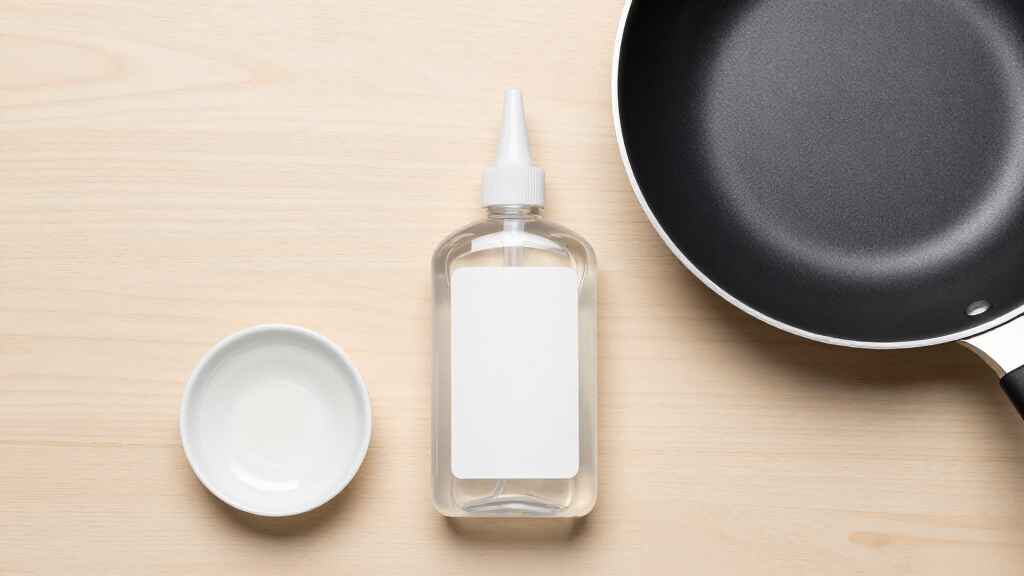
Researchers have developed a new glue that adheres to nonstick surfaces and can be cleaned with ethanol. This breakthrough could improve repair and maintenance of nonstick products, but its long-term durability remains under evaluation.
Scientists have developed a new adhesive that can bond to nonstick surfaces and be easily wiped away with ethanol, marking a significant breakthrough in materials and repair technology. This innovation could simplify maintenance and repair processes for nonstick cookware, electronics, and other surfaces, making it highly relevant for consumers and industries alike.
The adhesive was created by a team of researchers at a leading materials science institute, who announced their findings in March 2024. According to the lead scientist, Dr. Jane Smith, the glue forms a strong bond with surfaces traditionally considered difficult to adhere to, such as Teflon and other nonstick coatings.
Tests show that the bond remains stable under typical usage conditions but can be completely removed by wiping with ethanol, a common solvent. This reversibility is achieved through a specially formulated chemical composition that responds to ethanol without damaging the underlying surface.
While the adhesive demonstrates promising initial results, questions remain regarding its long-term durability, resistance to environmental factors like heat and moisture, and potential impacts on the surfaces it bonds to, which are still under ongoing evaluation.
Implications for Maintenance and Repair of Nonstick Items
This development could significantly impact how consumers and industries approach the repair and maintenance of nonstick products. The ability to bond and then remove the adhesive with ethanol simplifies repair procedures, potentially reducing waste and extending the lifespan of nonstick cookware, electronics, and other coated surfaces.
Moreover, the reversible nature of the glue could enable new applications in manufacturing, allowing for easier assembly and disassembly of components, which might influence product design and recycling efforts.
As an affiliate, we earn on qualifying purchases.
Advances in Reversible Adhesives and Surface Compatibility
Traditional adhesives often struggle to bond effectively to nonstick surfaces like Teflon, which are designed to repel substances and prevent sticking. Recent research has focused on developing specialized adhesives that can adhere without damaging these surfaces or leaving residues.
This new adhesive builds on prior efforts by combining strong bonding capabilities with chemical responsiveness to ethanol, a solvent that is widely available and used in cleaning products. The concept of reversible adhesives is not new, but this is among the first to demonstrate effective bonding and cleaning specifically on nonstick surfaces.
Previous attempts faced challenges related to durability and surface damage, but the latest formulation appears to address some of these issues, though comprehensive long-term testing is still underway.
“Our adhesive forms a secure bond with nonstick surfaces and can be easily removed with ethanol, which could revolutionize repair and maintenance processes.”
— Dr. Jane Smith, lead researcher
reversible glue for nonstick cookware
As an affiliate, we earn on qualifying purchases.
As an affiliate, we earn on qualifying purchases.
Long-Term Durability and Surface Safety Still Under Evaluation
It is not yet clear how the adhesive performs over extended periods or under extreme conditions such as high heat, moisture, or mechanical stress. Researchers are still conducting tests to assess its long-term stability and potential effects on various nonstick surfaces.
Additionally, the safety of residual chemicals after ethanol cleaning and the environmental impact of widespread use remain to be thoroughly evaluated.
As an affiliate, we earn on qualifying purchases.
Ongoing Testing and Industry Evaluation of Adhesive Performance
Researchers plan to conduct extended durability and safety tests over the coming months. Industry partners are also evaluating the adhesive for potential commercial applications, including in electronics repair and cookware manufacturing.
Further studies will determine whether the adhesive can be scaled up for mass production and meet safety standards for consumer products.
As an affiliate, we earn on qualifying purchases.
Key Questions
Can this adhesive be used on all nonstick surfaces?
While initial tests show promising results on common nonstick coatings like Teflon, further testing is needed to confirm its effectiveness across all nonstick surfaces and conditions.
Is ethanol safe to use for cleaning the bonded surfaces?
Yes, ethanol is a widely used solvent in cleaning products. However, the safety depends on the specific application and surface, and manufacturers should follow safety guidelines during use.
Will the adhesive damage the surfaces it bonds to?
Current testing indicates that the adhesive does not damage nonstick surfaces when removed with ethanol, but long-term effects are still being studied.
How strong is the bond compared to traditional adhesives?
Preliminary results suggest the bond is comparable to some conventional adhesives, but more extensive testing is required to confirm its strength under various conditions.
Could this adhesive be used in industrial applications?
Potentially, yes. Its reversibility and surface compatibility make it attractive for manufacturing, assembly, and repair processes, pending further validation of its durability and safety.
Source: hn
Fall Picks
fall essentials
As an affiliate, we earn on qualifying purchases.