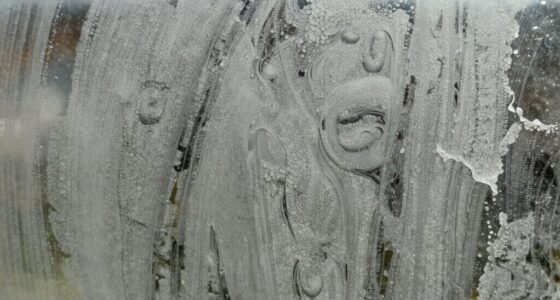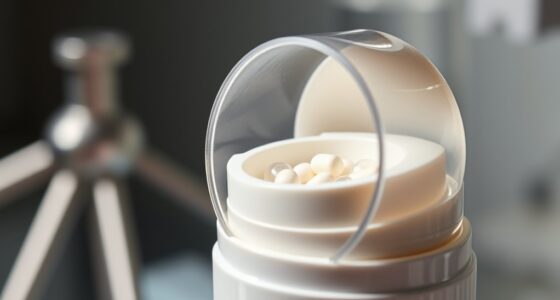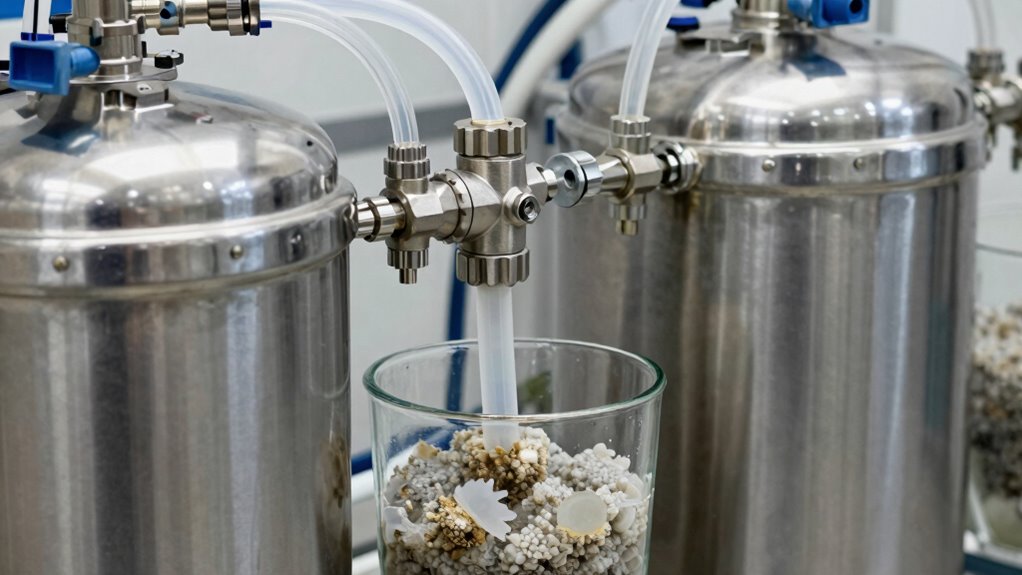

Industrial water softeners prevent scale buildup by removing minerals like calcium and magnesium, which cause hard water. This process helps keep your equipment running efficiently, saves energy, and reduces maintenance costs. Regular upkeep, such as salt replenishment and system cleaning, is essential to maintain performance and prevent damage. Proper scale prevention not only extends your system’s lifespan but also supports environmentally friendly operations. Continuing further can give you more detailed insights into effective deferral strategies.
Key Takeaways
- Water softeners remove calcium and magnesium ions to prevent scale formation in industrial equipment.
- Regular maintenance, including salt replenishment and system cleaning, ensures optimal softening performance.
- Properly maintained systems reduce energy consumption and operational costs associated with scale buildup.
- Scale prevention enhances equipment lifespan and minimizes downtime and costly repairs.
- Monitoring and preventative strategies optimize system efficiency and support environmental sustainability.
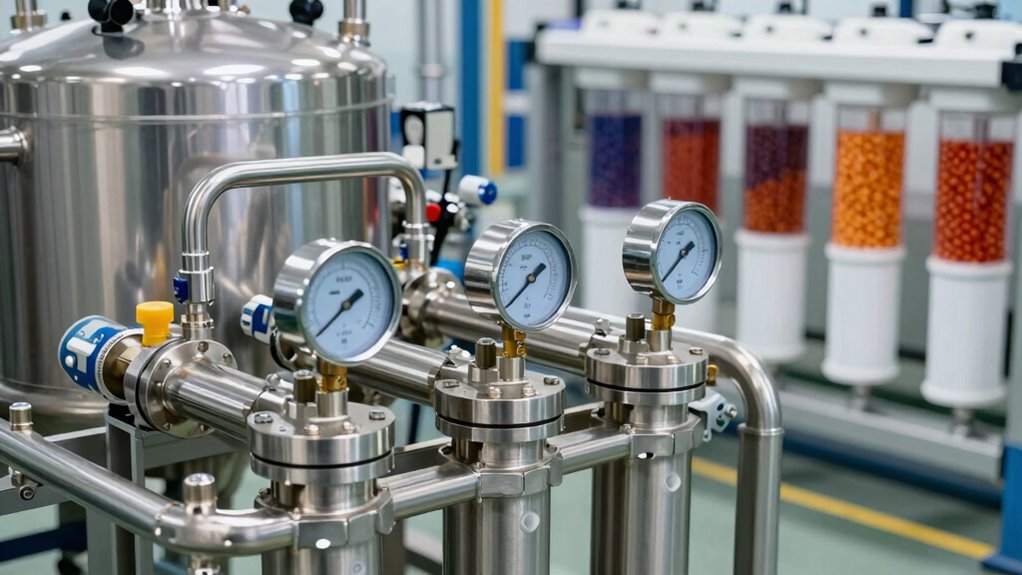
One of the key benefits of implementing industrial water softeners is their positive environmental impact. When hard water causes scale buildup, it often results in higher energy use because equipment has to work harder to heat water or pump fluids through clogged pipes. Using soft water minimizes this energy drain, reducing your carbon footprint and lowering your operational costs. Additionally, softened water enables more effective cleaning processes, which means you may use less chemical detergents and cleaning agents, further decreasing environmental pollution. By investing in water softening technology, you’re making a conscious choice to support greener practices and reduce your facility’s environmental impact. Maintaining proper biodiversity in surrounding ecosystems can also be supported by reducing chemical runoff from cleaning agents and pollutants associated with scale buildup.
However, it’s crucial to evaluate maintenance costs when choosing a water softening system. While these systems are generally reliable, they do require regular upkeep to function at its best. The most common maintenance involves replenishing salt levels in the resin bed, cleaning mineral deposits, and inspecting components for wear and tear. Regular system monitoring can help detect issues early and ensure optimal performance, preventing costly repairs. Incorporating preventative maintenance strategies can extend the lifespan of your system and improve efficiency. Proper maintenance also involves keeping an eye on system performance to avoid unexpected failures that could disrupt operations. Additionally, understanding the cost implications of maintenance helps in planning your budget effectively. Neglecting maintenance can lead to reduced softening efficiency, increased water and salt consumption, and potential damage to the system. Although maintenance costs are an ongoing expense, they are often offset by the savings gained from preventing scale-related damage and reducing energy bills. Proper maintenance ensures your investment in a water softener pays off in the long run, avoiding costly repairs and downtime.

Aquasure Harmony Series 48,000 Grains Whole House Water Softener w/High Efficiency Digital Metered Control Head (48,000 Grains)
- Ideal for 3-4 Bathrooms: Provides soft water throughout your home
- High Efficiency Capacity: Treats 48,000 grains of hardness
- Multi-Stage Filtration: Removes 99% of contaminants
As an affiliate, we earn on qualifying purchases.
As an affiliate, we earn on qualifying purchases.
Frequently Asked Questions
How Often Should I Replace the Resin in My Water Softener?
You should replace the resin in your water softener every 10 to 15 years, depending on resin durability and your softener’s overall lifespan. Keep an eye on the water’s softness; if you notice increased hardness or mineral buildup, it’s a sign the resin is deteriorating. Regular maintenance and monitoring help extend the softener’s lifespan, but eventually, resin replacement guarantees your system continues to work efficiently.
Can Water Softeners Remove All Types of Scale?
Water softeners can considerably reduce mineral buildup and prevent scale formation, but they may not remove all types of scale, especially if it’s already heavily mineralized or caused by other factors like silica or iron. They work best at softening water by removing calcium and magnesium. To handle stubborn or complex scale issues, consider additional treatments like chemical descaling or specialized filtration systems alongside your softener’s use.
What Are the Environmental Impacts of Water Softening?
Water softening impacts the environment through increased salt discharge, energy consumption, and resource use. You might face environmental regulation that limits salt levels, aiming to reduce ecological effects like soil and water contamination. While softening improves equipment lifespan and efficiency, it’s essential to balance these benefits with ecological considerations. You can minimize environmental impacts by choosing alternative systems or Eco-friendly methods, ensuring responsible water management that protects both your operations and the environment.
How Does Water Temperature Affect Softener Efficiency?
Higher water temperatures can reduce softener efficiency because they alter water chemistry and affect ion exchange processes. When water is too hot, sodium ions may not exchange as effectively with calcium and magnesium, leading to less softened water. Proper temperature regulation guarantees ideal softener performance, maintaining effective ion exchange and preventing scale buildup. Keep water within recommended temperature ranges to maximize softener efficiency and prolong equipment lifespan.
Are There Alternative Methods to Water Softening for Scale Prevention?
Did you know that up to 85% of homes and industries seek eco-friendly alternatives? Yes, there are chemical-free solutions you can explore, like magnetic or electronic water conditioners, which alter mineral behavior to prevent scale buildup. These methods are eco-friendly and reduce chemical usage, making them safer for the environment. They’re effective options for scale prevention, especially if you prefer sustainable, chemical-free solutions over traditional water softening systems.

Waterdrop AP431 Whole House Scale Inhibitor with Adapter
- Scale Inhibition: Uses food-grade polyphosphates to prevent scale
- Energy Saving: Protects appliances and extends lifespan
- High Flow Rate: Supports 10 GPM with 3/4 inch NPT
As an affiliate, we earn on qualifying purchases.
As an affiliate, we earn on qualifying purchases.
Conclusion
By understanding how industrial water softeners work, you can effectively prevent scale buildup and protect your equipment. Did you know that hard water causes over $15 billion in damage annually to industrial systems worldwide? Investing in the right softening solutions not only saves you money on repairs but also boosts efficiency. Keep scale at bay, and you’ll extend your equipment’s lifespan while maintaining peak performance. It’s a smart move for any facility aiming for long-term operational success.
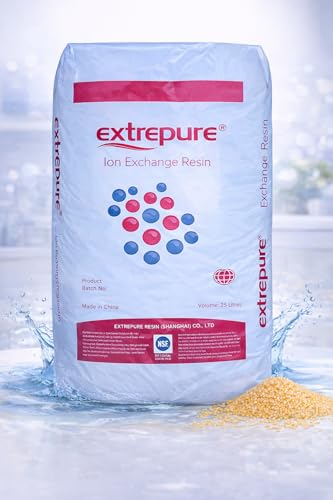
Water Softener Resin 1 Cu Ft – 32K Grain High-Capacity 7% Cross-linked
- High-Performance Resin: 7% cross-linked, durable, efficient
- High Capacity Softening: Removes minerals, reduces regeneration
- Long-Lasting & Easy to Install: Reliable beads, compatible with standard systems
As an affiliate, we earn on qualifying purchases.
As an affiliate, we earn on qualifying purchases.

Morton Clean and Protect Water Softener Salt Pellets, 40 LB (Pack of 2)
- Package Includes: Two 40 lb bags of salt pellets
- Extended Use: Total of 80 lbs of salt pellets
- Buildup Prevention: Patented system reduces buildup
As an affiliate, we earn on qualifying purchases.
As an affiliate, we earn on qualifying purchases.