
TL;DR
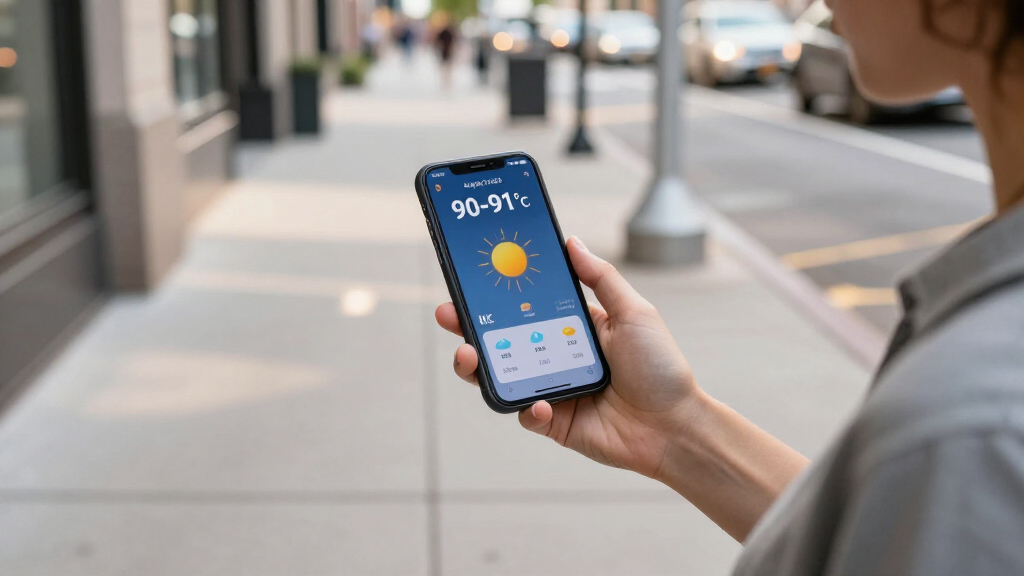
Market activity indicates a betting trend that NYC may reach 90-91°F on August 6, 2026. However, official weather forecasts for that date are not yet available, and the temperature remains uncertain.
There is currently no confirmed weather forecast predicting that New York City will reach a high temperature of 90-91°F on August 6, 2026. However, recent trading activity on weather prediction markets suggests some participants believe this is possible, indicating a level of market speculation rather than confirmed meteorological data.

Prime made for students and young adults
- Fast, free delivery for dorm and study essentials
- Prime Video and Amazon Music included
- Member-only deals
Market data from the Kalshi trading platform shows five recent trades related to the temperature in NYC on August 6, 2026, with traders betting that the high will fall within the 90-91°F range. These trades reflect investor expectations but do not constitute official weather forecasts from meteorological agencies.
Weather agencies such as the National Weather Service have not issued any predictions or models for temperatures that far in advance, especially for a specific day nearly four years ahead. Long-term weather forecasts are inherently uncertain, and predictions for August 2026 remain unavailable at this time. For more on how weather forecasts are made, see our article on weather prediction accuracy.
Implications of Market-Driven Temperature Predictions
The activity in prediction markets highlights how speculative forecasts can influence public perception of future weather conditions. While these bets are not official forecasts, they can reflect emerging trends or concerns about climate patterns. For residents and businesses, understanding the difference between market speculation and scientific prediction is crucial, especially as climate variability increases. The uncertainty surrounding long-term weather forecasts underscores the importance of relying on authoritative sources for planning and safety measures.Popular right now

Vitamix Nano Personal Blender with SmoothiePilot, Black

KitchenAid 5.5-Qt Bowl-Lift Stand Mixer, Porcelain White

Sony 65 Inch BRAVIA 3 LED 4K HDR Smart Google TV (K-65S30)
As an affiliate, we earn on qualifying purchases.
Long-Term Weather Forecasting and Market Predictions
Weather forecasting models typically provide reliable predictions up to 7-10 days in advance. Beyond that, forecasts become increasingly uncertain, especially for specific temperatures on exact dates several years ahead. The recent trading activity on prediction markets like Kalshi indicates some market participants are speculating about future conditions, but these are not based on meteorological models.
Historically, August temperatures in NYC have ranged from the mid-80s to low 90s, with occasional heatwaves exceeding 95°F. Climate change has contributed to more frequent and intense heat events, but predicting precise temperatures for a specific day in 2026 remains beyond current scientific capabilities.
“Long-term weather predictions, especially four years into the future, are highly uncertain. Market activity reflects speculation, not scientific certainty.”
— Dr. Emily Carter, Meteorologist
Unconfirmed Nature of Long-Range Temperature Predictions
It is not yet clear whether any authoritative weather models will produce specific temperature predictions for NYC on August 6, 2026. The current market activity is speculative, and no official meteorological data confirms the forecasted temperature range.
Monitoring for Official Weather Forecasts and Market Trends
Meteorological agencies are unlikely to release specific forecasts for August 2026 until closer to the date, probably within the 7-10 day window. Market activity may continue to reflect speculative expectations, but these should not be taken as definitive predictions. Stakeholders should rely on official sources for planning and safety decisions as the date approaches.
Key Questions
Can the market predictions be trusted as weather forecasts?
No, market predictions are based on trading activity and reflect investor sentiment, not scientific weather forecasts.
When will official weather forecasts for August 6, 2026, be available?
Official forecasts are typically issued within a 7-10 day window before the date, so detailed predictions are unlikely before late July or early August 2026.
How accurate are long-term weather predictions?
Long-term predictions beyond a few weeks are generally unreliable; climate trends are better understood than specific daily temperatures years in advance.
Why are there market bets on future temperatures?
Prediction markets allow traders to speculate on future weather conditions, which can reflect perceived trends but do not replace scientific forecasting.
Source: kalshi