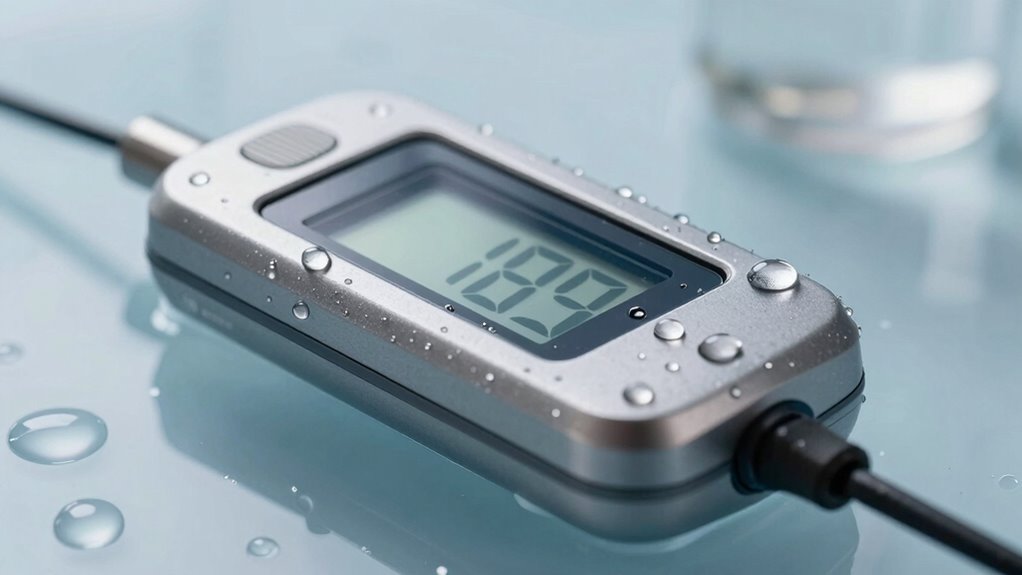

A water activity meter measures how much free water is available in your product, which helps predict stability, shelf life, and safety. You’ll use it to assess microbial growth, chemical reactions, and physical changes during storage. Proper calibration with standards guarantees accurate and consistent results. Regular calibration also prevents measurement errors and maintains reliability. Keep exploring to discover more about how proper calibration and measurement techniques can improve your product quality and safety.

Prime made for students and young adults
- Fast, free delivery for dorm and study essentials
- Prime Video and Amazon Music included
- Member-only deals
Key Takeaways
- Water activity measures free water available for microbial growth, chemical reactions, and physical changes affecting product stability.
- Water activity meters provide accurate assessments of free water levels, crucial for shelf life and safety evaluations.
- Proper calibration using standards like saturated salt solutions ensures measurement accuracy and instrument reliability.
- Regular calibration detects sensor drift, maintaining precise water activity readings over time.
- Accurate water activity data helps predict product behavior during storage and prevents spoilage or quality loss.
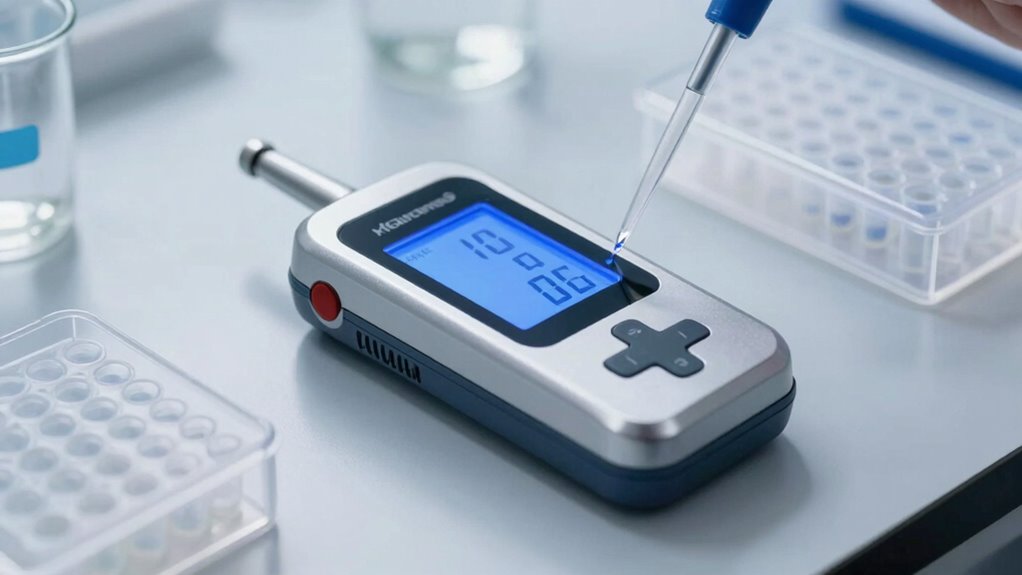
Have you ever wondered how scientists determine the stability and safety of food, pharmaceuticals, or other products? It all comes down to understanding water activity, and a water activity meter is your key tool in this process. To get reliable results, calibration techniques are essential. Proper calibration ensures measurement accuracy, which is crucial when evaluating product shelf life, safety, and quality. When you calibrate your meter, you set a baseline that accounts for environmental factors, sensor drift, and other variables. This step guarantees that the readings you get truly reflect the water activity levels in your samples, rather than being skewed by instrument inconsistencies.
Measurement accuracy with a water activity meter depends heavily on your calibration process. You want to ensure your readings are precise, especially since even small deviations can lead to incorrect conclusions about product stability. To achieve this, you typically use standards with known water activity values, such as saturated salt solutions, which provide stable reference points. Regular calibration using these standards helps you detect any drift in your instrument and correct it promptly, maintaining the integrity of your measurements over time. Additionally, calibration standards play a vital role in establishing accurate reference points for your measurements. Maintaining consistent calibration practices also helps mitigate sensor drift, ensuring ongoing measurement reliability.
Understanding water activity is essential because it directly influences microbial growth, chemical reactions, and physical stability. A water activity meter measures the free water available in a product, not just the total moisture content. This distinction is important because two products with the same moisture level can have different water activities, affecting their shelf life differently. By accurately measuring water activity, you can predict how your product will behave during storage, prevent spoilage, and guarantee safety. Additionally, calibration accuracy is vital to ensure your measurements remain reliable over extended use. Proper calibration techniques are especially critical when monitoring products over time to detect subtle changes in water activity.
water activity meter for food safety
As an affiliate, we earn on qualifying purchases.
As an affiliate, we earn on qualifying purchases.
Frequently Asked Questions
How Often Should Water Activity Meters Be Calibrated?
You should calibrate your water activity meter regularly, ideally before each testing session or at least weekly, depending on usage. Follow standardization procedures provided by the manufacturer to guarantee accuracy. Calibration frequency depends on your product’s stability and how often you use the device. Regular calibration helps maintain reliable readings, reduces errors, and ensures product quality. Always document calibration results for traceability and compliance.
What Types of Products Can Be Tested With a Water Activity Meter?
Think of a water activity meter as a detective uncovering hidden clues in your products. You can test a wide range of items, including dry goods, dairy, meats, baked goods, and even pharmaceuticals, to assess their moisture levels. This helps you evaluate product packaging effectiveness and conduct shelf life assessments. By doing so, you guarantee your products stay fresh and safe, extending their quality from production to your customer’s hands.
How Does Temperature Affect Water Activity Readings?
Temperature fluctuations can substantially impact your water activity readings, as higher or lower temperatures alter the moisture’s behavior within your product. You need to account for these variations to guarantee calibration accuracy, which directly affects measurement reliability. By controlling temperature during testing and regularly calibrating your meter, you maintain consistent, precise readings, helping you better assess product stability and shelf life.
What Maintenance Is Required for Water Activity Meters?
Imagine losing valuable product quality due to inaccurate readings. To prevent this, you need to regularly perform calibration procedures and follow strict cleaning protocols. Calibration guarantees your water activity meter provides precise measurements, while cleaning removes residues that could skew results. Schedule routine checks and clean the sensor after each use. Proper maintenance safeguards your product stability, saving costs and maintaining consumer trust.
Can Water Activity Meters Detect Microbial Growth?
Water activity meters don’t directly detect microbial growth, but they play a crucial role in microbial detection and contamination prevention. By measuring water activity levels, you can assess the likelihood of microbial proliferation, since most microbes need specific water activity ranges to grow. Maintaining proper water activity levels helps you prevent microbial contamination, ensuring product safety and extending shelf life without relying solely on microbial detection methods.
As an affiliate, we earn on qualifying purchases.
Conclusion
In mastering moisture measurement, remember that water activity meters bring brilliance to your product stability. By understanding and utilizing these tools, you enhance quality, prevent spoilage, and promote longevity. Stay sharp with specifications, calibration, and consistent checks. With diligent diligence, you’ll deliver desirable dryness, defend against deterioration, and delight your customers. Water activity wonders will work wonders, ensuring your products remain perfect, protected, and prized.
water activity meter for pharmaceuticals
As an affiliate, we earn on qualifying purchases.
As an affiliate, we earn on qualifying purchases.
saturated salt solution standards
As an affiliate, we earn on qualifying purchases.
As an affiliate, we earn on qualifying purchases.
Fall Picks
fall essentials
As an affiliate, we earn on qualifying purchases.