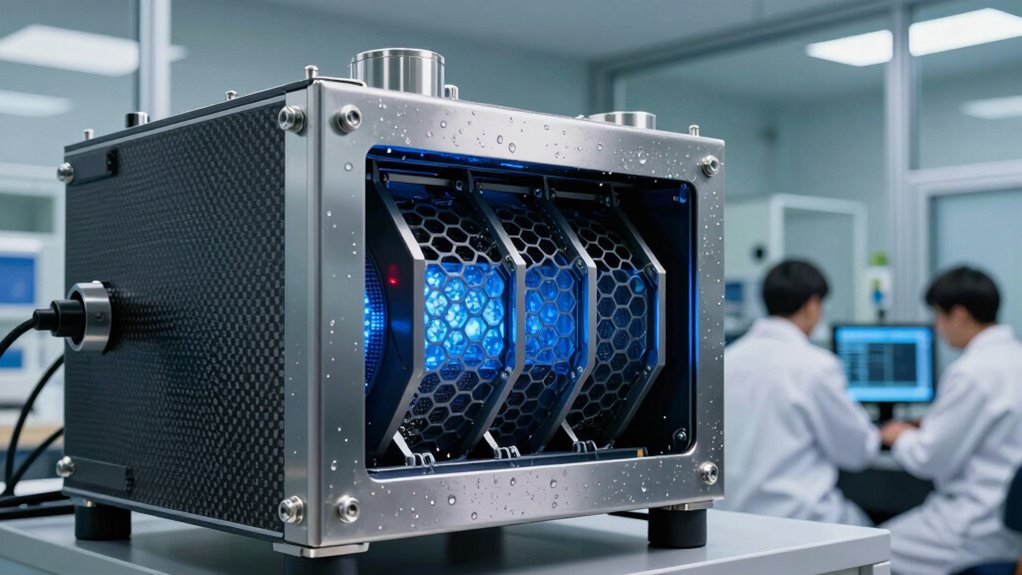

Recent breakthroughs in carbon capture materials, like advanced sorbents and metal organic frameworks (MOFs), are making it easier and cheaper to trap CO₂ from emissions and the atmosphere. These innovations focus on improving selectivity, durability, and energy efficiency, paving the way for large-scale use. Smart, stimuli-responsive materials allow easier CO₂ release and reuse. If you keep exploring, you’ll discover how these exciting developments are shaping a more sustainable future and tackling climate change.

Prime made for students and young adults
- Fast, free delivery for dorm and study essentials
- Prime Video and Amazon Music included
- Member-only deals
Key Takeaways
- Advances in metal-organic frameworks (MOFs) enhance CO₂ capture efficiency, selectivity, and moisture resistance.
- Smart, stimuli-responsive sorbents enable easier CO₂ release and regeneration, reducing energy consumption.
- Development of durable, cost-effective materials supports large-scale, practical carbon capture deployment.
- Integration of MOFs into smart systems accelerates the transition from lab research to real-world applications.
- Ongoing pilot projects indicate increasing commercial adoption of innovative carbon capture materials.
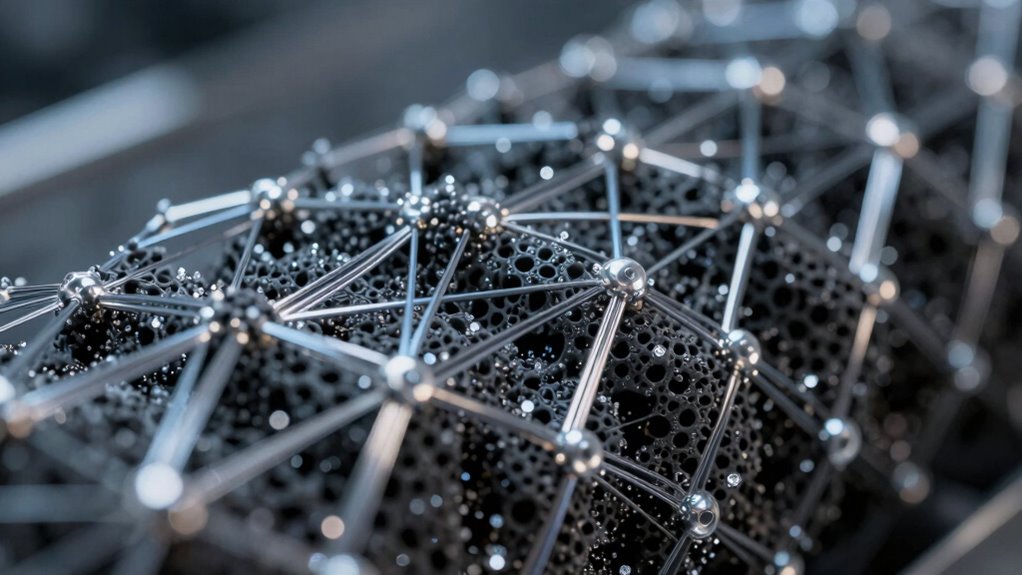
Recent advances in carbon capture materials are transforming how we address climate change. As researchers push the boundaries of what’s possible, innovative sorbent development has become a key focus. These new materials aim to efficiently trap carbon dioxide from industrial emissions and the atmosphere, making it easier to reduce greenhouse gases. You’ll find that the latest breakthroughs are making sorbents more selective, durable, and cost-effective, which is essential for large-scale implementation. The goal is to create materials that can reliably capture CO₂ without requiring excessive energy or maintenance. This is where metal organic framework advancements come into play, offering some of the most promising solutions so far. Metal organic frameworks, or MOFs, are crystalline compounds composed of metal ions connected by organic linkers. Their highly porous structure provides an enormous surface area, making them ideal for capturing gases like CO₂. Researchers are now designing MOFs with tailored pore sizes and chemical functionalities to enhance CO₂ affinity while resisting moisture and other contaminants. These advancements mean that MOFs can selectively trap carbon dioxide even in complex, real-world environments, improving the efficiency of carbon capture systems. You might not realize how significant this is—these materials could drastically lower the cost and energy consumption associated with capturing CO₂, accelerating adoption across industries, and helping to mitigate climate change. Furthermore, the ability to regenerate these materials quickly and repeatedly without losing effectiveness means they’re not just lab curiosities but practical solutions for long-term use. The development of smart sorbents that respond to environmental stimuli, such as temperature or pressure changes, is also gaining momentum. These innovations allow for easier release of captured CO₂, simplifying the process of storage or utilization. The integration of metal organic frameworks into these smart sorbent systems exemplifies how cutting-edge chemistry is making carbon capture more feasible. As these technologies mature, they’ll help bridge the gap between current capabilities and the pressing need for scalable solutions. You can expect to see a growing number of pilot projects and commercial applications that leverage these advancements. The combination of innovative sorbent development and metal organic framework advancements is poised to reshape the landscape of carbon capture, making it more efficient, affordable, and adaptable. These breakthroughs are not just scientific achievements—they’re essential steps toward a sustainable future. By staying informed about these technologies, you can better understand how science is actively shaping strategies to combat climate change and reduce our carbon footprint. Advances in materials science continue to drive progress toward more effective carbon capture solutions.
metal organic frameworks for CO2 capture
As an affiliate, we earn on qualifying purchases.
As an affiliate, we earn on qualifying purchases.
Frequently Asked Questions
How Cost-Effective Are New Carbon Capture Materials at Large Scale?
New carbon capture materials are becoming more cost-effective at large scale, but their economic viability still varies. You’ll find that initial costs can be high, but advancements in technology are lowering operational expenses. Market adoption depends on supportive policies and carbon pricing, which can make these materials more financially attractive. Overall, these innovations are promising, but widespread implementation will require continued investment and incentives to maximize their economic feasibility.
What Are the Environmental Impacts of Developing These Materials?
You might find developing these materials a gentle step forward for our environment, but there’s still a delicate environmental footprint to take into account. As you explore their ecosystem effects, be mindful of potential impacts like resource extraction or waste management. While innovation aims to be eco-friendly, ongoing assessments ensure that the development of carbon capture materials minimizes harm and supports sustainable progress for both our planet and future generations.
How Long Do These Materials Typically Last in Operation?
You’ll find that the durability and lifespan longevity of carbon capture materials vary depending on their type and operating conditions. Generally, these materials last several years—often between 5 to 15 years—before needing replacement or regeneration. Regular maintenance and proper handling can extend their lifespan. Advances in material durability are ongoing, aiming to improve longevity and reduce costs, making these solutions more sustainable and effective over time.
Are There Any Safety Concerns With the New Materials?
You might think new carbon capture materials are completely safe, but theories suggest some could pose risks if not properly managed. Safety concerns do exist, especially regarding potential chemical leaks or reactions. That’s why rigorous safety protocols and thorough risk assessments are essential before deployment. Ensuring these steps are followed can help mitigate dangers, making the technology safer for workers and the environment. Vigilance is key as these innovations develop.
How Quickly Can These Materials Be Implemented Commercially?
You can expect commercial implementation of these new carbon capture materials within 5 to 10 years, depending on how quickly they pass regulatory hurdles and demonstrate material durability in real-world conditions. While promising, scaling up requires extensive testing to guarantee safety and longevity. Regulatory agencies will need time to evaluate and approve these innovations, but ongoing research suggests a promising timeline for broader deployment once these challenges are addressed.
stimuli-responsive carbon capture sorbents
As an affiliate, we earn on qualifying purchases.
As an affiliate, we earn on qualifying purchases.
Conclusion
As you keep an eye on these breakthroughs, you’ll see how new materials can truly turn the tide in fighting climate change. These innovations are the game-changers that can make a real difference, helping us stay ahead of the curve. Don’t count your chickens before they hatch, but it’s clear that these advances are promising. Staying informed and supporting such research could be the key to a cleaner, greener future for all of us.
advanced carbon capture materials
As an affiliate, we earn on qualifying purchases.
As an affiliate, we earn on qualifying purchases.
MOF-based gas separation systems
As an affiliate, we earn on qualifying purchases.
As an affiliate, we earn on qualifying purchases.
Fall Picks
fall essentials
As an affiliate, we earn on qualifying purchases.