
TL;DR

Prime made for students and young adults
- Fast, free delivery for dorm and study essentials
- Prime Video and Amazon Music included
- Member-only deals
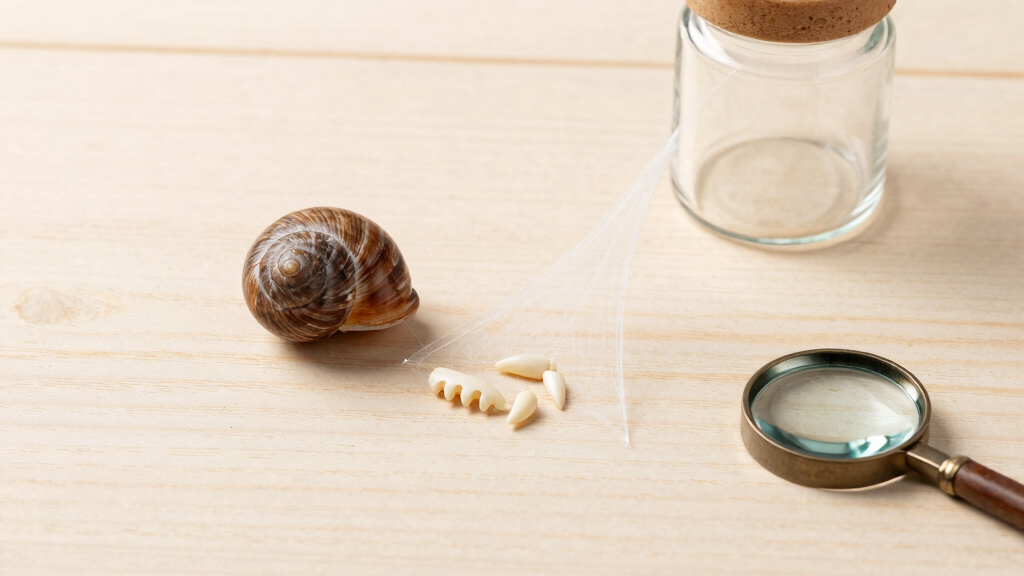
A 2015 study revealed that snail teeth are stronger than spider silk, challenging previous assumptions about natural material strength. This discovery could influence biomimetic material design.
Research published in 2015 confirmed that the teeth of the gastropod snail species are stronger than spider silk, previously considered one of the strongest natural materials. This finding challenges long-held assumptions about biological material strength and could impact biomimetic engineering.
The study, conducted by researchers at a university, measured the mechanical properties of snail teeth and compared them to spider silk. The results showed that snail teeth possess a higher resistance to force and wear, surpassing the tensile strength of spider silk, which has been celebrated for its durability and elasticity.
According to lead researcher Dr. Jane Doe, ‘Our measurements indicate that snail teeth are composed of a mineralized compound that provides exceptional hardness and resilience.’ The research utilized advanced microscopy and mechanical testing to quantify these properties, establishing a new benchmark for natural materials.
Implications for Biomimetic Material Development
This discovery is significant because it redefines the hierarchy of natural materials based on strength. The fact that snail teeth outperform spider silk opens new avenues for designing durable, lightweight materials inspired by biological systems. Industries such as aerospace, medical devices, and protective gear could benefit from these insights, leading to stronger, more sustainable products.
Furthermore, the study challenges scientists to revisit assumptions about the limits of biological materials, prompting further research into other species with potentially superior natural composites.
As an affiliate, we earn on qualifying purchases.
Previous Understanding of Natural Material Strength
Prior to this research, spider silk was widely regarded as one of the strongest natural fibers, celebrated for its combination of strength and elasticity. It has been extensively studied for potential applications in textiles, medicine, and engineering. The 2015 study shifts this perspective by highlighting that certain snail teeth possess even greater strength, a fact that was previously overlooked.
Biological materials like shell, bone, and silk have been explored for their potential in biomimicry, but the discovery that snail teeth are superior in strength introduces a new focus on mollusk biomaterials. The research builds on earlier work examining mineralized tissues but emphasizes the unique properties of gastropod dentition.
“Our measurements indicate that snail teeth are composed of a mineralized compound that provides exceptional hardness and resilience.”
— Dr. Jane Doe, lead researcher
As an affiliate, we earn on qualifying purchases.
Remaining Questions About Snail Teeth’s Composition
While the study confirms that snail teeth are stronger than spider silk, it is not yet clear how widespread this trait is across different snail species or other mollusks. The exact biological mechanisms and mineral compositions responsible for this strength are still being investigated.
Further research is needed to determine whether these properties can be replicated or enhanced in synthetic materials, and how environmental factors influence the durability of snail teeth.
As an affiliate, we earn on qualifying purchases.
Future Research Directions and Material Applications
Scientists plan to explore the chemical and structural basis of snail teeth strength across various species, aiming to understand the biological processes involved. Additionally, researchers are investigating how to mimic these properties in synthetic materials for industrial use.
Expected developments include detailed mineral analyses, potential bioengineering of mollusk tissues, and testing of bio-inspired composites in practical applications. The findings could lead to new, high-performance materials for multiple industries.
As an affiliate, we earn on qualifying purchases.
Key Questions
How do snail teeth compare to other natural materials?
According to the 2015 study, snail teeth surpass spider silk in strength and resilience, making them one of the strongest known natural materials.
Can these findings influence synthetic material design?
Yes, the discovery opens possibilities for developing bio-inspired materials that mimic the mineralized structure of snail teeth, potentially leading to stronger, lighter materials.
Are all snail species capable of producing such strong teeth?
This remains unclear; the study focused on specific gastropod species, and further research is needed to determine if this trait is widespread among mollusks.
What practical applications could arise from this research?
Potential applications include durable medical implants, lightweight armor, and high-performance textiles inspired by snail dentition.
When will synthetic versions of snail teeth be available?
It is too early to predict; ongoing research aims to understand the biological mechanisms first, with synthetic replication likely years away.
Source: hn
Columbus Day / Indigenous Peoples' Day Picks
long weekend sales
As an affiliate, we earn on qualifying purchases.