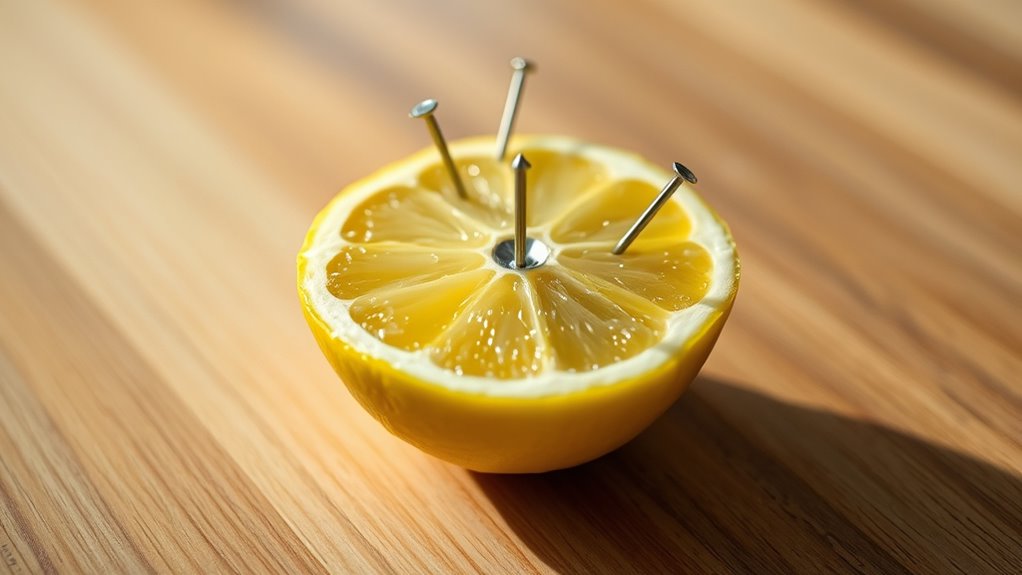
To build a simple lemon battery, insert a copper wire and a zinc nail into a lemon, making sure they don’t touch. The lemon’s citric acid acts as an electrolyte, enabling chemical reactions that produce electrons, which flow through the wires. This setup creates a small voltage capable of powering low-energy devices like LEDs. Want to see how chemical reactions generate electricity and how you can optimize your lemon battery? Keep exploring!
Key Takeaways
- Insert a copper wire and a zinc nail into the lemon to create two different metal electrodes.
- Connect the metals with a wire to complete the circuit, forming a simple electrochemical cell.
- Use the lemon’s citric acid as an electrolyte to facilitate ion transfer and generate electrical current.
- Test the lemon battery by powering small devices like LEDs or digital clocks.
- For higher voltage, connect multiple lemon batteries in series.
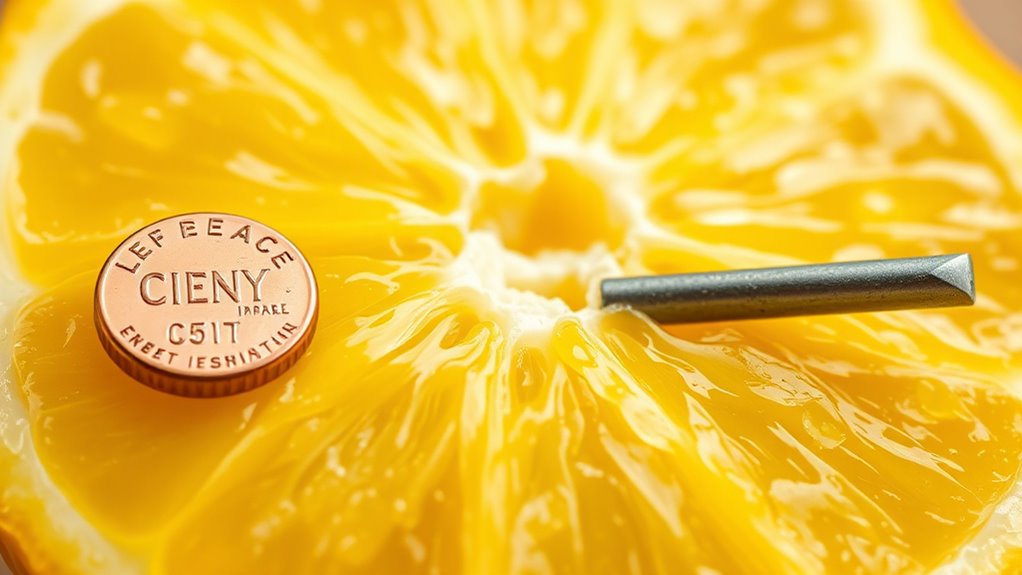
If you’re curious about how to generate electricity with everyday items, building a lemon battery is a simple and fun experiment. It’s a great way to see science in action and understand the basics of how batteries work. The key to making a lemon battery successful lies in understanding electrical conductivity and chemical reactions. When you insert metal electrodes into the lemon, you create a small electrochemical cell that produces a voltage.
Lemons are excellent for this because they contain citric acid, which enhances electrical conductivity. The acid acts as an electrolyte, allowing ions to move freely between the metal contacts. This movement of ions is essential for the chemical reactions that generate electrical energy. When you connect a copper wire and a zinc nail to the lemon, a chemical reaction occurs at each electrode. The zinc, which is more reactive, begins to oxidize, releasing electrons. These electrons then travel through the wire to the copper electrode, completing the circuit. As a result, you can power a small LED or a digital clock, demonstrating the flow of electricity.
Connecting copper and zinc in a lemon creates a chemical reaction that powers small devices.
The chemical reactions involved are simple yet fascinating. Zinc reacts with the acid in the lemon, producing zinc ions and releasing electrons into the circuit. Meanwhile, the copper acts as an inert conductor, providing a pathway for electrons to flow. This flow of electrons is what creates the electric current. The lemon’s acidic environment guarantees that the electrical conductivity remains high enough for the chemical reactions to sustain a steady flow of electricity. Once the zinc is fully oxidized, or if you use too many lemons in series, the power diminishes. But for a small experiment, a single lemon can produce enough voltage to light up a tiny bulb or run a clock.
Building a lemon battery is a perfect introduction to the science of electrical circuits and electrochemistry. It shows you how chemical reactions can be harnessed to generate electrical energy, and how different materials influence the process. By experimenting with different metals or adding more lemons in series, you can increase the voltage and learn more about how batteries work. Exploring voltage and current helps deepen your understanding of how electrical energy is produced and used. It’s a hands-on project that makes the concepts of electrical conductivity and chemical reactions clear and engaging. Whether you’re a student, teacher, or just a curious mind, creating a lemon battery offers a tangible way to explore the fundamentals of electricity with everyday items.
Frequently Asked Questions
How Long Does a Lemon Battery Typically Last?
A lemon battery usually lasts about 30 to 60 minutes, depending on factors like lemon acidity and electrode materials. The acidity provides the necessary ions for electrical flow, but over time, the lemon’s juice dries out or reacts with the electrodes, reducing voltage. Using better electrode materials, such as copper and zinc, can extend the lifespan. Keep in mind, the battery’s longevity also depends on how well you set up the connections.
Can I Use Other Fruits Instead of Lemons?
You can absolutely use other fruits instead of lemons, and it’s exciting to explore natural power sources! Fruits like oranges, grapefruits, and strawberries work well because they contain acids that generate electricity. While lemons are popular, experimenting with different fruit alternatives can be a fun way to see which produces the most power. Don’t let the idea of limited options hold you back—your curiosity fuels innovation!
What Safety Precautions Should I Take?
You should wear safety gear like gloves and goggles to protect yourself when handling acids in your fruit battery. Make sure to work in a well-ventilated area, avoid direct contact with the acid, and wash your hands afterward. Keep acids away from your eyes and face, and handle all components carefully. Always supervise children during this experiment to prevent accidents and guarantee a safe, enjoyable experience.
How Much Voltage Can a Lemon Battery Produce?
Think of a lemon battery as a tiny lightning bolt in disguise, sparking a modest current. You can expect it to produce around 0.9 volts, but this depends on electrolyte concentration—the higher it is, the more juice you get. Keep in mind, its battery lifespan is fleeting, like a firework fading into the night sky, so don’t rely on it for long-term power needs.
Can Lemon Batteries Power LED Lights?
Yes, lemon batteries can power LED lights, though their voltage is limited. For better results, you can connect multiple lemon cells in series to increase voltage, similar to harnessing renewable sources like solar energy. While lemon batteries are a fun, educational project, they’re not practical for long-term power. They demonstrate basic principles of renewable energy, but for reliable lighting, consider more efficient sources like solar panels.
Conclusion
Now, your lemon battery isn’t just a simple experiment; it’s a symbol of possibility. Like a tiny sun, it lights the way to understanding energy and innovation. With a little citrus and a spark of curiosity, you’ve harnessed nature’s power, turning something ordinary into a beacon of potential. Keep exploring, and remember that even in the smallest fruits, there’s a universe of energy waiting to be uncovered. Your journey into discovery has just begun.