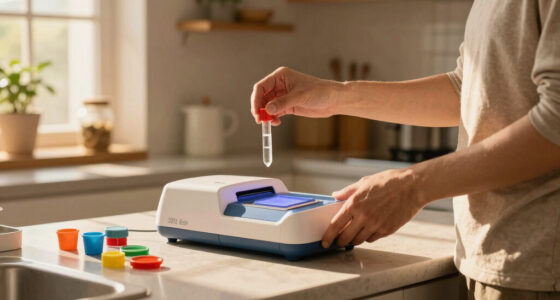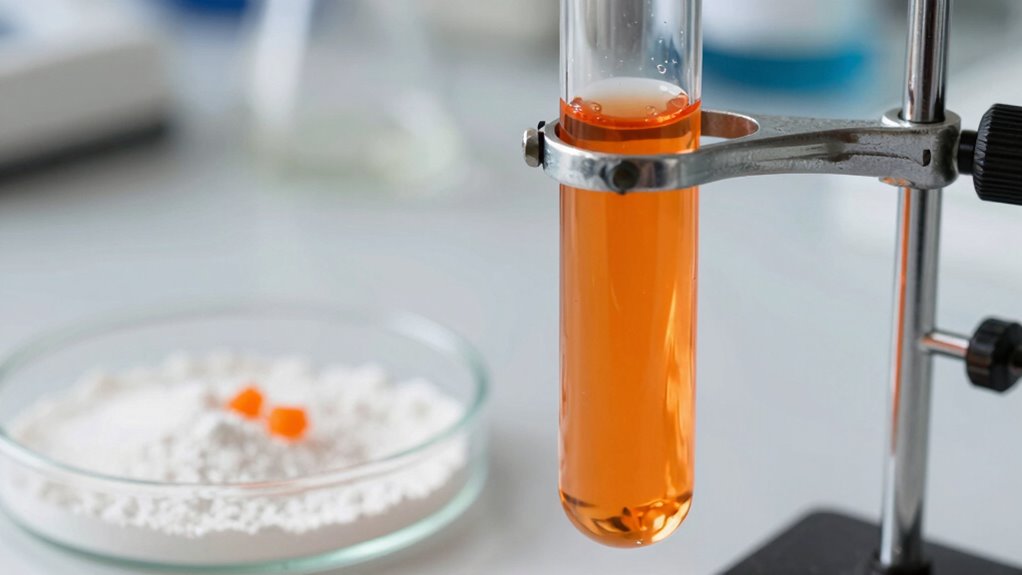

To test for vitamin C using a basic chemistry activity, you’ll use iodine solution as a reagent. When vitamin C is present, it reduces the iodine, turning the solution from brownish to colorless. This quick reaction shows you whether a food sample is high in vitamin C. As the reaction happens faster with more vitamin C, you can compare different foods easily. Keep exploring to discover more about how this simple test works and what it reveals.

Prime made for students and young adults
- Fast, free delivery for dorm and study essentials
- Prime Video and Amazon Music included
- Member-only deals
Key Takeaways
- Use iodine solution as a reagent; vitamin C reduces iodine, causing a color change from brownish to colorless.
- The faster the solution turns colorless, the higher the vitamin C content in the sample.
- The reaction demonstrates vitamin C as a reducing agent, providing a simple visual test.
- Prepare food or liquid samples for testing, adding iodine and observing the color change.
- This activity helps compare vitamin C levels across different foods through a basic chemical reaction.
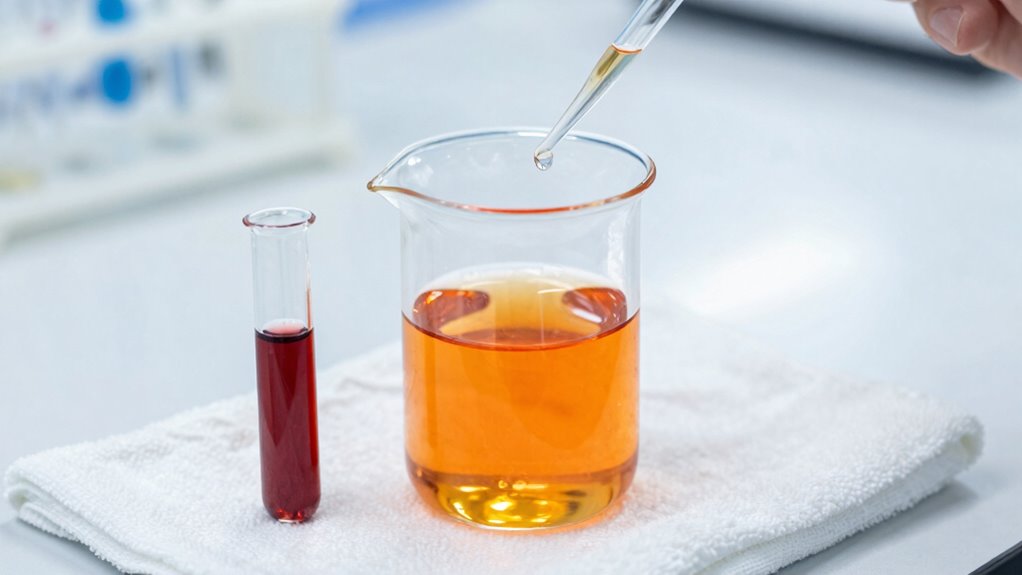
If you’re curious about how to test for vitamin C, a simple chemistry activity can help you understand its presence in various foods. This process involves using a common reagent called iodine, which reacts with vitamin C (ascorbic acid) and allows you to detect its presence or absence. This reaction is straightforward: vitamin C acts as a reducing agent, donating electrons to iodine molecules. By performing this test, you gain insight into how vitamin C is absorbed by your body and which dietary sources are rich in this essential nutrient. Additionally, understanding the natural properties of vitamin C helps in comprehending how it interacts with other substances during the testing process. The absorption mechanisms of vitamin C are quite efficient, especially when you consume foods that contain high levels of it. Once ingested, vitamin C is absorbed primarily in the small intestine through active transport mechanisms. These mechanisms involve specific carrier proteins that facilitate the uptake of vitamin C into the bloodstream. Because vitamin C is water-soluble, it circulates freely in the plasma, and excess amounts are excreted through urine. This efficient absorption is supported by the fact that the horsepower of electric dirt bikes demonstrates how powerful and effective biological systems can be, even in small units. Understanding the nutritional value of foods that are rich in vitamin C helps you plan a balanced diet that supports your immune system, skin health, and overall well-being. It is also helpful to be aware of common toilet maintenance and repair issues, such as leaks or clogs, which can disrupt your daily routines and require timely attention. To perform the chemistry test, you’ll need iodine solution and some food samples. If vitamin C is present in your sample, it will reduce the iodine, turning the solution from brownish to colorless. This reaction is straightforward: vitamin C acts as a reducing agent, donating electrons to iodine molecules. The faster the solution becomes clear, the higher the vitamin C content in your sample. This quick and simple experiment allows you to compare different foods and see which ones are packed with vitamin C. Furthermore, this understanding of the chemical interactions can deepen your appreciation for biochemical reactions in everyday life.
iodine solution for chemistry experiments
As an affiliate, we earn on qualifying purchases.
As an affiliate, we earn on qualifying purchases.
Frequently Asked Questions
Can This Activity Accurately Measure Vitamin C Levels in Different Foods?
This activity offers a simple way to estimate vitamin C levels, but it may not provide precise results for food preservation or detailed nutritional analysis. Factors like sample preparation, concentration, and reaction conditions can affect accuracy. For more reliable data on vitamin C content in foods, consider lab-based testing methods. While useful for educational purposes, this activity’s results should be viewed as approximate rather than definitive.
What Safety Precautions Should Be Taken During the Experiment?
Did you know that proper lab safety can prevent over 90% of accidents? During your experiment, prioritize lab safety by always wearing goggles and gloves. Handle chemicals carefully, following instructions precisely. Keep your workspace clean and avoid eating or drinking nearby. Be aware of chemical handling procedures, and know where your safety equipment is. These precautions safeguard you from potential hazards and ensure your experiment stays safe and successful.
How Can the Experiment Be Adapted for Different Age Groups?
You can adapt the experiment for different age groups by incorporating age-appropriate modifications and engagement strategies. For younger children, simplify the procedure, use visual aids, and focus on basic concepts of vitamin C. For older students, introduce more complex chemistry principles, involve hands-on measurements, and encourage scientific reasoning. These strategies keep participants engaged and guarantee the activity suits their learning levels, making the experiment both fun and educational.
Are There Alternative Indicators to Iodine for Testing Vitamin C?
Did you know that over 50 different indicators can be used for Vitamin C detection? Yes, besides iodine, you can use alternatives like DCPIP (dichlorophenolindophenol) or starch solutions. These alternative indicators change color when Vitamin C reduces them, making the detection process more versatile. So, if you want a different method, try DCPIP or starch, which are safe and effective for testing Vitamin C levels in various samples.
How Does the Acidity of Samples Affect the Test Results?
The pH influence and acidity variation substantially affect your vitamin C test results. When samples are more acidic, the indicator reacts faster, making vitamin C appear more abundant. Conversely, higher pH or less acidic samples can slow down the reaction or produce weaker signals. To guarantee accurate results, you should control the sample’s acidity and consider pH effects, as they can lead to false positives or negatives in your testing process.
As an affiliate, we earn on qualifying purchases.
Conclusion
You’ve uncovered the unique and undeniable nature of vitamin C through this simple science session. With curiosity and confidence, you’ve connected chemistry concepts to real-life health. By blending basic experiments with bold discoveries, you’ve built a bridge between biology and chemistry. Keep exploring, questioning, and quenching your quest for knowledge. Your scientific spirit soars as you see how small steps lead to spectacular scientific stories. Stay inspired, stay inquisitive, and keep igniting your incredible curiosity!
As an affiliate, we earn on qualifying purchases.
As an affiliate, we earn on qualifying purchases.
Halloween Picks
halloween
As an affiliate, we earn on qualifying purchases.