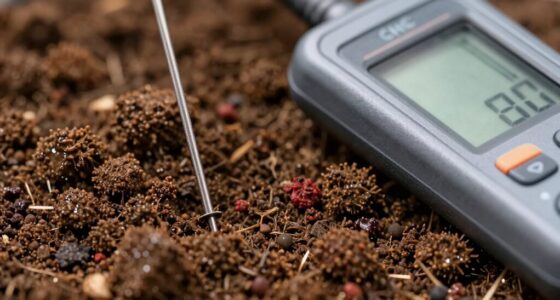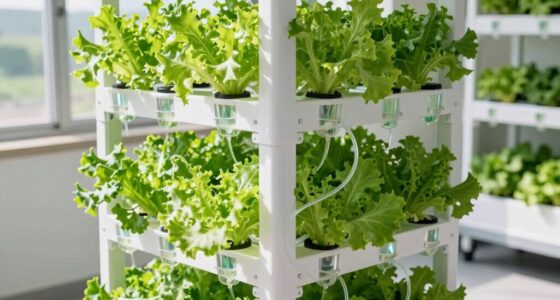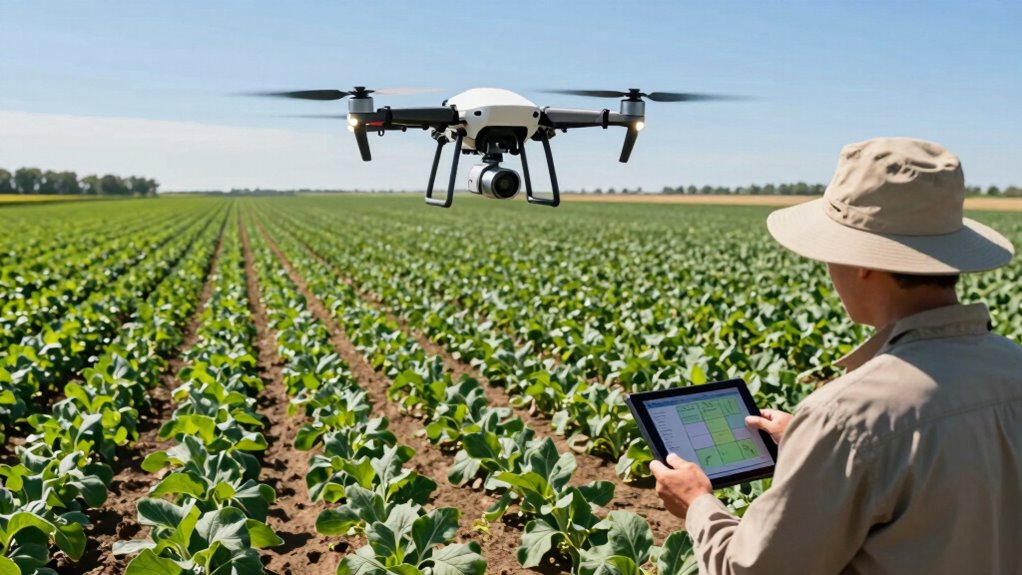

Better fertilizer monitoring helps you apply nutrients more precisely, reducing waste and preventing over-application. Using tools like soil sensors and testing kits, you can deliver what your crops need exactly when they need it. This not only saves money but also protects the environment from pollution. By optimizing fertilizer use, you support healthier plants and improve yields. Want to discover more ways you can make your farming more efficient? Keep exploring to find out.

Prime made for students and young adults
- Fast, free delivery for dorm and study essentials
- Prime Video and Amazon Music included
- Member-only deals
Key Takeaways
- Improved monitoring ensures nutrients are applied precisely when crops need them, minimizing excess fertilizer use.
- Real-time soil sensors help detect deficiencies early, reducing unnecessary over-application.
- Data-driven approaches optimize fertilizer amounts, preventing waste and environmental pollution.
- Accurate monitoring maintains soil health, decreasing the need for frequent or excessive fertilization.
- Better tracking supports sustainable practices, reducing costs and environmental impact associated with fertilizer waste.

Have you ever wondered how farmers guarantee their crops get the right nutrients at the right time? It’s a critical question because the way fertilizers are monitored directly impacts soil health and crop yield. When you focus on precise monitoring, you can reduce waste and improve the overall quality of your soil. Fertilizer over-application can damage soil structure, deplete organic matter, and lead to runoff that pollutes nearby water sources. But with better monitoring, you can tailor your fertilizer use, ensuring your soil remains healthy and productive over the long term.
By paying close attention to soil conditions, you gain a clearer picture of what your crops truly need. Modern tools like soil sensors and testing kits allow you to measure nutrient levels in real-time, so you don’t guess or rely on broad estimates. When you use this data effectively, you apply fertilizer more accurately, which means less excess that might otherwise leach into the environment. This not only protects the environment but also preserves the soil’s natural fertility, promoting soil health for future planting seasons. Additionally, soil monitoring can help detect early signs of nutrient deficiencies before they impact crop growth. Using these advanced techniques can also help optimize fertilizer application processes to maximize efficiency.
In addition, improved monitoring methods directly boost crop yield. When nutrients are supplied precisely when your crops need them, plants grow stronger and healthier. You avoid the pitfalls of under-fertilization, which can stunt growth, or over-fertilization, which wastes resources and can harm plant roots. The result is a more efficient use of fertilizer, leading to higher yields and better quality produce. This is especially important in areas where fertilizer costs are high, as reducing waste saves money without sacrificing productivity.
Furthermore, adopting advanced monitoring practices encourages sustainable farming. By applying only what’s necessary, you minimize environmental impact and enhance soil resilience. It also helps you comply with regulations on fertilizer use and runoff, reducing the risk of penalties or environmental damage. With consistent monitoring, you can identify nutrient deficiencies early and adjust your practices accordingly, maintaining soil health and supporting a thriving ecosystem around your farm. Incorporating soil testing techniques can further refine your approach and improve your understanding of soil composition. This approach aligns with sustainable farming principles to ensure long-term productivity and environmental stewardship. Additionally, understanding soil health can help prevent long-term degradation and ensure that your land remains productive for generations.
In essence, better fertilizer monitoring isn’t just about saving money; it’s about creating a smarter, more sustainable approach to farming. When you harness technology and data, you make informed decisions that benefit your soil, your crops, and the environment. This balance ensures your farm remains productive year after year, with healthier soil and higher crop yields—proof that precise, attentive monitoring truly makes a difference.
As an affiliate, we earn on qualifying purchases.
Frequently Asked Questions
How Much Does Advanced Monitoring Technology Cost for Farmers?
Advanced monitoring technology costs vary based on features and farm size, but generally, you can expect a cost comparison showing initial investments from a few hundred to several thousand dollars. As you consider technology adoption, weigh these costs against potential savings from reduced fertilizer waste and improved crop yields. While the upfront expense may seem high, many farmers find that long-term benefits outweigh the initial investment, making it a worthwhile choice.
Are There Environmental Regulations Influencing Fertilizer Monitoring Practices?
Are environmental regulations shaping your fertilizer monitoring practices? Absolutely. Environmental compliance and regulatory standards push you to adopt better monitoring tools, ensuring you meet legal requirements while minimizing waste. These regulations compel you to track fertilizer application precisely, reducing runoff and pollution. By adhering to regulatory standards, you not only protect the environment but also enhance your farm’s sustainability and efficiency, making smarter use of resources and reducing costs over time.
Can Monitoring Systems Be Integrated With Existing Farm Management Tools?
Yes, monitoring systems can be integrated with your existing farm management tools. You can use sensor integration to gather real-time data on soil and crop conditions, which seamlessly feeds into your management platform. Data analytics then help you interpret this information, optimizing fertilizer application and reducing waste. This integration streamlines decision-making, making your farm more efficient and environmentally friendly without overhauling your current systems.
What Training Is Needed for Effective Fertilizer Monitoring Implementation?
You need to cultivate your skills just like tending a garden, starting with farmer education that covers sensor use, data interpretation, and decision-making. You also focus on data accuracy, ensuring your measurements reflect reality. Practical training on device calibration, troubleshooting, and data management helps you get the most from monitoring systems. With proper training, you’ll nurture healthier crops and reduce fertilizer waste, turning knowledge into a harvest of efficiency.
How Often Should Fertilizer Monitoring Be Conducted for Optimal Results?
You should conduct soil nutrient monitoring regularly, ideally every 2 to 4 weeks during the growing season, to guarantee ideal results. Monitoring frequency depends on crop type, soil conditions, and weather. By staying consistent, you catch nutrient deficiencies early, preventing excess fertilizer use. This approach helps you maintain healthy soil nutrient levels, minimizes waste, and maximizes crop yield, making your fertilization practices more efficient and sustainable.
As an affiliate, we earn on qualifying purchases.
Conclusion
By monitoring fertilizer carefully, you can reduce waste, improve crop yields, and save money. By paying attention to your soil, adjusting your practices, and embracing technology, you take control of your farming future. By being proactive, you prevent excess, minimize environmental harm, and promote sustainability. By making smarter choices, you nurture your land, support your community, and secure your success. Ultimately, better monitoring isn’t just about cutting waste — it’s about growing a better tomorrow.
As an affiliate, we earn on qualifying purchases.
As an affiliate, we earn on qualifying purchases.
Halloween Picks
halloween
As an affiliate, we earn on qualifying purchases.