
To build a seasonal fertility calendar, start by tracking your menstrual cycle and noting key signs like cervical mucus, temperature, and sensation changes daily. Observe how these signals may align with lunar phases and seasonal shifts over several months. Record your data consistently to detect patterns or connections to natural cues. By paying attention to these details, you’ll better understand your fertility signals in relation to seasons. If you keep exploring, you’ll discover even more ways to refine your awareness.

Prime made for students and young adults
- Fast, free delivery for dorm and study essentials
- Prime Video and Amazon Music included
- Member-only deals
Key Takeaways
- Track menstrual cycle dates and physical fertility signs daily to identify recurring patterns aligned with seasons and lunar phases.
- Record cervical mucus, basal body temperature, and sensations consistently over several months for accurate pattern recognition.
- Incorporate observations of lunar phases, especially new moon and full moon, to understand their influence on fertility signals.
- Use a journal or fertility app to organize and analyze data, noting seasonal variations and environmental cues.
- Recognize natural rhythms and adjust tracking to account for seasonal and lunar cycle shifts for personalized fertility awareness.
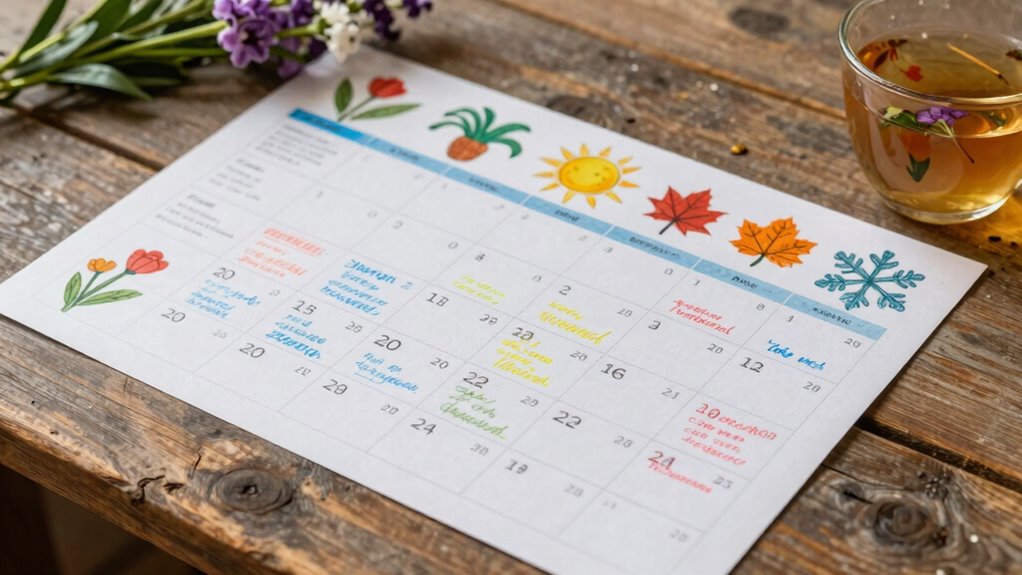
Have you ever wondered how tracking seasonal changes can improve your understanding of fertility patterns? One effective way to do this is by paying attention to lunar cycles, which have historically been connected to fertility and reproductive health. Lunar cycles, lasting approximately 29.5 days, influence various biological processes, and recognizing their impact can enhance your fertility tracking efforts. By observing the moon’s phases—new moon, waxing crescent, full moon, and waning crescent—you can identify subtle patterns in your body’s fertility signals. For example, some women notice increased cervical mucus or changes in basal body temperature around the full moon, aligning with their most fertile days. Incorporating lunar cycles into your fertility tracking isn’t complicated; it simply requires consistent observation and noting these changes in a journal or app designed for fertility awareness.
Building a seasonal fertility calendar starts with understanding your body’s natural rhythms and how they sync with environmental cues like the lunar cycle. You’ll want to track your menstrual cycle carefully—marking the start and end dates—and observe physical signs such as cervical fluid, position, and temperature. Recording these details daily helps you detect patterns that recur each month and across seasons. Over time, you may notice that your fertile window shifts slightly depending on the season or lunar phase, giving you a more detailed picture of your reproductive health. This approach makes fertility tracking more nuanced and personalized, moving beyond simple calendar methods to include biological and celestial cues.
To create your seasonal fertility calendar, set aside time each day to record your observations. Use a dedicated app or journal to log the timing of your cycle, noting any sensations or changes in discharge. Pay special attention to the days around the new moon and full moon; some women find these phases correlate with shifts in their fertility signals. As you gather data over several months, you’ll be able to see which lunar phases coincide with your most fertile days, allowing you to plan or avoid pregnancy with greater confidence. This process not only improves your understanding of your cycle but also connects you to the natural ebb and flow of fertility that has been recognized across cultures for centuries.
As an affiliate, we earn on qualifying purchases.
Frequently Asked Questions
Can I Use Lunar Phases to Determine Fertility Peaks?
Yes, you can use lunar phases to help identify fertility peaks, as lunar influence has historically been linked to fertility cycles. You observe that ovulation often aligns with specific moon phases, like the new or full moon. While not scientifically definitive, tracking lunar cycles alongside your own fertility signs can offer additional insights into your fertility peaks, helping you better understand your body’s natural rhythms.
How Does Climate Affect Seasonal Fertility Patterns?
Climate variation dramatically influences your fertility response, making it seem like your body’s in a constant dance with nature’s unpredictable rhythm. Harsh winters or scorching summers can suppress or boost fertility, depending on the season. These environmental changes impact hormone levels, food availability, and stress, all of which play vital roles in your reproductive cycle. By understanding how climate affects you, you can better align your fertility awareness with seasonal shifts.
Are There Cultural Differences in Seasonal Fertility Calendars?
You’ll find that cultural differences substantially influence seasonal fertility calendars. Many cultures incorporate traditional beliefs and rituals tied to specific seasons, believing they impact fertility positively. For instance, some societies celebrate harvest festivals or perform rituals during particular times of the year to enhance conception chances. These cultural practices reflect deep-rooted traditions that shape perceptions of the most auspicious times for conception, varying widely across regions and communities.
What Are Common Mistakes When Tracking Fertility Seasons?
Don’t let fertility myths cloud your judgment; they can lead you astray. Common mistakes include relying solely on calendar accuracy, ignoring bodily signs, or assuming ovulation occurs on exact dates. You might overlook the natural variability of fertility seasons or misinterpret symptoms. Remember, tracking is a dynamic process, not a fixed formula. Stay attentive, question misconceptions, and combine methods for a more reliable understanding of your fertility window.
How Long Does It Take to See Accurate Seasonal Fertility Patterns?
It typically takes about three to six months to see accurate seasonal fertility patterns. During this time, you’ll track hormone fluctuations and identify consistent fertility peaks. Avoid common fertility myths that suggest quick results; hormone fluctuations vary throughout your cycle, so patience is key. Consistent tracking over several months helps you distinguish genuine patterns from short-term fluctuations, giving you a clearer picture of your fertility seasons.
basal body temperature thermometer
As an affiliate, we earn on qualifying purchases.
As an affiliate, we earn on qualifying purchases.
Conclusion
Now that you’ve mapped out your seasonal fertility calendar, you’re like a gardener tending to your own blooming cycle. With each month’s rhythm, you nurture your body’s natural flow, turning the seasons into a symphony of fertility. Trust this gentle dance, and let your calendar be the guiding star in your journey. Remember, patience and awareness are your best tools—soon, you’ll see your own garden flourish with new life.
fertility app for menstrual cycle
As an affiliate, we earn on qualifying purchases.
As an affiliate, we earn on qualifying purchases.
As an affiliate, we earn on qualifying purchases.
Fall Picks
fall essentials
As an affiliate, we earn on qualifying purchases.