Choosing between dry and liquid fertilizer depends on your system’s size, management style, and sustainability goals. Dry fertilizers are ideal for long-term storage, easy to apply with spreaders, and suited for larger, automated systems. Liquid fertilizers deliver nutrients quickly, requiring more frequent applications, and work well for rapid responses or smaller setups. Understanding your needs can help you decide which option best fits your operation—exploring further will give you even clearer insights.
Key Takeaways
- Dry fertilizers are ideal for large-scale, long-term storage and applications, while liquid fertilizers provide rapid nutrient delivery for quick responses.
- Application methods differ; dry fertilizers use spreaders and broadcast equipment, whereas liquids require more frequent, targeted application.
- Dry fertilizers have longer shelf life and less nutrient loss, making them suitable for systems prioritizing storage and stability.
- Liquid fertilizers are better for systems needing precise, quick nutrient adjustments, but demand careful management to prevent environmental runoff.
- System size and management preferences influence the choice; dry fertilizers suit larger, less maintenance-intensive setups, while liquids fit smaller, responsive systems.
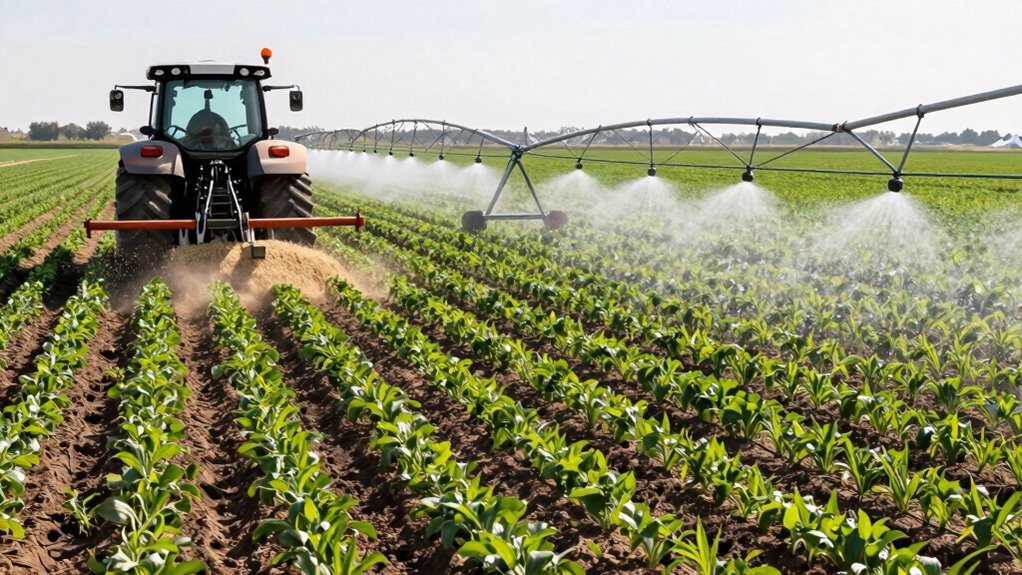
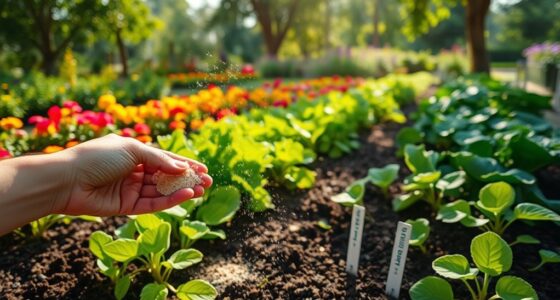
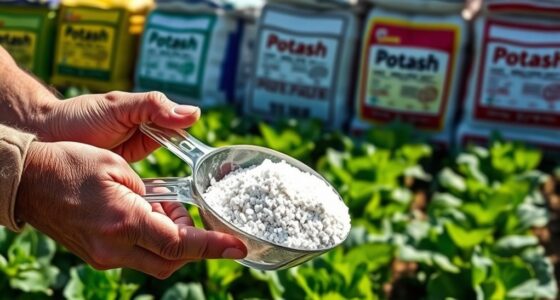
Choosing the right fertilizer type is essential for optimizing plant growth across different systems. When deciding between dry and liquid fertilizers, you need to take into account the specific needs of your plants, the system setup, and your management preferences. Dry fertilizers are often favored because they’re straightforward to store and handle. They come in granular or pellet form, making them suitable for large-scale applications like fields, lawns, or garden beds. They require manual or automated application methods—such as spreaders or broadcast equipment—that can cover extensive areas efficiently. Automated application systems are particularly beneficial here, as they ensure uniform distribution, reduce labor, and help maintain consistent nutrient levels. For those interested in sustainable practices, dry fertilizers also offer organic alternatives, including compost, bone meal, or organic mineral blends, which can be incorporated into your system to promote healthy, eco-friendly growth. Additionally, dry fertilizers have a longer shelf life and are less prone to nutrient loss over time, making them a reliable choice for long-term planning. Proper nutrient management is essential when using liquid fertilizers to prevent runoff and environmental impact. When using liquids, it’s important to consider the absorption rate of your plants, which varies depending on the type of system and plant species. Understanding the nutrient release patterns of different fertilizers can help optimize their effectiveness and reduce waste. It is also crucial to consider the application frequency to match your plant’s nutrient demands and avoid over-fertilization. When comparing dry and liquid fertilizers, factor in your system’s maintenance and your capacity for manual labor or automation. Dry fertilizers typically have a longer shelf life and are less prone to nutrient loss, but they may take longer to be available to plants. Liquid options deliver nutrients quickly but require more frequent application and careful management to prevent runoff or damage. If you’re looking to adopt a more sustainable approach, many organic alternatives are available for both types, aligning with eco-conscious gardening or farming practices. Understanding the benefits of organic fertilizers can help you make environmentally friendly choices. Automated application systems work well with both fertilizer types, streamlining the process and ensuring consistent, even coverage. Ultimately, your choice depends on your system’s scale, your operational preferences, and your commitment to organic or conventional methods, but understanding these differences helps you make an informed decision.

Scotts Whirl Hand-Powered Spreader
- Adjustable Arm Support: Provides maximum comfort during operation
- Hand-Held Design: Ideal for small yards and precise spreading
- Large Capacity: Spreads over 1,500 sq. ft. of lawn products
As an affiliate, we earn on qualifying purchases.
As an affiliate, we earn on qualifying purchases.
Frequently Asked Questions
Which Fertilizer Type Is More Eco-Friendly?
You’ll find that organic alternatives are generally more eco-friendly than traditional dry or liquid fertilizers because they have a lower environmental impact. Organic options, like compost or manure, release nutrients slowly and improve soil health without causing runoff or pollution. By choosing organic fertilizers, you help protect ecosystems, reduce chemical runoff, and promote sustainable farming practices—making them a better choice for the environment overall.
How Do Costs Compare Over the Long Term?
You might think liquid fertilizers are cheaper, but over the long term, dry fertilizers often win in cost efficiency. They typically require less frequent application and have lower transportation costs. While liquid options seem convenient, investing in dry fertilizer can lead to better long-term savings, especially when considering storage and application ease. So, ironically, what appears more expensive upfront could actually save you money over time.
Can Fertilizers Be Combined for Better Results?
Yes, you can combine fertilizers for better results through fertilizer blending, which allows you to customize nutrient ratios. To maximize effectiveness, focus on application timing, applying different fertilizers at ideal stages of plant growth. This approach ensures nutrients are available when plants need them most, improving absorption and growth. Just be sure to carefully mix compatible fertilizers to prevent clogging or chemical reactions that could reduce efficacy.
What Are the Safety Considerations for Application?
When applying fertilizers, prioritize application safety by wearing protective gear like gloves and goggles. Be aware of storage hazards—keep fertilizers in a cool, dry area away from children and pets. Follow label instructions carefully to prevent over-application, which can harm plants and the environment. Always wash hands after handling, and avoid inhaling dust or fumes. Proper precautions guarantee safe, effective fertilization without risking health or safety.
How Do Fertilizers Affect Soil Health?
They say “you are what you eat,” and that also applies to soil health. Fertilizers influence soil microbial activity and organic enrichment, shaping the soil’s robustness. Proper use boosts beneficial microbes, enhances organic matter, and maintains nutrient balance. Conversely, overuse can harm microbial diversity and degrade soil structure. You need to choose fertilizers carefully, ensuring they support long-term soil health rather than just immediate crop needs.
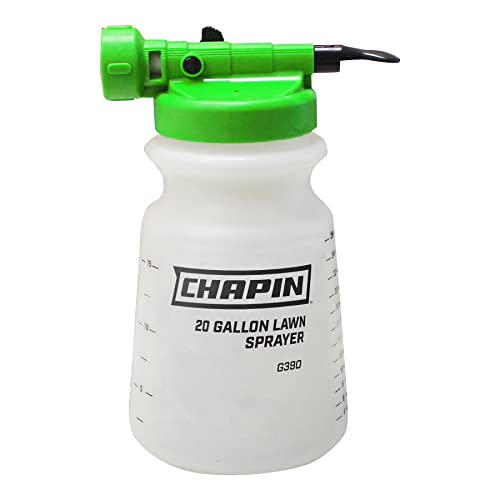
Chapin 32oz Hose-End Sprayer, Auto Mixing for Easy Application
- Tank Capacity: 32-ounce chemical-resistant tank
- Coverage Area: Sprays up to 20 gallons per fill
- Hose Compatibility: Universal garden hose connection
As an affiliate, we earn on qualifying purchases.
As an affiliate, we earn on qualifying purchases.
Conclusion
Choosing between dry and liquid fertilizers depends on your system’s needs and your gardening style. Both have their perks, so don’t put all your eggs in one basket. Sometimes, a balanced approach is the best way to keep your plants thriving. Remember, it’s about finding what works best for you and your garden’s unique rhythm. After all, you don’t want to put the cart before the horse—stick with what suits your system and watch your plants flourish.

Jobe’s Organics Granular All Purpose Fertilizer, Easy Plant Care Fertilizer for Vegetables, Flowers, Shrubs, Trees, and Plants, 16 lbs Bag
- Package Size: 16 Pounds of organic fertilizer
- Waste Reduction: Designed to minimize runoff and mess
- Nutrient Ratio: 4-4-4 NPK for balanced feeding
As an affiliate, we earn on qualifying purchases.
As an affiliate, we earn on qualifying purchases.

FoxFarm Soil Liquid Trio Pack – Big Bloom, Grow Big, Tiger Bloom Fertilizers Supports Vigorous Plant Growth, Bud Development & Abundant Fruit – Complete Liquid Plant Food Set – 3 Pint Bottles
- Complete Plant Nutrition Set: Includes Tiger Bloom, Grow Big, Big Bloom
- Supports All Growth Stages: Provides nutrients for every growth phase
- Versatile for Various Plants: Suitable for roses, tomatoes, houseplants, and vegetables
As an affiliate, we earn on qualifying purchases.
As an affiliate, we earn on qualifying purchases.