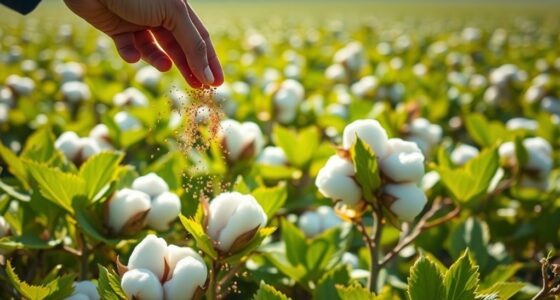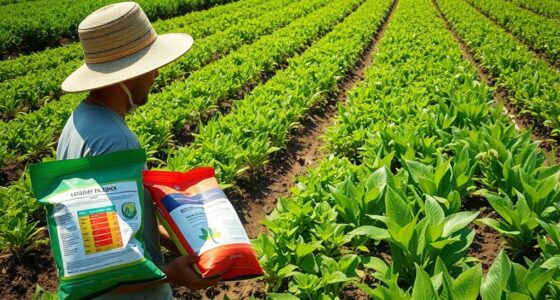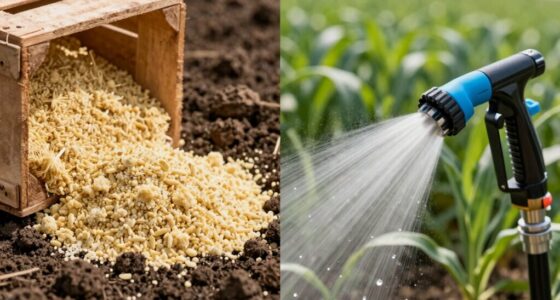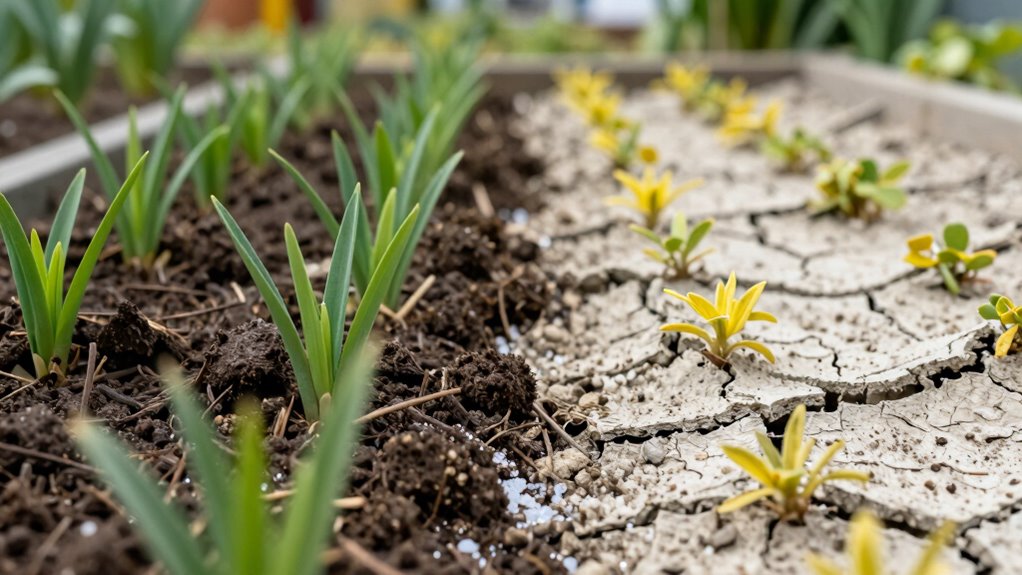

Salinity impacts fertilizer performance by changing soil chemistry and making nutrients less available to your plants. When soil salts build up, they bind with key nutrients like potassium, calcium, and magnesium, preventing plants from absorbing them properly. This reduces nutrient uptake, leading to poor growth and lower yields. High salinity also causes osmotic stress, making water uptake difficult. Understanding how salinity influences fertilizers can help you improve your soil and crop health, so keep exploring to learn more.

Prime made for students and young adults
- Fast, free delivery for dorm and study essentials
- Prime Video and Amazon Music included
- Member-only deals
Key Takeaways
- Salinity causes salts to bind with nutrients, reducing fertilizer solubility and plant availability.
- Excess salts hinder root function, impairing nutrient uptake from fertilizers.
- High salinity levels can lead to nutrient imbalances, decreasing fertilizer efficiency.
- Salt buildup in soil can cause fertilizer nutrients to become less accessible over time.
- Salinity stress can reduce plant ability to utilize applied fertilizers effectively.
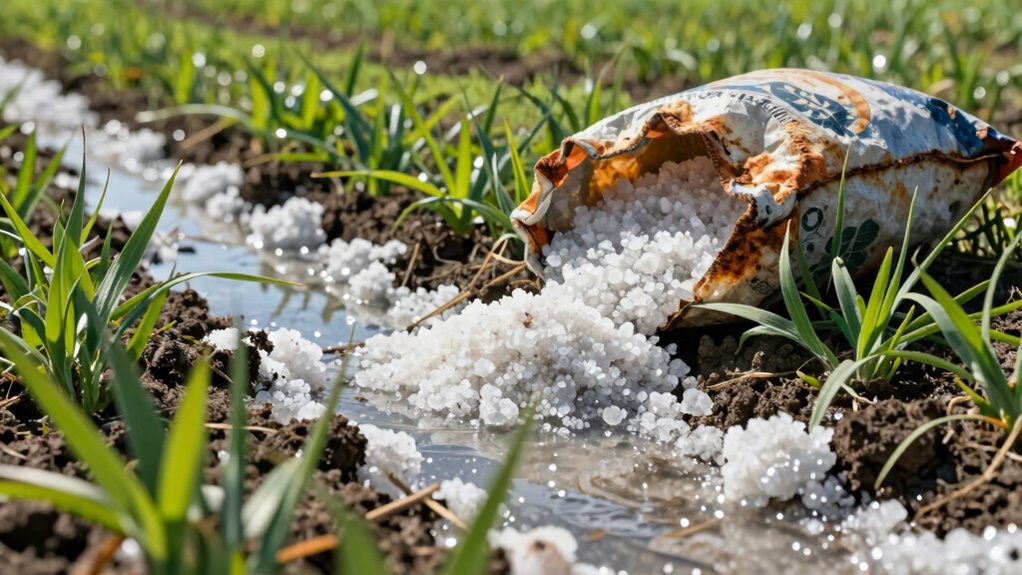
Have you ever wondered how salinity affects the effectiveness of fertilizers? When soil becomes salty, it doesn’t just make your plants uncomfortable; it fundamentally changes how nutrients behave in the soil. Salinity influences soil mineral content by causing soluble salts to accumulate, which can interfere with the availability of essential nutrients. These salts can bind with nutrients like potassium, calcium, and magnesium, making them less accessible to plants. As a result, even if you apply the right amount of fertilizer, your plants may not absorb what they need efficiently. This situation often leaves plants nutrient-deficient despite proper fertilization, ultimately stunting growth or causing poor yields.
Salinity hampers nutrient availability, causing deficiencies even with proper fertilization.
Your plants’ ability to tolerate salt plays a significant role here. Some species or varieties have a higher plant salt tolerance, meaning they can withstand higher salinity levels without severe damage. If you’re working with salt-sensitive plants, high salinity can quickly lead to nutrient imbalances and toxicity issues. The excess salts in the soil create a challenging environment where roots struggle to take up water and nutrients, leading to osmotic stress. This stress hampers the plant’s overall health, making it less responsive to fertilizers. Conversely, plants with better salt tolerance can adapt more readily, maintaining nutrient uptake and growth even in salty conditions. Recognizing your plants’ salt tolerance level helps you adjust fertilization strategies accordingly, perhaps by choosing more tolerant varieties or modifying soil conditions. Soil mineral content and its influence on nutrient dynamics is crucial for managing these challenges effectively. Additionally, managing soil salinity through proper irrigation and soil amendments can help improve fertilizer efficiency in affected areas. Proper salinity management techniques, such as leaching excess salts or improving drainage, can further mitigate these issues. Understanding the impact of salinity on soil chemistry can guide you in selecting appropriate fertilizers and amendments to mitigate these effects.
As an affiliate, we earn on qualifying purchases.
Frequently Asked Questions
How Does Salinity Impact Different Types of Fertilizers?
Salinity impacts fertilizers by reducing their solubility and limiting nutrient availability, especially for salts with low salinity tolerance. You’ll find that high salinity levels can cause certain fertilizers to precipitate or become less effective, making it harder for plants to absorb nutrients. To optimize performance, choose fertilizers with better solubility and consider salinity tolerance, ensuring your plants get the nutrients they need despite challenging soil conditions.
Can Salinity Levels Change Over Time in the Soil?
Salinity levels can definitely shift over time, often subtly, influenced by factors like soil moisture and salinity variability. When soil stays moist longer or experiences irregular watering, it can cause salinity to gradually rise or fall. These changes aren’t always obvious, but they impact how well fertilizers work. Monitoring soil moisture and salinity variability helps you manage these shifts, ensuring your plants get the nutrients they need without the risks of imbalanced salinity.
Are There Specific Crops More Vulnerable to Salinity-Related Fertilizer Issues?
Certain crops are more vulnerable to salinity-related fertilizer issues, especially salt-sensitive crops. You should consider planting salt-tolerant crops or salinity-resistant varieties if you’re dealing with high soil salinity. These options help maintain fertilizer efficiency and crop health. For vulnerable crops, adjusting fertilization practices and selecting suitable varieties can reduce the negative impact of salinity, ensuring better growth and yield despite challenging soil conditions.
How Can Farmers Test Soil Salinity Effectively?
You can test soil salinity effectively by performing soil sampling at different points across your fields, especially where you suspect issues. Use a portable electrical conductivity (EC) meter to measure salinity levels directly in the soil. Compare your readings to established salinity thresholds for your crops. Regular testing helps you monitor changes, manage fertilizer application, and prevent salt buildup, ensuring maximum crop growth and soil health.
What Long-Term Strategies Exist to Manage Soil Salinity?
To manage soil salinity long-term, you should focus on soil remediation techniques like leaching excess salts with good-quality water and improving drainage. Implement effective water management practices, such as controlled irrigation, to prevent salt buildup. Crop selection also matters—choose salt-tolerant varieties. Regular monitoring helps track salinity levels, allowing timely adjustments. Combining these strategies guarantees healthier soils, better fertilizer performance, and sustained productivity over time.
salt-tolerant fertilizer for crops
As an affiliate, we earn on qualifying purchases.
As an affiliate, we earn on qualifying purchases.
Conclusion
While salinity may gently challenge your fertilizer’s effectiveness, it also invites you to explore more resilient strategies. Embracing this subtle shift encourages you to adapt and innovate, nurturing healthier crops and richer yields. Sometimes, nature’s quiet adjustments lead to the most profound growth. By understanding and respecting these delicate balances, you’ll find that even the smallest changes can foster a more fruitful and sustainable future.
soil amendments for high salinity
As an affiliate, we earn on qualifying purchases.
As an affiliate, we earn on qualifying purchases.
drainage improvement products for soil
As an affiliate, we earn on qualifying purchases.
As an affiliate, we earn on qualifying purchases.
Fall Picks
fall essentials
As an affiliate, we earn on qualifying purchases.