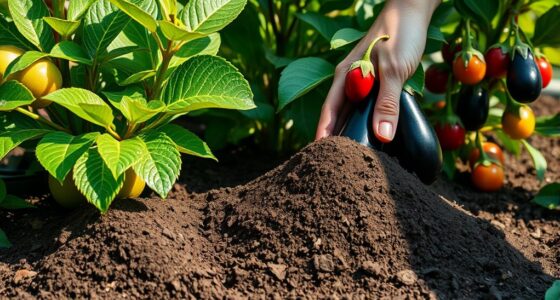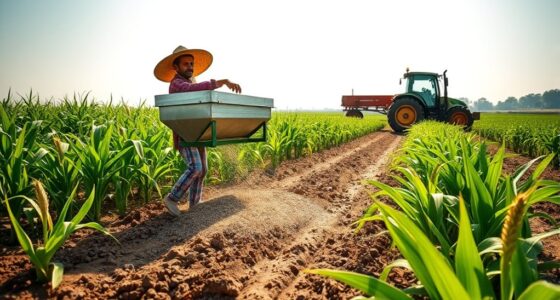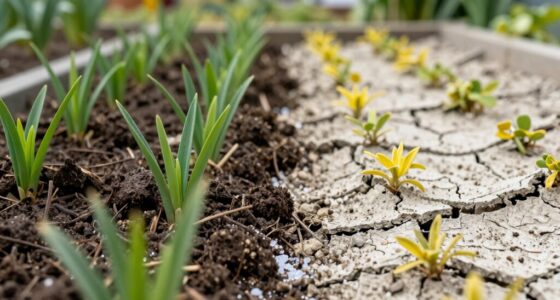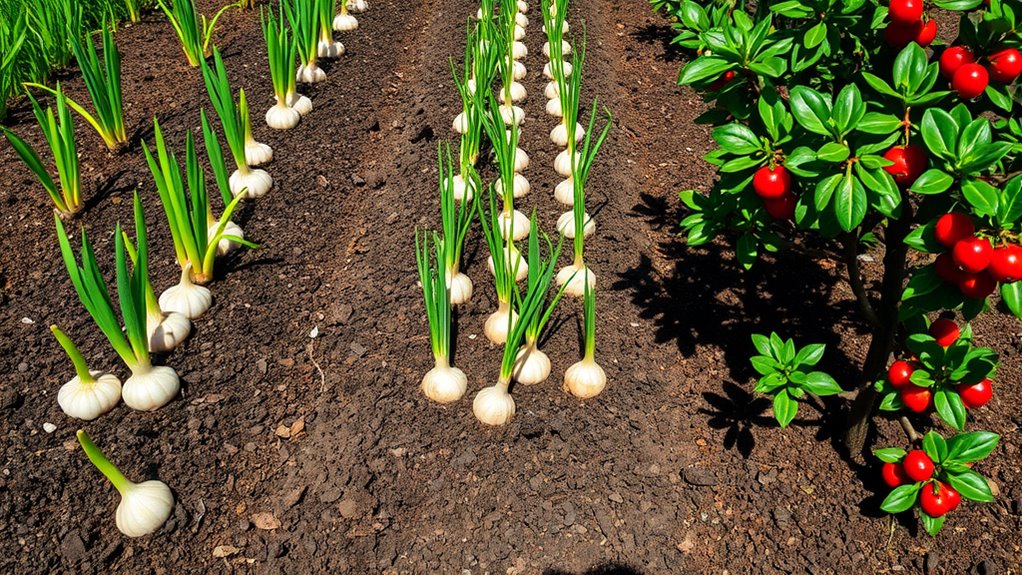
To optimize growth, start fertilizing garlic and onions early by mixing nitrogen-rich fertilizer into the soil and applying side dressings about a month after planting, with liquid feeds every few weeks. For jujube trees, focus on early spring applications with balanced fertilizer, shifting to higher potassium during fruiting. Proper timing, soil testing, and watering help maximize yield and health. Keep exploring for more detailed tips to fine-tune your fertilization approach.

Prime made for students and young adults
- Fast, free delivery for dorm and study essentials
- Prime Video and Amazon Music included
- Member-only deals
Key Takeaways
- Begin fertilization early during planting for garlic and onions, focusing on nitrogen-rich soil pre-planting and periodic liquid feed.
- Prioritize balanced nutrients for garlic and onions, avoiding excess nitrogen to promote bulb growth over leafy development.
- For jujube trees, apply potassium and phosphorus-rich fertilizers, shifting to higher potassium during fruiting season.
- Fertilize jujube trees in early spring or dormancy, avoiding late-season applications to prevent overgrowth.
- Use soil testing to tailor fertilization schedules, ensuring proper watering and nutrient balance for optimal plant health.

Are you unsure how to properly fertilize your garden or lawn? When it comes to garlic, onions, and jujube trees, understanding the right fertilization strategies can markedly boost your plants’ health and yield. Each plant has unique nutrient needs, so tailoring your approach is essential. Garlic and onions, being root vegetables, benefit from a balanced fertilizer that encourages bulb development, while jujube trees, as fruit-bearing trees, require a different nutrient profile to produce high-quality fruit.
Understanding the unique fertilization needs of garlic, onions, and jujube trees maximizes growth and yield.
For garlic and onions, you should start fertilizing early in the planting process. Before planting, work in a nitrogen-rich fertilizer into the soil to promote lush green growth. Once the plants are established, typically about a month after planting, apply a side-dressing of nitrogen fertilizer to support continued growth. This helps the bulbs develop properly and prevents deficiency symptoms like yellowing leaves. Be cautious not to over-fertilize; too much nitrogen can lead to excessive leafy growth at the expense of bulb size. During the growing season, you might also apply a balanced liquid fertilizer every few weeks to supply essential nutrients and keep the plants vigorous.
Jujube trees, on the other hand, have different requirements. They thrive with a fertilizer that emphasizes potassium and phosphorus, which support flowering and fruiting. Usually, a balanced fertilizer with a ratio like 10-10-10 works well during the early stages of growth. As the tree matures and begins fruiting, shift to fertilizers higher in potassium, such as 10-20-10, to enhance fruit quality and yield. It’s best to apply fertilizer in early spring before the tree’s active growth phase. Spread the fertilizer evenly around the drip line—the area beneath the outermost branches—and water it in thoroughly. This encourages the roots to absorb nutrients efficiently.
Timing and consistency are key to effective fertilization. For garlic and onions, adjust your fertilization schedule to match their growth stages, avoiding late-season applications that may encourage disease. With jujube trees, annual fertilization during dormant periods or early spring supports healthy development and fruit production. Remember, soil testing can help you determine specific nutrient deficiencies and avoid over-application, which can harm plants and pollute the environment.
As an affiliate, we earn on qualifying purchases.
Frequently Asked Questions
How Often Should I Fertilize Garlic, Onions, and Jujube Trees?
You’re wondering how often to fertilize your garlic, onions, and jujube trees. Typically, garlic and onions benefit from fertilization every 4 to 6 weeks during their growing season, focusing on nitrogen. Jujube trees usually need fertilizing twice a year—early spring and mid-summer—with a balanced fertilizer. Adjust based on plant health and soil tests, and always follow recommended application rates for best results.
Are Organic Fertilizers Effective for These Crops?
Organic fertilizers can be very effective for your crops. They improve soil health, boost nutrient availability, and promote strong growth. You might notice better flavor and larger yields over time. Just make certain you choose the right type and apply it properly. Organic options like compost, manure, and plant-based fertilizers work well and are eco-friendly. With consistent use, you’ll support healthy, productive garlic, onions, and jujube trees naturally.
What Are Signs of Over-Fertilization in These Plants?
Imagine your plants as delicate dancers, and over-fertilization as a heavy, unsteady step. You’ll notice yellowing leaves, wilting, or stunted growth as warning signs. Dark, crusty soil or an overly lush, rapid top growth can also signal excess nutrients. If you see these signs, cut back on fertilizing immediately. Over-fertilization stresses your plants, making them vulnerable to pests and diseases, so always monitor and adjust accordingly.
Can I Use Compost as the Primary Fertilizer?
You can definitely use compost as your main fertilizer since it enriches your soil naturally. Compost provides essential nutrients, improves soil structure, and promotes healthy plant growth. Just make sure to apply it evenly and in appropriate amounts to avoid overfeeding. Combining compost with other organic or balanced fertilizers can boost your plants’ health, ensuring they get everything they need without the risk of excessive nutrient buildup.
Does Fertilization Affect the Flavor of Garlic and Onions?
Fertilization can influence the flavor of garlic and onions because nutrients affect their growth and chemical makeup. When you provide balanced, appropriate fertilization, you help develop their natural flavors. Over-fertilizing, especially with nitrogen, might lead to milder or less pungent bulbs. Conversely, under-fertilizing can produce more intense flavors. So, your fertilization practices directly impact the taste profile, making it important to follow suitable guidelines for ideal flavor development.
As an affiliate, we earn on qualifying purchases.
Conclusion
By following these fertilization guidelines, you’ll optimize growth and yield for your garlic, onions, and jujube trees. Did you know that proper fertilization can increase crop productivity by up to 30%? Stay consistent with your nutrient management, monitor plant health regularly, and adjust as needed. This simple step can make a big difference in your garden’s success, helping you enjoy healthier plants and bountiful harvests season after season.
As an affiliate, we earn on qualifying purchases.
balanced fertilizer for fruit trees
As an affiliate, we earn on qualifying purchases.
As an affiliate, we earn on qualifying purchases.
Evergreen bestsellers Picks
bestsellers
As an affiliate, we earn on qualifying purchases.