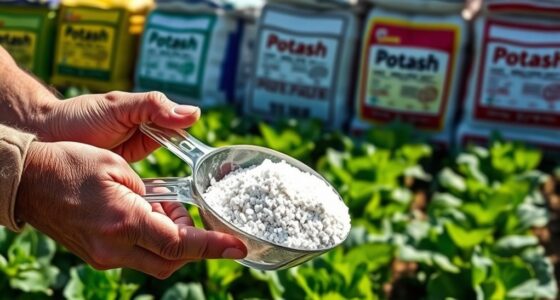

Zinc sulfate plays a key role in agriculture by providing an easily absorbed zinc source that supports vital enzymatic processes, DNA synthesis, and carbohydrate metabolism in plants. It helps correct zinc deficiencies that cause stunted growth, chlorosis, and lower yields. You can apply it to soil, spray foliarly, or treat seeds to boost crop health, strength, and resistance to stresses. Keep exploring how zinc sulfate can optimize your crop performance even further.
Key Takeaways
- Supplies an accessible form of zinc to improve plant enzymatic functions and metabolic processes.
- Corrects zinc deficiency symptoms like stunting and chlorosis, boosting crop health and yields.
- Enhances root development, stalk strength, and resistance to environmental stresses.
- Can be applied via soil, foliar spray, or seed treatment for flexible, rapid nutrient correction.
- Promotes higher crop quality and nutritional value, supporting sustainable agriculture and human health.
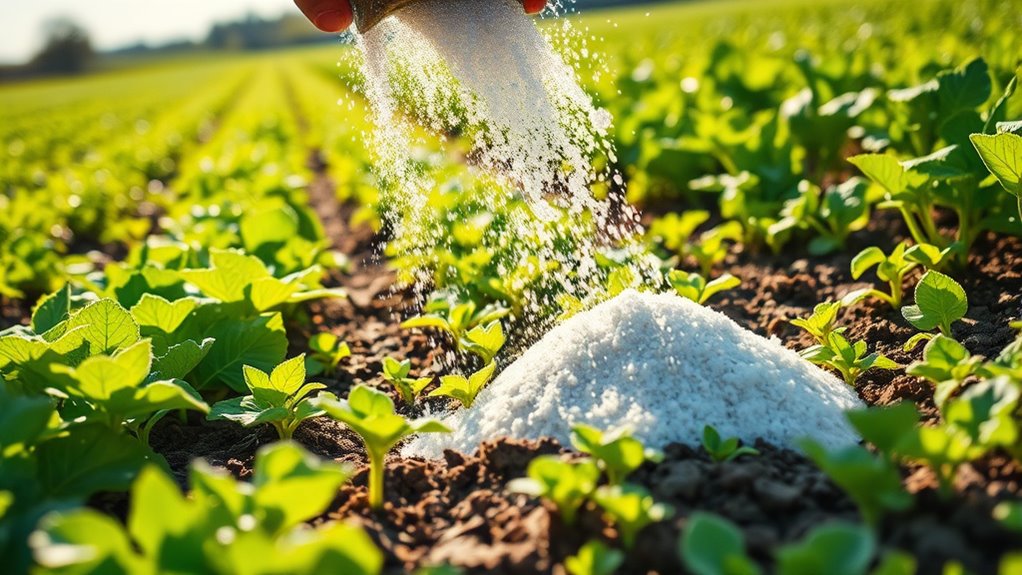
Have you ever wondered how zinc sulfate benefits agriculture? This versatile compound plays an essential role in supporting healthy crop growth and improving overall plant performance. As a critical micronutrient, zinc is necessary for numerous enzymatic processes within plants, influencing everything from growth regulation to disease resistance. When applied correctly, zinc sulfate supplies an easily accessible form of zinc that plants can absorb quickly, ensuring they meet their nutritional needs. Its solubility in water makes it particularly effective for soil applications, foliar sprays, or seed treatments, providing flexibility for farmers seeking efficient ways to boost their yields.
In soils deficient in zinc, crops often exhibit stunted growth, chlorosis, or reduced yields, which can considerably impact profitability. Zinc sulfate replenishes these deficiencies, restoring proper enzyme function and supporting essential processes like DNA synthesis and carbohydrate metabolism. You’ll notice healthier, more vigorous plants when zinc levels are optimized, leading to improved stalk strength, better root development, and increased resistance to environmental stresses. This is especially important in high-yield crops such as maize, wheat, and rice, where nutrient imbalances can limit production potential.
Zinc sulfate corrects deficiencies, boosts plant health, and enhances crop yields in zinc-deficient soils.
Applying zinc sulfate is straightforward and adaptable to different farming systems. You can incorporate it into your soil before planting, ensuring that plants have access to zinc from the start. Alternatively, foliar sprays allow for rapid correction of zinc deficiencies during the growing season, especially when deficiencies are diagnosed late or when soil conditions hinder zinc mobility. Seed treatments with zinc sulfate can also promote early seedling vigor, helping plants establish strong roots and resist pests or diseases. By integrating zinc sulfate into your fertilization strategy, you can optimize nutrient availability and support robust crop development.
Beyond supporting plant growth, zinc sulfate also plays a role in improving the nutritional quality of your harvest. Zinc is an essential mineral for human health, and crops with adequate zinc levels can help address deficiencies in local diets. This adds value to your produce and enhances its marketability, especially in regions where micronutrient deficiencies are common. Furthermore, zinc sulfate is cost-effective and widely available, making it an accessible choice for farmers aiming to improve crop yields without significant investment.

Espoma Organic Garden Gypsum Soil Conditioner; All-Natural & pelletized mined Gypsum with no fillers or additives. Helps Loosen Clay Soil; 36 lb. Bag Pack of one
- Application Use: Loosen clay soil and repair turf burns
- Product Composition: 100% natural mined gypsum, pelletized
- Usage Instructions: Apply anytime during growing season
As an affiliate, we earn on qualifying purchases.
Frequently Asked Questions
How Is Zinc Sulfate Applied in Organic Farming Practices?
You can apply zinc sulfate in organic farming by foliar spraying or as a soil amendment. When you spray it directly onto plant leaves, it quickly provides zinc for nutrient uptake. Alternatively, mixing it into the soil helps improve zinc levels over time. Make sure to follow recommended dosages and timing to avoid over-application, ensuring your crops get the zinc they need for healthy growth without harming the environment.
Are There Any Environmental Risks Associated With Zinc Sulfate Runoff?
You might worry that zinc sulfate runoff could cause an environmental disaster, but it’s usually not that extreme. While excess zinc can harm aquatic life and pollute water sources, proper application and management greatly reduce these risks. If you’re cautious—avoiding overuse, monitoring runoff, and following guidelines—you’ll minimize environmental impacts. So, with responsible practices, you can enjoy zinc’s benefits without risking an ecological catastrophe.
What Crops Benefit Most From Zinc Sulfate Supplementation?
You’re wondering which crops benefit most from zinc sulfate supplementation. You’ll find that cereal grains like wheat and maize, along with legumes such as beans and peas, respond well to zinc fertilization. These crops often face zinc deficiencies that limit growth and yield. By providing zinc sulfate, you help improve their overall health, boost crop productivity, and enhance resistance to diseases, making your agricultural practices more effective and sustainable.
Can Zinc Sulfate Be Used to Prevent Zinc Deficiency in Soil?
Imagine your soil transforming into a treasure trove of energy—that’s what zinc sulfate can do. Yes, you can use zinc sulfate to prevent zinc deficiency in your soil. It acts quickly, restoring balance and boosting plant health before deficiencies even show up. Just apply it properly, and watch your crops thrive as if they’ve discovered a hidden goldmine of nutrients, ensuring robust growth and higher yields.
How Does Zinc Sulfate Interact With Other Soil Nutrients?
You’re curious about how zinc sulfate interacts with other soil nutrients. When applied, zinc sulfate can enhance the availability of zinc, but it also influences the balance of nutrients like iron, manganese, and copper. It may compete with these elements for absorption, potentially causing deficiencies if overused. To optimize soil health, you should monitor nutrient levels regularly and apply zinc sulfate carefully, ensuring it complements your overall fertilization plan.

Gypsum Powder for Mushroom Substrate (5 lb) | Lab Grade | Packed in a HEPA-Filtered Facility | Highly Soluble for Growing Mushrooms | Soil Conditioner | (Calcium Sulfate Dihydrate) (5 Pounds)
- Mycology Grade Quality: Packaged in HEPA-filtered facility
- High Purity: 97% calcium sulfate dihydrate
- Highly Soluble: Easily mixes with water
As an affiliate, we earn on qualifying purchases.
Conclusion
In summary, zinc sulfate is an essential nutrient that can considerably enhance your crops’ health and yields. Did you know that zinc deficiency affects around 25% of the world’s arable land, reducing crop productivity? By incorporating zinc sulfate into your farming practices, you can help bridge this gap, ensuring healthier plants and better harvests. Don’t overlook this affordable and effective solution — it could make all the difference in your agricultural success.
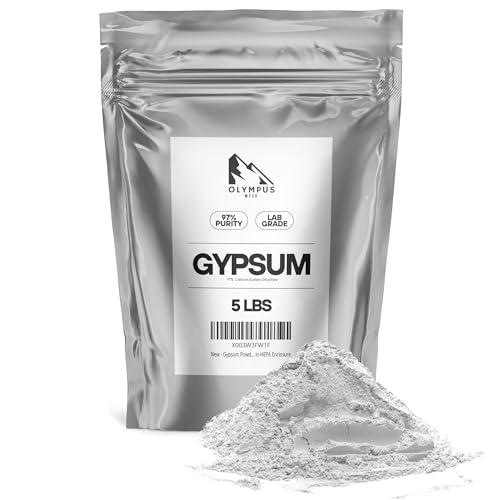
Olympus Myco 97% Pure Gypsum Powder, 5 lbs – High Solubility Calcium Sulfate Dihydrate for Soil, Gardens, Lawns, Soil Conditioner
- Soil Structure Improvement: Prevents compaction and enhances air flow
- Supports Plant & Mushroom Growth: Provides calcium, sulfur, and balanced pH
- Improves Water Retention: Ensures even moisture distribution
As an affiliate, we earn on qualifying purchases.

Calcium Sulfate Dihydrate - Gypsum - CaSO4*2H2O - 5 Pounds
- Feed Grade Calcium Sulfate: High-quality gypsum for feed use
- Fine Powder Consistency: Easily dispersible, fine-textured powder
- Versatile Soil Conditioner: Reduces soil pH and improves soil health
As an affiliate, we earn on qualifying purchases.