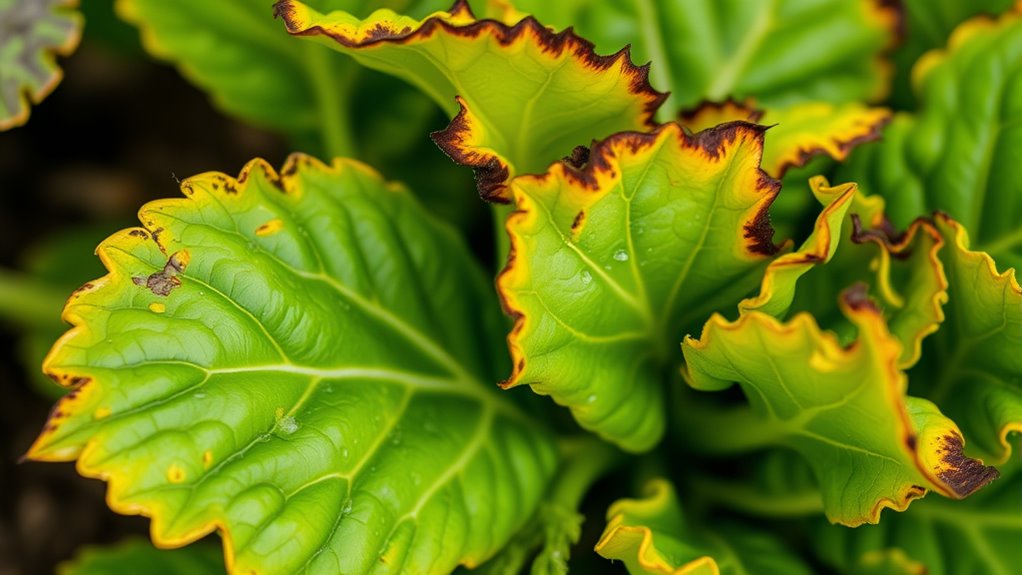
Fertilizer burn happens when you over-apply nutrients, overwhelming your plant’s roots and causing dehydration, leaf browning, and stunted growth. Symptoms include yellowing leaves, crispy edges, and salt residue on the soil. To prevent this, follow recommended fertilizer amounts, avoid applying before heavy rain, and consider organic options like compost. Proper soil management and careful monitoring help keep plants healthy. For detailed tips, keep exploring how to protect your garden from fertilizer burn.
Key Takeaways
- Over-application of fertilizer and chemical overloads cause plant root damage and fertilizer burn.
- Symptoms include leaf browning, wilting, salty residue, and uneven growth indicating over-fertilization.
- Prevent by following recommended fertilizer amounts, avoiding application before rain, and conducting soil tests.
- Use organic alternatives like compost and seaweed extracts to provide gentle nutrients and improve soil health.
- Regular monitoring and soil flushing help identify early signs and mitigate damage from fertilizer burn.
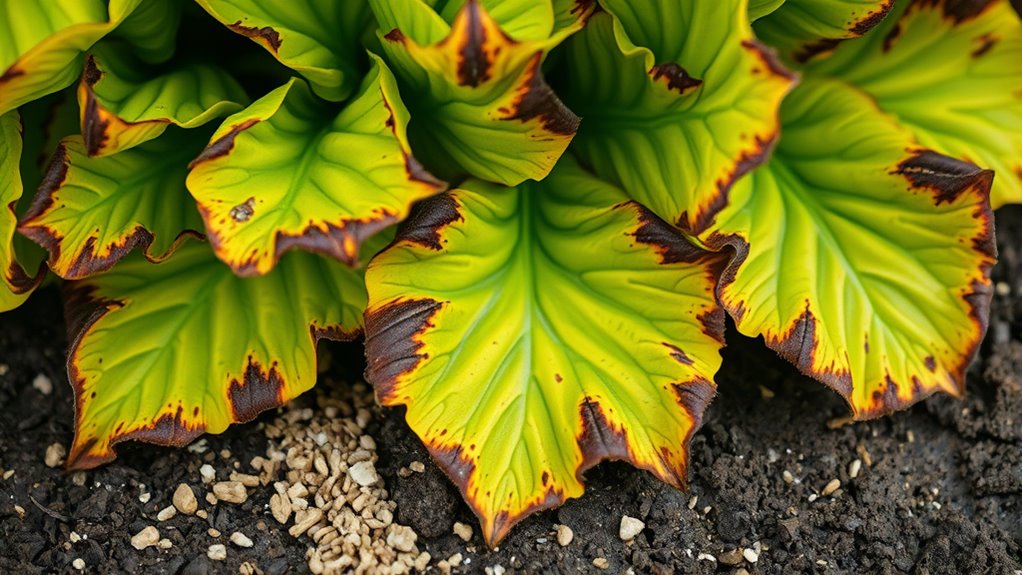
Fertilizer burn occurs when plants receive too much fertilizer, causing their roots to become damaged and unable to absorb nutrients properly. This over-application overwhelms the plant’s roots, leading to dehydration, tissue damage, and ultimately, stunted growth or death. To prevent this, it’s essential to understand the importance of proper soil management. Using soil amendments can help improve soil structure, balance pH levels, and enhance nutrient retention, reducing the likelihood of fertilizer burn. Incorporating organic alternatives, like compost, aged manure, or seaweed extracts, provides gentle, slow-release nutrients that support healthy plant growth without risking over-fertilization. These natural options not only nourish your plants but also improve soil health over time, making them a safer choice for home gardeners.
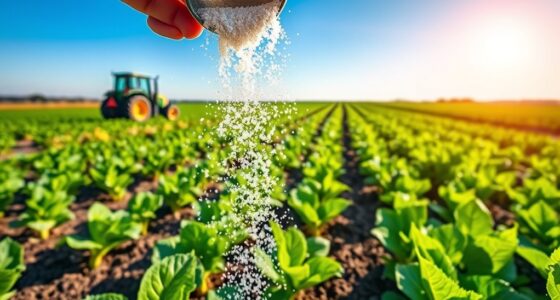
When applying fertilizer, always follow the recommended dosage and frequency. Over-fertilizing is one of the main causes of fertilizer burn, especially when relying on chemical fertilizers that deliver concentrated nutrients. Never guess or assume more is better; instead, measure carefully and avoid applying fertilizer before heavy rain, which can wash excess nutrients into the soil and cause root damage. If you notice signs of over-fertilization, such as wilting, browning leaf edges, or a salty residue on the soil surface, act quickly to flush the soil with water. This helps leach out the excess salts and nutrients, reducing the risk of further damage.
Understanding your soil’s needs is fundamental in preventing fertilizer burn. Conduct a soil test to determine existing nutrient levels and pH. This information allows you to choose appropriate amendments and organic fertilizers tailored to your plants’ requirements. Organic alternatives like compost tea or fish emulsion deliver nutrients in a more balanced, less aggressive manner, giving your plants what they need without risking burn. Additionally, layering organic matter into the soil improves its water-holding capacity and encourages beneficial microorganisms, which naturally assist in nutrient uptake and plant health. Incorporating data-driven strategies can also help optimize fertilizer use and prevent over-application.
Monitoring your plants regularly is essential. Look for early signs of stress—such as yellowing leaves or uneven growth—and adjust your fertilizing routine accordingly. Remember, consistent, moderate feeding based on your soil’s specific needs is the best way to prevent fertilizer burn. By combining proper soil amendments, organic alternatives, and careful application practices, you protect your plants from the damaging effects of over-fertilization and promote vibrant, healthy growth.
Frequently Asked Questions
Can Fertilizer Burn Affect Indoor Plants Differently Than Outdoor Plants?
Yes, fertilizer burn can affect indoor plants differently than outdoor plants because indoor plants often have higher fertilizer sensitivity. You might notice that indoor plants react more quickly to over-fertilizing, showing symptoms like leaf browning or wilting sooner. Since indoor conditions limit nutrient dispersal, you should be extra cautious with fertilizer amounts, ensuring you follow recommended guidelines to prevent damage and keep your indoor plants healthy.
Are Certain Plant Species More Susceptible to Fertilizer Burn?
You’ll notice some plant species are more tender than others, making their fertilizer sensitivity higher. These delicate varieties, like succulents or ferns, can easily suffer from fertilizer overindulgence, leading to stress or damage. If you’re caring for different plant species, pay close attention to their specific needs, and always follow recommended fertilizer guidelines. Your attentive approach helps prevent unwelcome surprises and keeps your plants thriving beautifully.
How Long Does It Take for Fertilizer Burn Symptoms to Appear?
You’ll typically see fertilizer burn symptoms within a few days to a week after over-fertilizing. The timing of symptoms depends on the fertilizer type, concentration, and plant sensitivity. As the symptom progression unfolds, you might notice leaf scorch, browning, or yellowing starting at the tips and edges. Keep an eye on your plants, and if you spot early signs, act quickly to prevent further damage.
Can Organic Fertilizers Cause Fertilizer Burn?
Yes, organic fertilizers can cause fertilizer burn if you apply them in excess or on dry soil. Organic nutrients are generally gentler, but overdoing it can still harm your plants. To prevent this, always follow application instructions and water thoroughly afterward. If you notice damage, use natural remedies like rinsing the soil with water or applying compost tea to help plants recover and minimize further stress.
What Are the Long-Term Effects of Fertilizer Burn on Plant Health?
Fertilizer burn can cause lasting damage to your plants’ health. It may lead to soil degradation, making it harder for nutrients to be absorbed, and can create nutrient imbalances that stunt growth or weaken plants over time. If you don’t address fertilizer burn early, your plants might suffer from reduced vigor, increased susceptibility to pests, and long-term soil health issues, affecting your garden’s productivity and sustainability.
Conclusion
To keep your plants thriving, remember that fertilizer burn is a warning sign, not a defeat. By understanding its causes and taking proactive steps, you can nurture your garden without risking harm. Think of your plants as delicate dreams—overfeeding can crush them, but with care, they flourish. So, stay vigilant, balance your nutrients, and let patience be your gardener’s most valuable tool. After all, a healthy garden reflects the love and attention you give it.