

To apply urea effectively for vehicles and agriculture, use calibrated spreaders or spray systems to guarantee even distribution. For agriculture, incorporate urea into the soil or apply before rainfall to reduce nitrogen loss, and avoid windy conditions that cause drift. For vehicles, use specialized spraying equipment for precise delivery. Always follow safety protocols and environmental guidelines. Continuing with this approach will help you master more tips for maximizing efficiency and minimizing environmental impact.

Prime made for students and young adults
- Fast, free delivery for dorm and study essentials
- Prime Video and Amazon Music included
- Member-only deals
Key Takeaways
- Use calibrated hydraulic spreaders or spray systems for precise and uniform urea distribution on vehicles and in agriculture.
- Incorporate urea into the soil through harrows or plows to minimize nitrogen volatilization and environmental impact.
- Apply urea during active plant growth stages and before rainfall to enhance nitrogen uptake and leaching.
- Avoid applying urea during windy or rainy conditions to prevent drift, runoff, and nitrogen loss.
- Wear protective gear and follow local regulations to ensure safety and environmental compliance during application.
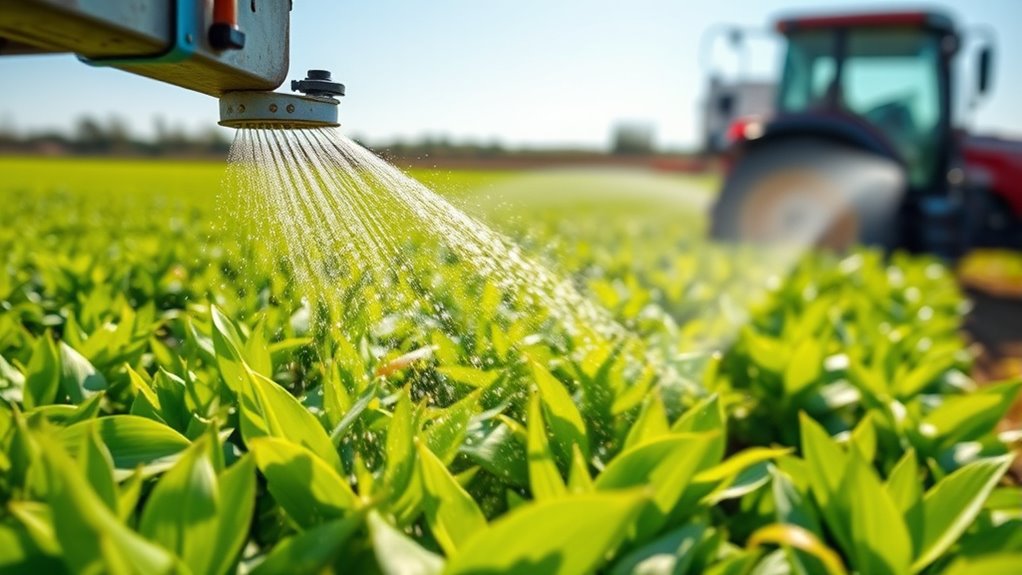
Applying urea effectively is essential for maximizing its benefits as a nitrogen fertilizer. When you use urea properly, you ensure plants receive the right amount of nitrogen, promoting healthy growth and increasing crop yields. To achieve this, you need to understand the best application techniques tailored to your specific needs, whether you’re fertilizing fields or applying it through vehicles. Proper handling and application not only improve efficiency but also minimize environmental impact, such as nitrogen runoff or volatilization.
Proper urea application maximizes nitrogen uptake and crop yields while minimizing environmental impact.
For agricultural use, the most effective technique involves surface application or incorporation into the soil. When you spread urea on the soil surface, it’s crucial to do so evenly to prevent wastage and ensure uniform nutrient distribution. Using a broadcast spreader or a drop spreader can help you achieve this precision. After spreading, incorporating the urea into the soil with a harrow or plow can markedly reduce nitrogen loss through volatilization, especially in dry or windy conditions. If incorporation isn’t feasible, applying urea before expected rainfall can help leach the nitrogen into the soil more effectively. Timing also matters; applying urea during active plant growth stages ensures that the plants can absorb the nitrogen efficiently, reducing the chances of loss due to runoff or leaching. Additionally, understanding the soil nutrient profile can help tailor your application for better efficiency.
When it comes to applying urea via vehicles, such as in turf management or large-scale farming, precision is key. Using specialized equipment like hydraulic spreaders or spray systems allows you to control the amount and distribution of urea accurately. Before application, calibrate your equipment to match the recommended application rate, which varies depending on crop type and soil conditions. For vehicle-based applications, maintaining even speed and consistent application patterns prevents overlaps and gaps, ensuring uniform coverage. If you’re spraying urea solutions, make sure the mixture is well-prepared, and use nozzles designed for liquid fertilizers to avoid clogging and uneven distribution. Always consider weather conditions; avoid applying during high winds or rain, as this can cause drift or runoff, reducing efficiency and increasing environmental risks. Properly calibrating equipment is essential for optimal results and minimizing waste.
Additionally, understanding the caffeine content in cocoa and coffee can be useful if you are using organic or natural fertilizer supplements derived from plant sources, as these can influence plant health and growth. Being aware of fertilizer regulations in your area helps ensure compliance and environmental safety when applying urea. In both cases, safety precautions are critical. Wear protective gear, such as gloves and masks, especially when handling concentrated urea solutions, to prevent skin contact or inhalation. Proper storage and disposal of leftover urea and containers also help protect the environment. By mastering these application techniques, you maximize the fertilizer’s effectiveness, improve crop productivity, and minimize potential negative impacts. Whether working in the field or using vehicles, attention to detail and adherence to best practices will ensure you get the most from your urea fertilizer investment.
Top picks for "urea application techniqu"
As an affiliate, we earn on qualifying purchases.
Frequently Asked Questions
How Often Should Urea Be Reapplied for Optimal Results?
You’re wondering how often to reapply urea for the best results. Typically, it depends on the crop or vehicle’s needs, but generally, you should reapply every 2 to 4 weeks during active growth or use. Keep an eye on soil or engine conditions, and adjust your schedule accordingly. Proper timing ensures efficient nutrient absorption and prevents wastage, helping you achieve maximum growth and performance.
Are There Environmental Concerns With Urea Runoff?
You should be aware that urea runoff can pose environmental concerns, especially when excess fertilizer washes into water bodies. It can cause nutrient pollution, leading to harmful algal blooms and water quality issues. To minimize this, you’re encouraged to apply urea carefully, follow recommended guidelines, and avoid over-application. Proper timing and methods help reduce runoff, protecting ecosystems and maintaining sustainable practices.
Can Urea Be Used in Cold Weather Conditions?
You wonder if urea works in cold weather, and the answer isn’t straightforward. Cold temperatures can slow down the chemical reactions needed for urea to effectively convert into usable nitrogen. If you apply it during freezing conditions, it might not perform as expected, risking runoff or inefficiency. But with proper timing and techniques, you can still make it work. Stay cautious, and adapt your approach to weather conditions for the best results.
What Are the Signs of Over-Application of Urea?
When you over-apply urea, you might notice leaf burn, yellowing, or browning of plants, indicating nitrogen toxicity. You could also see reduced growth, increased susceptibility to pests, or soil imbalance. Excess urea can leach into water sources, causing pollution. Keep an eye on application rates and plant responses to prevent these signs. Proper dosing ensures healthy growth and minimizes environmental impact.
How Does Urea Application Differ Between Various Vehicle Types?
While each vehicle type handles urea differently, your approach varies based on design and purpose. For example, trucks and buses often have larger, specialized tanks and injection systems, allowing precise application, whereas smaller vehicles might use simpler dosing methods. You need to take into account factors like engine size, emission standards, and operational conditions. Adapting your technique ensures efficient use, minimizes waste, and keeps your vehicle running smoothly without overdoing it.
Conclusion
Remember, a job well done is worth doing right the first time. When applying urea for vehicles and agriculture, always follow proper techniques to guarantee effectiveness and safety. Use the correct methods to maximize benefits and minimize waste or damage. Whether you’re fertilizing crops or fueling engines, careful application makes all the difference. Keep in mind that “a stitch in time saves nine,” so take the time to do it properly now, and you’ll see better results later.
Fall Picks
fall essentials
As an affiliate, we earn on qualifying purchases.