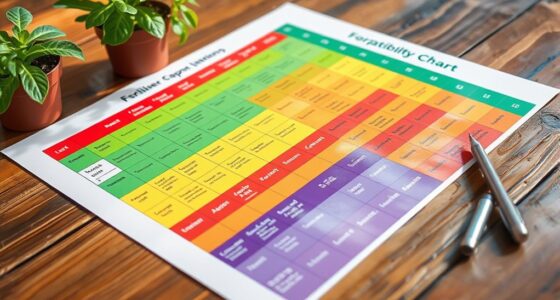
One common mistake is ignoring soil pH, which can prevent plants from absorbing nutrients properly. Over-fertilizing can cause root burn and lush foliage instead of flowers or fruits. Using only synthetic fertilizers doesn’t improve soil health long-term; mixing in organic options is better. Timing also matters—applying fertilizer too early or late wastes nutrients and reduces growth. If you keep these issues in mind, you’ll develop healthier, more productive raised beds and containers. Keep going to learn more tips for success.
Key Takeaways
- Over-fertilizing can cause nutrient imbalances and root damage in raised beds and containers.
- Ignoring soil pH testing may lead to nutrient deficiencies or toxicities.
- Relying solely on synthetic fertilizers without organic amendments can harm soil health long-term.
- Applying fertilizer at incorrect times reduces nutrient uptake and plant growth efficiency.
- Neglecting soil health can limit nutrient availability and overall plant resilience.
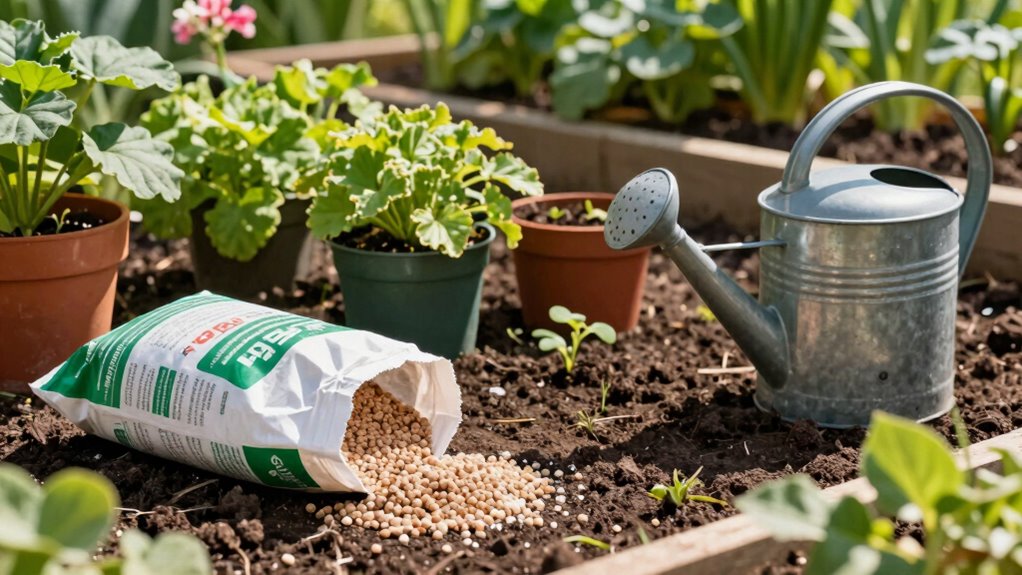
Fertilizer mistakes are common and can substantially impact the health of your plants and soil. One of the biggest errors is neglecting to evaluate soil pH adjustments. Plants are sensitive to pH levels, and if your soil is too acidic or alkaline, nutrients won’t be absorbed efficiently, leading to poor growth or deficiencies. Before fertilizing, it’s wise to test your soil’s pH and make necessary adjustments. Lime can raise pH if your soil is too acidic, while sulfur or peat moss can lower it when it’s too alkaline. Ignoring these adjustments means your plants won’t get the nutrients they need, even if you’re fertilizing properly.
Neglecting soil pH testing can hinder nutrient absorption and harm plant growth.
Another common mistake involves relying solely on synthetic fertilizers without taking into account organic fertilizer options. While synthetic fertilizers provide quick nutrients, they often lack the long-term benefits of organic options, such as improving soil structure and fostering beneficial microbial activity. Organic fertilizers, like compost, manure, or bone meal, release nutrients slowly and improve the overall health of your soil over time. Using a combination of organic options ensures your raised beds and containers stay fertile and resilient, reducing the risk of nutrient runoff or buildup that can harm plants or the environment. Recognizing the importance of soil health and its influence on nutrient uptake can help you make better fertilization decisions.
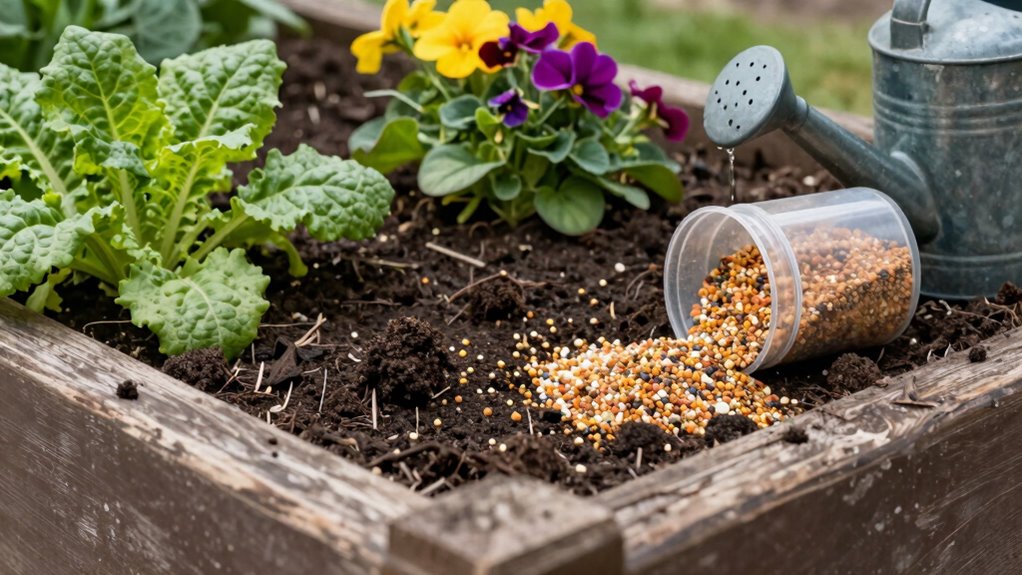
Many gardeners also over-fertilize, thinking that more is better. Applying too much fertilizer can lead to nutrient imbalances, root burn, or excessive foliage growth at the expense of fruit and flower production. It’s better to follow recommended application rates and observe how your plants respond. Sometimes, less is more, especially when you’ve made proper soil adjustments and used organic fertilizers that build up soil health gradually. Regularly watering your plants after fertilizing helps nutrients penetrate the soil and reduces the risk of salt buildup, which can damage roots. Additionally, understanding how fertilizer timing affects plant growth can help you optimize results and avoid waste.
As an affiliate, we earn on qualifying purchases.
Frequently Asked Questions
How Often Should I Fertilize My Raised Bed Plants?
You should fertilize your raised bed plants every 2 to 4 weeks during the growing season. Before fertilizing, do soil testing to determine nutrient levels and avoid overfeeding. Adjust fertilizer timing based on plant growth stages and the type of fertilizer you use. Consistent feeding helps plants thrive, but overdoing it can cause problems, so monitor their response and modify your schedule as needed.
Can Over-Fertilizing Harm My Plants?
Yes, over-fertilizing can harm your plants through fertilizer burn and nutrient toxicity. When you give too much fertilizer, salts can build up in the soil, damaging roots and causing leaf scorch. Nutrient toxicity can lead to poor growth or even plant death. To avoid this, follow recommended application rates and monitor your plants for signs of stress, ensuring they receive balanced nutrients without risking harm.
What Fertilizer Types Are Best for Container Gardening?
For container gardening, you should use balanced liquid fertilizers or slow-release granular options. These types guarantee proper fertilizer application, giving your plants steady nutrients without risking over-fertilizing. Look for products with essential nutrients like nitrogen, phosphorus, and potassium. Regular feeding helps prevent nutrient deficiencies, promoting healthy growth. Always follow label instructions to avoid excess, which can harm plants. Proper fertilizer choices support vibrant, thriving container gardens.
Should I Use Organic or Synthetic Fertilizers?
You should choose organic fertilizers because they offer benefits like improving soil health and providing slow, steady nutrient release. Organic options also reduce the risk of over-fertilization and environmental harm. On the other hand, synthetic fertilizers have drawbacks—they can cause nutrient runoff, burn plants, and degrade soil over time. For healthier, more sustainable gardening, opt for organic fertilizers, especially in raised beds and containers.
How Do I Know if My Plants Need More Nutrients?
You can tell if your plants need more nutrients by observing plant nutrient signs like yellowing leaves, stunted growth, or poor flowering. Soil testing helps you determine nutrient levels accurately, so you know what’s lacking. Regularly check your plants’ appearance and health, and if you notice any signs of deficiencies, consider supplementing with appropriate fertilizers. This proactive approach guarantees your plants stay healthy and vibrant.
organic fertilizer for raised beds
As an affiliate, we earn on qualifying purchases.
As an affiliate, we earn on qualifying purchases.
Conclusion
Avoiding common fertilizer mistakes guarantees your raised beds and containers thrive. Over-fertilizing can harm plants, while under-fertilizing stunts growth. Using slow-release or organic options can help you maintain consistent nutrition. Remember, plants often show signs of deficiencies early, so stay attentive. By following these tips, you’ll foster healthier, more productive gardens. It’s a myth that more fertilizer guarantees better growth—balance and proper application are key to garden success.
garden lime for soil pH adjustment
As an affiliate, we earn on qualifying purchases.
As an affiliate, we earn on qualifying purchases.
As an affiliate, we earn on qualifying purchases.