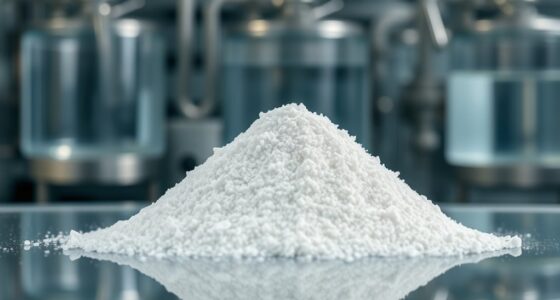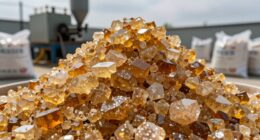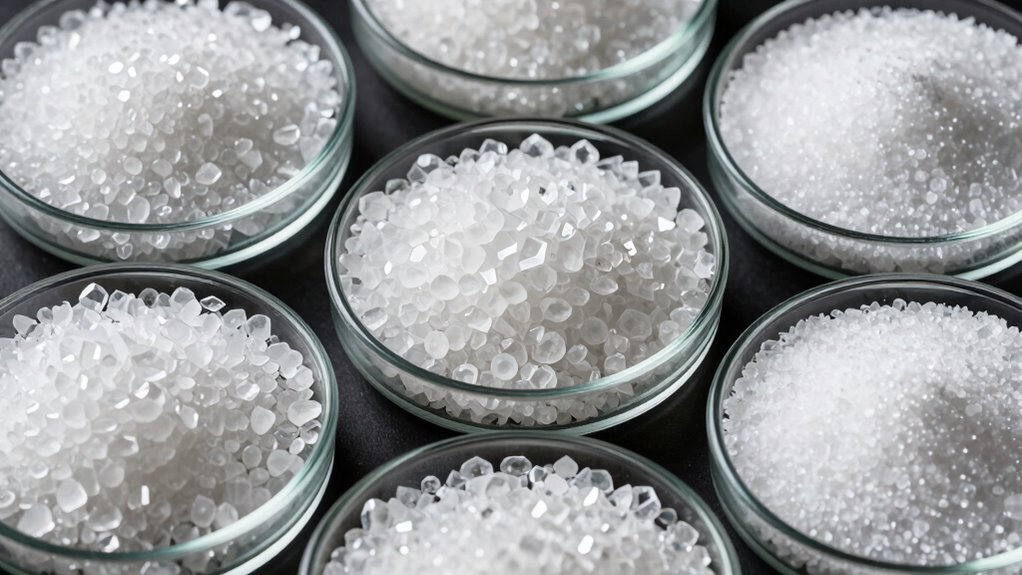

You use common industrial inorganic salts like sodium chloride, potassium salts, magnesium sulfate, and calcium salts in many applications. Sodium chloride is key in electrolysis and preservation, while potassium salts are essential for glass making and agriculture. Magnesium sulfate helps in medicine and construction, and calcium salts are used in building and environmental processes. These salts’ unique properties enable their crucial roles in industries, and discovering more about them can reveal even greater uses and benefits.
Key Takeaways
- Sodium chloride (NaCl) is used in electrolysis, food preservation, and manufacturing chlorine and caustic soda.
- Potassium salts like potassium carbonate and chloride are vital in glass making, agriculture, and food industries.
- Magnesium sulfate serves as a supplement, soil conditioner, and setting retarder in construction.
- Calcium carbonate is used in paper, building materials, and environmental applications, while calcium chloride is a de-icing agent.
- The chemical properties of salts like solubility and stability determine their diverse industrial applications.
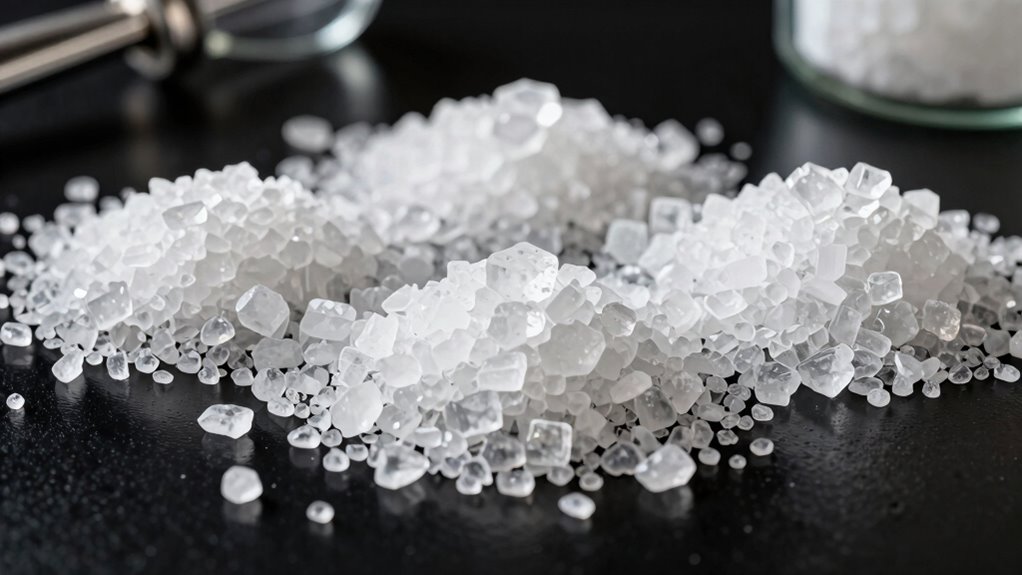
Have you ever wondered what types of salts are used in industry beyond the table variety? Many inorganic salts play crucial roles in various sectors, thanks to their unique chemical properties and diverse application uses. These salts aren’t just simple compounds; they’re essential ingredients in processes ranging from manufacturing to environmental management. Understanding their chemical properties helps explain how they function and why they’re so widely employed.
Take sodium chloride, for example. Its chemical properties include high solubility in water and a stable ionic structure, making it ideal for applications like chemical synthesis, food preservation, and water treatment. In industry, sodium chloride serves as a raw material for producing chlorine and caustic soda, which are foundational for manufacturing plastics, paper, and textiles. Its ability to easily dissolve and conduct electricity in solution makes it indispensable for electrolysis processes, where it’s transformed into other valuable chemicals.
Sodium chloride’s high solubility and ionic stability make it vital for chemical synthesis, preservation, and electrolysis in industry.
Potassium salts, such as potassium carbonate and potassium chloride, have their own distinctive chemical properties. Potassium carbonate, with its alkaline nature and solubility in water, is widely used in glass manufacturing, as a buffering agent in food processing, and in soap production. Potassium chloride is commonly used as a fertilizer due to its high solubility and nutrient content. Its chemical stability allows it to be stored and transported easily, making it a reliable source of potassium in agriculture.
Magnesium salts, like magnesium sulfate, also have unique chemical properties. Known for their high solubility and ability to act as a dehydrating agent, magnesium sulfate finds extensive use in medicine as a supplement and in agriculture to correct magnesium deficiencies in soil. In industrial settings, it’s used in cement and construction materials as a setting retarder, thanks to its chemical interactions with other compounds.
Calcium salts, such as calcium carbonate and calcium chloride, are equally important. Calcium carbonate’s chemical properties, like its insolubility in water and reactivity with acids, make it useful in paper manufacturing, as a building material, and in environmental applications like flue gas desulfurization. Calcium chloride’s hygroscopic nature and ability to lower the freezing point of water make it a common de-icing agent and a moisture control additive in various industrial processes.

Sodium Chloride USP Pharmaceutical Grade – 1 kg (2.2 lb) – Purified Salt for Saline Diluent Solutions & Supplements – Additive Free NaCl
USP Grade Sodium Chloride: Meets US Pharmacopeia standards for tablet and capsule manufacturing. Offers exceptional purity and quality,…
As an affiliate, we earn on qualifying purchases.
As an affiliate, we earn on qualifying purchases.
Frequently Asked Questions
Are Industrial Salts Environmentally Safe to Use?
Industrial salts can be safe if used correctly, but their environmental impact depends on proper handling and disposal. You need to guarantee regulatory compliance to minimize risks to ecosystems and human health. When managed responsibly, these salts pose less threat. Always follow safety guidelines, monitor discharge levels, and stay updated on environmental regulations to reduce potential harm. Proper practices help balance industrial needs with environmental protection.
How Are Industrial Salts Different From Food-Grade Salts?
Industrial salts differ from food-grade salts mainly due to purity standards and usage limitations. You’ll find industrial salts often contain impurities that aren’t suitable for human consumption, so they don’t meet food-grade purity standards. While industrial salts are used in applications like de-icing or manufacturing, food-grade salts are refined to guarantee safety and purity for ingestion. Always check labels and intended use to avoid cross-contamination or health risks.
Can Industrial Salts Be Recycled or Reused?
Yes, industrial salts can be recycled and reused. You can apply salt purification techniques to remove impurities, making the salts suitable for reuse. Recycling techniques like filtration, crystallization, or chemical treatment help recover salts from waste streams or industrial processes. This not only reduces waste but also saves costs. By continuously reprocessing salts, you guarantee a sustainable approach, maximizing the utility of these inorganic salts in various industrial applications.
What Safety Precautions Are Necessary When Handling Industrial Salts?
You must treat industrial salts with respect, like handling a wild beast. Always wear personal protective equipment—gloves, goggles, and masks—to prevent skin and eye contact. Keep spill containment measures ready, so accidental leaks don’t cause hazards. Proper ventilation is essential, and never mix salts with incompatible substances. By following these precautions, you protect yourself and your environment, turning a potential danger into a managed, safe process.
Do Industrial Salts Have Applications in Water Treatment?
Yes, industrial salts play a crucial role in water treatment. You source industrial salts that meet strict salt purity standards to guarantee effective filtration and purification processes. These salts help in softening water, controlling pH levels, and removing impurities. By choosing high-quality industrial salt sourcing, you can optimize water treatment efficiency, prevent equipment corrosion, and maintain safe, clean water supplies for various industrial and municipal applications.

Food Grade Potassium Carbonate – 6 Oz – Kansui Powder for Making Fresh Ramen Noodles – Type 4
Kansui Powder is an essential ingredient used to make ramen noodles alkaline. It gives ramen its characteristic flavor,…
As an affiliate, we earn on qualifying purchases.
As an affiliate, we earn on qualifying purchases.
Conclusion
In the world of industrial salts, your understanding unlocks unique uses and unexpected utilities. From fostering fermentation to fortifying food, these salts serve as silent, steadfast supporters of countless industries. Recognize their remarkable relevance, and you’ll reinforce your appreciation for their robust roles. Remember, mastering this mineral magic means more than mere knowledge—it’s an empowering embrace of essential elements that energize everyday life.

Dr. Clark Magnesium Sulfate USP (Epsom Salt): 1030 mg, Magnesium Supplement for Digestive Support and Wellness, 100 Gelatin Capsules
SUPPORTS DIGESTIVE BALANCE: Magnesium sulfate helps promote natural digestive comfort and regularity.*
As an affiliate, we earn on qualifying purchases.
As an affiliate, we earn on qualifying purchases.

Calcium CARBONATES (Marble Dust Fine (1KG | 2.2 LBS))
Marble powder is a product obtained by grinding limestone rocks containing mainly calcium carbonate. It takes the form…
As an affiliate, we earn on qualifying purchases.
As an affiliate, we earn on qualifying purchases.