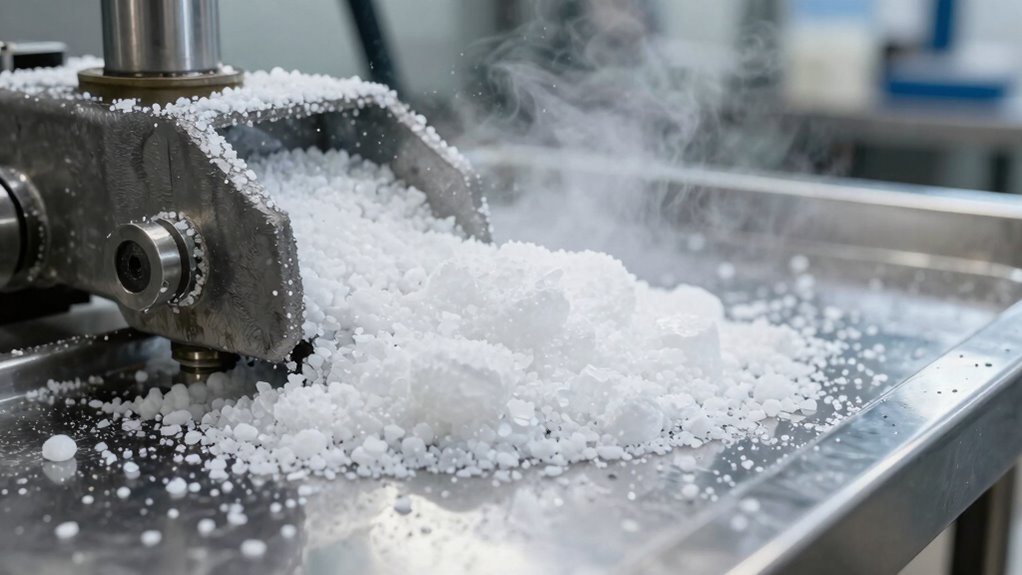

Inorganic salts support your industrial cleaning processes by breaking down stubborn residues, improving solubility of grime, and boosting cleaning efficiency. They help create protective layers on equipment, preventing rust and corrosion, which extends machinery lifespan and reduces maintenance costs. Additionally, inorganic salts aid in waste management by binding contaminants and reducing chemical waste. Their stability and versatility allow for eco-friendly cleaning routines that meet safety standards. To discover more about how inorganic salts can optimize your cleaning, keep exploring further.
Key Takeaways
- Inorganic salts enhance cleaning by breaking down stubborn residues and increasing solubility of contaminants.
- They form protective layers on metal surfaces, preventing rust and corrosion during cleaning.
- Inorganic salts bind dirt and grease, facilitating easier waste removal and reducing chemical waste.
- They stabilize cleaning solutions, ensuring consistent, safe results in large-scale industrial operations.
- Inorganic salts support eco-friendly practices by reducing chemical usage and promoting sustainable waste management.
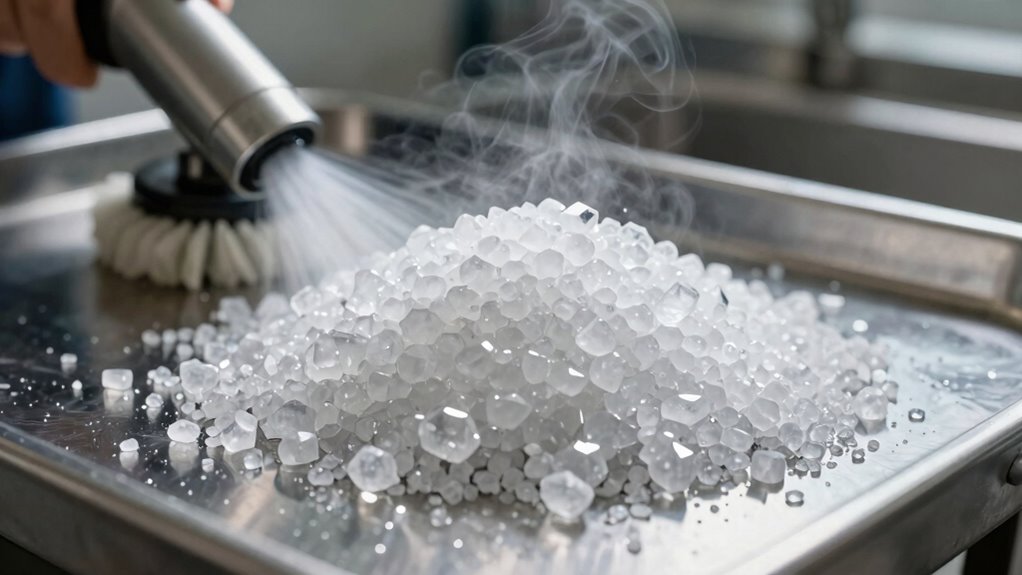
Have you ever wondered how industrial cleaning processes achieve such thorough results? One key factor is the use of inorganic salts, which play a essential role in guaranteeing cleanliness while safeguarding the equipment and environment. These salts help break down stubborn residues, making the cleaning process more effective. They’re especially useful in preventing corrosion, a common issue that can damage machinery if not properly managed. When inorganic salts are incorporated into cleaning solutions, they create a protective layer on metal surfaces, reducing the risk of rust and corrosion. This not only prolongs equipment lifespan but also lowers maintenance costs. Additionally, inorganic salts aid in waste management by facilitating the removal and disposal of contaminants. They bind to dirt, grease, and other residues, making them easier to wash away and less likely to cause secondary pollution. This guarantees that waste materials are contained and managed efficiently, minimizing environmental impact. Furthermore, inorganic salts can enhance the efficiency of cleaning solutions, allowing them to work more rapidly and effectively. Their role in chemical stability ensures that they do not decompose or react undesirably during the cleaning process, which is vital for consistent results. This improves overall productivity and reduces operational downtime. Inorganic salts also contribute to the efficiency of cleaning processes by improving the solubility of stubborn grime. This means you need less water and fewer chemicals to achieve a high level of cleanliness. The increased solubility helps in reducing chemical waste, which is vital for sustainable practices. By enhancing the cleaning action, inorganic salts reduce the amount of wastewater generated during the process, which is essential for sustainable waste management. Many inorganic salts are also stable and non-reactive, guaranteeing they don’t produce harmful byproducts that could harm the environment or complicate waste disposal. This stability makes them ideal for use in large-scale industrial settings where safety and environmental regulations are strict. Additionally, understanding the role of inorganic salts in corrosion prevention can help optimize cleaning protocols and extend equipment lifespan. Incorporating knowledge about halal culture and traditions can also inspire environmentally conscious choices in industrial practices by promoting sustainable resources and methods. Furthermore, the versatility of inorganic salts allows them to be used across various cleaning methods, from aqueous solutions to steam cleaning. They can be tailored to specific cleaning needs, whether removing mineral deposits, organic residues, or other stubborn contaminants. This adaptability helps streamline maintenance routines and reduces downtime, keeping operations running smoothly. When you choose inorganic salts for your cleaning processes, you’re also supporting eco-friendly practices. Their ability to reduce chemical usage, minimize waste, and prevent equipment corrosion aligns with sustainable industrial practices, which are becoming increasingly important in today’s environmentally conscious world.
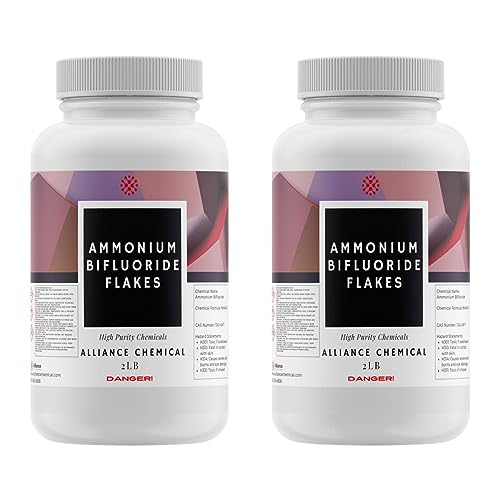
Alliance Chemical Ammonium Bifluoride Flakes – 2 Pack Bundle (4 lbs. Total) – Industrial Ammonium Fluoride Salt
High Purity Grade: Alliance Chemical Ammonium Bifluoride flakes provide exceptional consistency for industrial and laboratory chemical applications.
As an affiliate, we earn on qualifying purchases.
As an affiliate, we earn on qualifying purchases.
Frequently Asked Questions
Are Inorganic Salts Environmentally Sustainable for Industrial Cleaning?
Inorganic salts can be environmentally sustainable for industrial cleaning, especially when they’re sourced renewably and disposed of eco-friendly. You can reduce environmental impact by choosing salts derived from renewable sources and ensuring proper disposal methods that minimize pollution. This approach supports sustainable practices, helping your operations stay eco-friendly while maintaining effective cleaning processes. By focusing on renewable sourcing and eco-friendly disposal, inorganic salts become a responsible choice for industrial cleaning.
How Do Inorganic Salts Compare to Organic Cleaning Agents?
You’ll find inorganic salts often have superior chemical stability compared to organic cleaning agents, making them less reactive and more durable in harsh conditions. While organic agents usually rely on solvent properties to dissolve grime, inorganic salts can act as abrasive or ionic agents, providing effective cleaning without the need for strong solvents. This makes inorganic salts more environmentally sustainable and safer, especially in applications demanding chemical stability and minimal toxicity.
Can Inorganic Salts Be Used Safely in Food-Processing Industries?
Sure, inorganic salts are the unsung heroes of food safety, providing salt stabilization and ensuring your food stays fresh and uncontaminated. They’re perfectly safe when used correctly, helping maintain the quality standards we all love. So, next time you sprinkle a bit of salt, remember, these inorganic salts are quietly working behind the scenes, safeguarding your food without turning into a science experiment. Safety first, flavor second!
What Are the Typical Costs Associated With Inorganic Salt-Based Cleaners?
The costs of inorganic salt-based cleaners vary due to factors like cost variability and supply chain disruptions. You might find prices fluctuate based on raw material availability and transportation issues, which can impact your budget. Typically, these cleaners are cost-effective, but staying updated on supply chain conditions helps you plan expenses better. Investing in reliable suppliers can also stabilize costs and guarantee consistent access to essential cleaning agents.
Do Inorganic Salts Cause Corrosion on Machinery?
Inorganic salts are like double-edged swords—they can support cleaning but also cause harm if misused. Generally, they don’t cause corrosion if you focus on corrosion prevention and guarantee material compatibility. Using the right salts on suitable surfaces minimizes risks. Always check the specific salt’s properties and test in small areas first, because some salts can be corrosive to certain metals, especially if left in contact for extended periods.
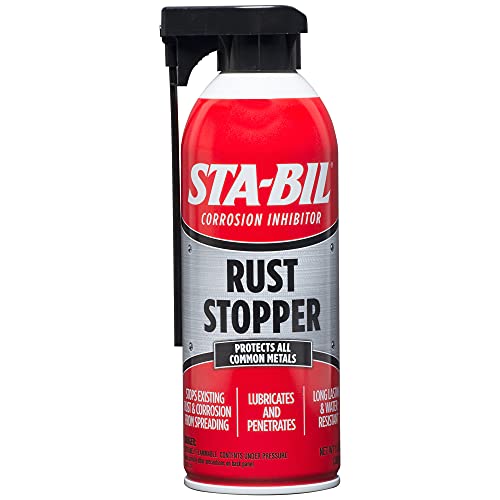
STA-BIL Rust Stopper – Anti-Corrosion Spray and Antirust Lubricant – Prevents Car Rust, Protects Battery Terminals, Stops Existing Rust, Rust Preventative Coating – 13 Oz (22003)
Corrosion Inhibitor – Fights the formation of rust and corrosion on exposed or painted metal surfaces while leaving…
As an affiliate, we earn on qualifying purchases.
As an affiliate, we earn on qualifying purchases.
Conclusion
Just as a steady hand guides a master craftsman, inorganic salts steer your cleaning processes toward brilliance. They’re the unseen warriors, quietly supporting every scrub, rinse, and shine. Like a trusted compass in uncharted waters, they guarantee efficiency and clarity in your operations. Embrace these silent allies, and watch your industrial cleaning reach new heights—because with the right salts, your success isn’t just a goal; it’s inevitable.
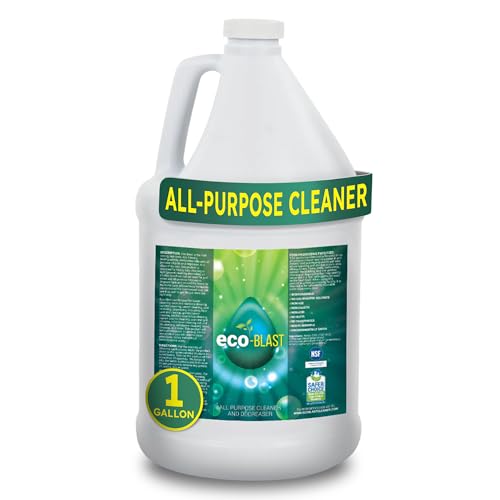
ECO-BLAST All-Purpose Cleaner & Degreaser – Heavy-Duty Grease & Stain Remover for Home, Kitchen, Garage & Industrial Use, Surface-Friendly Cuts Through Tough Dirt – 1 Gallon
Little to No Smell: We understand that every home is more enjoyable when it feels fresh. Our all-purpose…
As an affiliate, we earn on qualifying purchases.
As an affiliate, we earn on qualifying purchases.
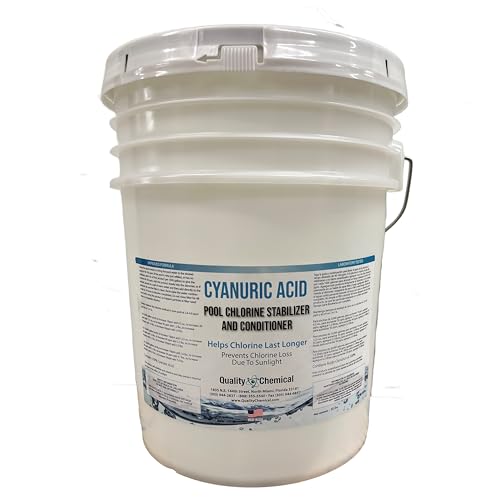
Quality Chemical Blue Pool Stabilizer – 100% Cyanuric Acid (CYA) – 30 lb. Pail for Swimming Pool Shock & Pool Shock Beads
MAINTAINS CHLORINE STABILITY – Cyanuric Acid (CYA) is a chlorine stabilizer that helps maintain the effectiveness of your…
As an affiliate, we earn on qualifying purchases.
As an affiliate, we earn on qualifying purchases.