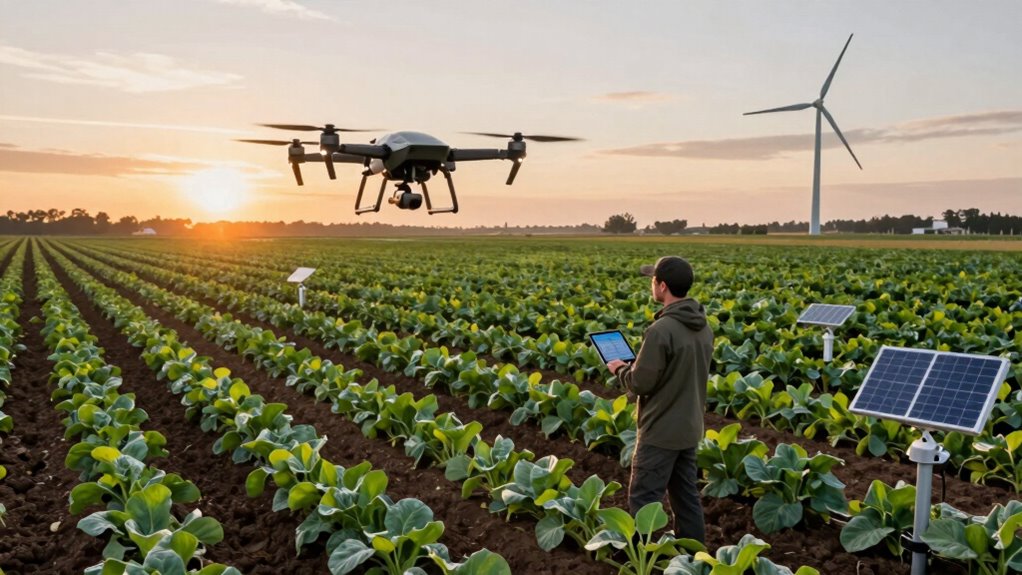

In 2026, you should know that carbon farming can improve your soil health and make your crops more resilient to extreme weather like droughts and floods. By adopting regenerative practices like cover cropping, reduced tillage, and organic amendments, you not only trap atmospheric CO₂ but also boost soil fertility and productivity. Technology tools help you track progress and verify environmental benefits, opening new opportunities with carbon credits. Keep exploring to discover how these practices can benefit your farm long-term.
Key Takeaways
- Carbon farming enhances soil health, trapping atmospheric CO₂ and increasing crop resilience to climate extremes.
- Adoption of regenerative practices like cover cropping and reduced tillage is essential for soil carbon sequestration.
- Accurate measurement tools and data tracking are vital for verifying soil carbon gains and accessing carbon credit markets.
- Support from government programs, training, and networks can facilitate the transition to sustainable carbon farming.
- Embracing carbon farming transforms agriculture into a climate solution, promoting long-term farm viability and environmental health.

By 2026, farmers have become key players in combating climate change through carbon farming practices. You understand that implementing these practices isn’t just about reducing emissions; it’s about actively enhancing your soil’s health and building resilience in your crops. Healthy soil acts as a carbon sink, trapping carbon dioxide from the atmosphere and helping to mitigate climate impacts. When you adopt regenerative farming techniques—such as cover cropping, reduced tillage, and organic amendments—you improve soil structure, increase microbial activity, and boost nutrient availability. This leads to richer, more fertile soil that can store more carbon, which benefits not only the environment but also your productivity.
You also recognize that soil health directly influences crop resilience. With improved soil conditions, your plants become better equipped to withstand extreme weather events like droughts and floods. Strong, healthy roots access water and nutrients more efficiently, reducing your reliance on chemical inputs and increasing your crop’s adaptability. As climate variability grows, this resilience becomes essential for maintaining yields and securing your livelihood. You realize that carbon farming isn’t just a climate strategy—it’s a way to make your farm more sustainable and resilient in the face of changing conditions.
In 2026, you’re aware that adopting carbon farming practices requires understanding new technologies and measurement tools. You might use soil testing kits or digital platforms to track soil carbon levels and gauge your progress. This data helps you fine-tune your practices, ensuring that you’re maximizing soil health and carbon sequestration while also improving crop resilience. You know that transparency and verification will be *vital*, especially if you’re participating in carbon credit markets. Being able to demonstrate your farm’s positive impact can open new revenue streams and provide financial incentives to continue these sustainable practices.
Furthermore, you understand the importance of collaboration and education. Staying informed about the latest research and participating in local or online networks allows you to share experiences and learn from others. Governments and organizations are increasingly offering support—like incentives, training programs, and access to resources—that can make adopting carbon farming practices more accessible and affordable. You’re motivated to integrate these practices not only for environmental benefits but because they contribute to long-term farm viability.
In essence, by 2026, you see yourself as part of a broader movement transforming agriculture into a climate solution. Your focus on soil health and crop resilience isn’t just about compliance or market trends—it’s about securing a sustainable future for your farm, your community, and the planet.
As an affiliate, we earn on qualifying purchases.
Frequently Asked Questions
How Will Carbon Farming Impact Crop Yields Long-Term?
Carbon farming can boost your long-term crop yields by improving soil health and water management. Healthier soil retains nutrients better and fosters beneficial microbes, leading to more resilient crops. Enhanced water management reduces drought stress, keeping your plants strong. Over time, these practices create a sustainable farming system, increasing productivity and profitability while helping the environment. With consistent efforts, you’ll see improved yields and healthier land for years to come.
Are There Specific Crops Better Suited for Carbon Farming Practices?
Think of crop selection as choosing the right puzzle pieces for soil improvement. Legumes like beans and peas are especially suited for carbon farming because they fix nitrogen and boost soil health. Cover crops such as clover or vetch also excel, enhancing soil structure and capturing carbon. These crops help you maximize carbon sequestration and improve soil quality, making your farm more resilient and sustainable long-term.
What Are the Initial Costs to Start Carbon Farming?
The initial costs for starting carbon farming can vary, but you’ll mainly need to invest in soil management practices and equipment. Budget for soil testing, cover crop seeds, and possibly new machinery or modifications to existing equipment. These investments help improve soil health and carbon sequestration. While upfront costs might seem high, these practices can boost your farm’s long-term sustainability and profitability, making the initial investment worthwhile.
How Do Carbon Credits Translate Into Financial Benefits?
Ever wondered how carbon credits boost your income? When you earn and sell credits, they translate into financial benefits through increased market valuation and additional revenue streams. The certification process guarantees your credits meet standards, making them more valuable and attractive to buyers. By participating in carbon farming, you not only improve sustainability but also open new profit opportunities, turning eco-friendly practices into tangible financial gains.
Will Government Policies Change Further Regarding Carbon Farming Incentives?
Government policies on carbon farming will likely evolve further, influenced by ongoing policy evolution and the need to refine incentive structures. You should stay informed about these changes, as they can directly impact your eligibility for incentives and credits. As governments seek to meet climate goals, expect adjustments that could either enhance or tighten support. Staying adaptable and engaged with policy updates will help you maximize the benefits of carbon farming in 2026 and beyond.
digital soil carbon measurement tools
As an affiliate, we earn on qualifying purchases.
As an affiliate, we earn on qualifying purchases.
Conclusion
Think of your farm as a mighty river, constantly flowing and shaping the land around it. By embracing carbon farming, you’re planting trees and nurturing soils that act like gentle banks, guiding and stabilizing the flow. In 2026, your efforts will be the current that clears pollutants and sustains the ecosystem. With each step, you’re not just farming—you’re crafting a resilient river that feeds the future, ensuring your land thrives for generations to come.
As an affiliate, we earn on qualifying purchases.
As an affiliate, we earn on qualifying purchases.