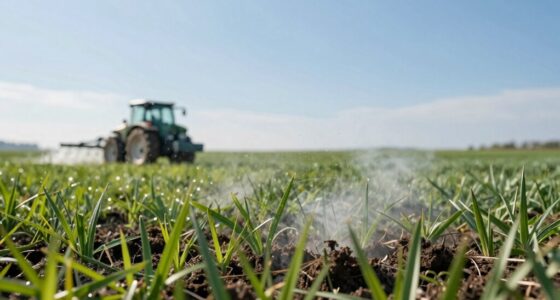
Cover crops interact with nitrogen management by naturally adding and controlling nitrogen in the soil. Legumes, like peas and beans, fix atmospheric nitrogen through bacteria, gradually releasing it for your crops. Non-leguminous cover crops, such as oats, help scavenge leftover nutrients, preventing leaching. Timing and methods of termination influence nitrogen release, ensuring your crops get the right amount when needed. Keep exploring to discover how to optimize these processes for healthier soils and better yields.
Key Takeaways
- Leguminous cover crops fix atmospheric nitrogen through symbiosis with bacteria, enriching soil naturally.
- Decaying cover crop biomass releases nitrogen gradually, supporting crop nutrient needs.
- Proper timing of cover crop planting and termination optimizes nitrogen availability and minimizes losses.
- Non-leguminous cover crops scavenge leftover nutrients, preventing leaching and enhancing soil fertility.
- Managing cover crop growth and termination influences nitrogen release timing, aligning with main crop requirements.

Have you ever wondered how to boost your soil’s health while managing nitrogen efficiently? Cover crops are an excellent tool for achieving both goals. They help improve soil structure, increase organic matter, and foster beneficial microbial activity—all of which contribute to healthier soil. When you plant cover crops, you’re not just protecting your land from erosion; you’re actively enhancing its fertility. These plants can absorb excess nutrients, preventing leaching and runoff, which makes your nitrogen management more sustainable. By fixing nitrogen naturally or recycling it within the soil, cover crops reduce your reliance on synthetic fertilizers, saving you money and decreasing environmental impact.
In addition to enriching soil health, cover crops play an essential role in pest control. Certain species, like clover or vetch, can attract beneficial insects that prey on common crop pests. This natural pest control reduces the need for chemical interventions, which can harm soil microorganisms and disrupt soil health. When pests are kept in check, plants grow stronger and more resilient, further aiding nitrogen uptake and minimizing nutrient losses. Cover crops also act as a physical barrier, suppressing weeds and reducing habitat for pests that prefer open or bare soil. This layered approach to pest management creates a more balanced ecosystem, which is fundamental for sustainable farming.
Managing nitrogen with cover crops involves timing and selection. For example, planting leguminous cover crops such as peas or beans before your main crop allows these plants to fix atmospheric nitrogen through symbiosis with bacteria, enriching the soil naturally. When you terminate these cover crops, their decaying biomass releases nitrogen gradually, providing an ongoing supply for your crops. Non-leguminous cover crops, like oats or radishes, are excellent for scavenging leftover nutrients, preventing them from leaching away during off-season periods. Properly managing the termination of cover crops—either by mowing, tilling, or crimping—ensures that nitrogen release aligns with your crop’s needs, avoiding excess or deficiency.
cover crop seed mix for nitrogen fixation
As an affiliate, we earn on qualifying purchases.
As an affiliate, we earn on qualifying purchases.
Frequently Asked Questions
How Do Cover Crops Affect Soil Microbial Activity Related to Nitrogen?
You see that cover crops boost soil microbial activity related to nitrogen by increasing microbial diversity and stimulating soil enzyme activity. These crops provide organic matter, fueling microbes that break down nitrogen compounds, making nutrients more available for plants. As a result, microbial communities thrive, enhancing nitrogen cycling and improving soil health. This interaction leads to more efficient nitrogen use and reduces the need for synthetic fertilizers, benefiting your overall crop management.
Can Cover Crops Replace Synthetic Nitrogen Fertilizers Entirely?
You can’t fully replace synthetic nitrogen fertilizers with cover crops, but they substantially cut costs. Studies show cover crop economics can save farmers up to 30% on fertilizer expenses. Proper cover crop planting timing boosts nitrogen fixation, enhancing soil health naturally. While they don’t completely substitute synthetic nitrogen, integrating cover crops into your rotation improves sustainability, reduces chemical use, and supports long-term productivity.
What Are the Best Cover Crop Species for Nitrogen Fixation?
You should choose cover crops like clover, vetch, and sunn hemp for best nitrogen fixation efficiency. These species excel in fixing atmospheric nitrogen, enriching your soil naturally. When selecting cover crops, consider their adaptability to your climate and soil conditions to maximize nitrogen fixation. Proper cover crop selection ensures you enhance soil fertility effectively while reducing reliance on synthetic fertilizers, promoting sustainable agricultural practices.
How Does Cover Crop Termination Timing Influence Nitrogen Availability?
If you delay cover crop termination, it can feel like missing the chance to open a treasure trove of nitrogen! Timing is critical; early termination may leave nitrogen trapped in the cover crop, reducing availability for your main crop. Conversely, late termination boosts nitrogen release but risks leaching. Incorporate cover crop diversity and plan your termination timing carefully to optimize nitrogen supply, ensuring lush, healthy growth.
Are There Any Crop Rotations That Optimize Nitrogen Use With Cover Crops?
Yes, you can optimize nitrogen use by implementing diverse crop rotations that include legumes and non-legumes. Incorporate cover crop diversity to enhance nitrogen fixation and soil health. Use crop rotation strategies that alternate nitrogen-fixing cover crops with main crops, ensuring nitrogen is naturally replenished and available for subsequent planting. This approach reduces fertilizer needs, improves soil fertility, and promotes sustainable, efficient nitrogen management throughout your growing cycle.
leguminous cover crop seeds peas beans
As an affiliate, we earn on qualifying purchases.
As an affiliate, we earn on qualifying purchases.
Conclusion
As you plant cover crops beneath the fading sun, envision their roots quietly sipping nitrogen from the soil, holding it like a treasure. These green guardians protect your fields from leaching and enrich the land for future crops, creating a seamless dance of life and renewal. Embrace this cycle, and watch your soil flourish with importance—an intricate tapestry woven from nature’s own threads, promising abundant harvests and resilient fields for seasons to come.
non-leguminous cover crops oats radishes
As an affiliate, we earn on qualifying purchases.
As an affiliate, we earn on qualifying purchases.
As an affiliate, we earn on qualifying purchases.