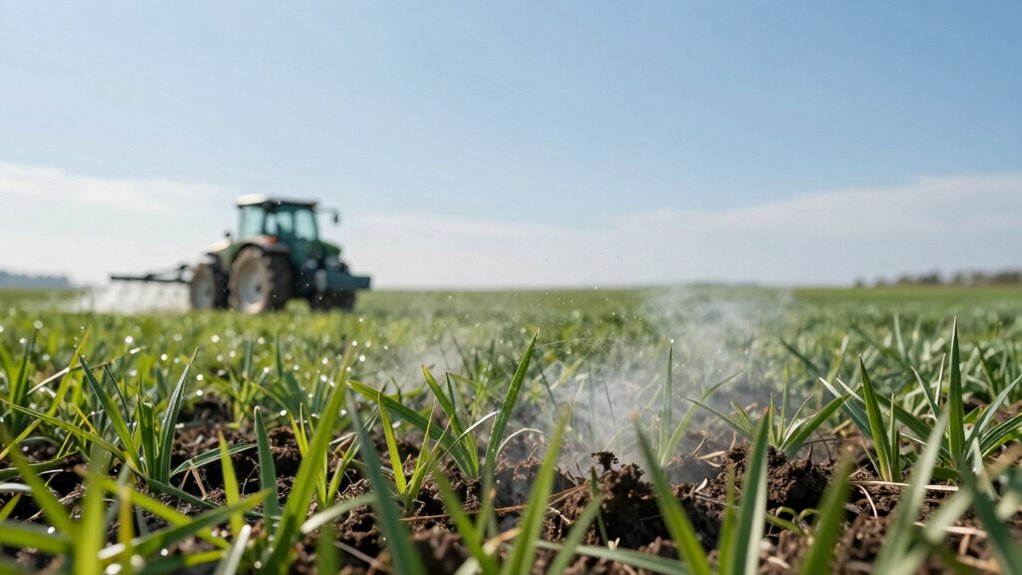

When you apply nitrogen fertilizer, microbes in the soil quickly start transforming it through processes like nitrification and denitrification, which can lead to losses. Heavy rainfall or watering soon after application can wash away nitrogen with runoff, contaminating waterways. Additionally, microbes can turn nitrate into gases like nitrous oxide, which escapes into the atmosphere. Proper management, such as timing and methods, can help reduce these losses—if you want to understand more, keep exploring the factors involved.
Key Takeaways
- Microbial activity transforms applied nitrogen into forms that can be lost, such as gases or leached into water.
- Excessive moisture and warmth accelerate microbial processes like nitrification and denitrification, increasing nitrogen loss.
- Heavy rainfall or irrigation can wash away surface-applied nitrogen before plants absorb it.
- Nitrogen in soil can be converted to gaseous forms like nitrous oxide, which escape into the atmosphere.
- Improper timing and application methods increase the risk of nitrogen runoff and gaseous emissions.

Have you ever wondered what happens to nitrogen after you apply it to your fields? Once you spread fertilizer, nitrogen doesn’t just stay put; it begins a journey influenced by various factors. One of the most essential processes involves soil microbial activity. Microbes in the soil play a critical role in transforming nitrogen compounds, either making them available for plant uptake or converting them into forms that can escape into the environment. For example, certain bacteria perform nitrification, turning ammonium into nitrate, which plants readily absorb. However, if conditions aren’t ideal—like if the soil is too wet or too warm—these microbes can accelerate nitrogen transformations that lead to losses. Denitrification is another microbial process where bacteria convert nitrate into gaseous forms such as nitrous oxide or nitrogen gas, both of which drift away from the soil. This microbial activity, while natural, can markedly reduce the amount of nitrogen available to your crops and contribute to environmental concerns.
As nitrogen shifts through these microbial processes, some of it becomes susceptible to loss through environmental runoff. Heavy rainfall or irrigation can wash away surface-applied nitrogen before plants have a chance to use it. When nitrogen-laden water enters nearby waterways, it causes runoff that pollutes lakes, rivers, and coastal waters. This not only depletes your soil of valuable nutrients but also triggers issues like algal blooms and hypoxia, harming aquatic life. The risk of environmental runoff increases if the nitrogen isn’t incorporated into the soil properly or if excessive rainfall occurs shortly after application. That’s why timing and method of fertilizer application matter so much—applying fertilizer during periods of expected heavy rain can lead to more nitrogen escaping into the environment. Additionally, soil microbial activity can be influenced by factors such as temperature and moisture levels, which further impacts nitrogen loss.
Understanding how soil microbial activity and environmental runoff influence nitrogen loss helps you make better decisions about fertilizer management. To reduce losses, you can adopt practices like split applications, which give plants more time to absorb nitrogen, or use slow-release fertilizers that minimize rapid microbial transformations. Cover crops can also help by taking up excess nutrients, preventing them from leaching away. Ultimately, being mindful of these processes allows you to optimize nitrogen use efficiency, ensuring your crops get the nutrients they need while protecting the surrounding environment from unnecessary pollution.

Milorganite All-Purpose Eco-Friendly Slow-Release Nitrogen 6-4-0 Fertilizer, 32 lb Bag – for Lawns, Flowers, and Gardens – Includes Bonus Feeding & Spreader Tips Brochure
Bonus brochure includes seasonal application timing, spreader settings, and tips for lawns, gardens, and trees.
As an affiliate, we earn on qualifying purchases.
As an affiliate, we earn on qualifying purchases.
Frequently Asked Questions
How Quickly Does Nitrogen Typically Leach After Application?
Nitrogen can leach quickly, often within just a few days to weeks after application, especially if your soil is acidic. Soil acidity increases leaching risk because it affects nutrient retention. To minimize nitrogen loss, you should time your fertilizer application carefully, applying when plants need it most and avoiding heavy rains immediately afterward. Proper fertilizer timing and managing soil pH help retain nitrogen and improve crop health.
Can Nitrogen Loss Be Completely Prevented?
While you can’t entirely prevent nitrogen loss, you can minimize it by nurturing your soil’s organic matter and maintaining a healthy soil structure. Organic matter acts like a reservoir, holding onto nutrients, while good soil structure improves water retention and reduces leaching. By adopting these practices, you’re gently safeguarding your nitrogen, ensuring your plants get more of what they need, and fostering a resilient, vibrant garden.
What Role Do Soil Microbes Play in Nitrogen Loss?
Soil microbes play a vital role in nitrogen loss through microbial activity and soil decomposition. They break down organic matter, releasing nitrogen in the process. Sometimes, microbes convert nitrogen into gases like N₂ or N₂O, which escape into the atmosphere. Your soil’s microbial activity can accelerate nitrogen loss, especially under warm, moist conditions, making it essential to manage these factors for better nitrogen retention.
How Does Rainfall Influence Nitrogen Loss?
Rainfall considerably influences nitrogen loss by affecting soil absorption and runoff management. When heavy rain occurs, it can overwhelm the soil’s ability to absorb nutrients, leading to increased runoff. This runoff carries nitrogen away from the soil, reducing its availability for plants and contaminating nearby water bodies. To minimize this, you should improve soil absorption through proper management and implement runoff controls, preventing nitrogen from washing away during intense rains.
Are Certain Fertilizers More Prone to Nitrogen Loss?
Yes, certain fertilizer types are more prone to nitrogen loss. Organic fertilizers and ammonium-based fertilizers tend to lose nitrogen more easily, especially if applied at the wrong time. Application timing is essential—you should apply fertilizers when plants need nitrogen most and avoid periods of heavy rainfall. Using slow-release fertilizers or timing applications carefully helps reduce nitrogen loss, ensuring plants get the nutrients they need efficiently.

Rapitest® Soil Microbial Test Kit. Improve Soil Health and Activity. for use Along with Soil Conditioners/Activators/Nutrients. Designed, Engineered and Assembled in the USA.
Learn: Find out and understand whether your soil is truly healthy, active and self-sustaining for optimal growing
As an affiliate, we earn on qualifying purchases.
As an affiliate, we earn on qualifying purchases.
Conclusion
To minimize nitrogen loss after application, stay mindful of factors like rainfall, temperature, and soil type. For instance, if you apply fertilizer before heavy rain, it can wash away, reducing efficiency. Imagine a farmer who used slow-release nitrogen; despite a sudden storm, the nitrogen remained in the soil, boosting crop growth. By understanding these dynamics, you can improve fertilizer use, maximize crop yield, and reduce environmental impact.

Miniature Clover Seeds – 1 Oz Packet ~25,000 Seeds – Small Leaf White Clover – Low Growing Nitrogen Fixing Lawn Clover & Cover Crop – Non-GMO, Perennial
Miniature Clover Seeds – 1 Oz Packet ~25,000 Seeds – Trifolium repens – Low growing, nitrogen-fixing small leaf…
As an affiliate, we earn on qualifying purchases.
As an affiliate, we earn on qualifying purchases.

Aatraay Manual Fertilizer Spreader Fertilizing Tool with Bag for Farm Corn Vegetables Sugar Cane Fruit Trees
With the function of fertilizing crop roots, simple operation, accurate measurement, scientific and reasonable.
As an affiliate, we earn on qualifying purchases.
As an affiliate, we earn on qualifying purchases.